Should you book Greek island ferries in advance?
Whether you can roll up to the port and buy a ticket depends almost entirely on the month and the boat. In July, the fast morning boats to Santorini do not wait for you.
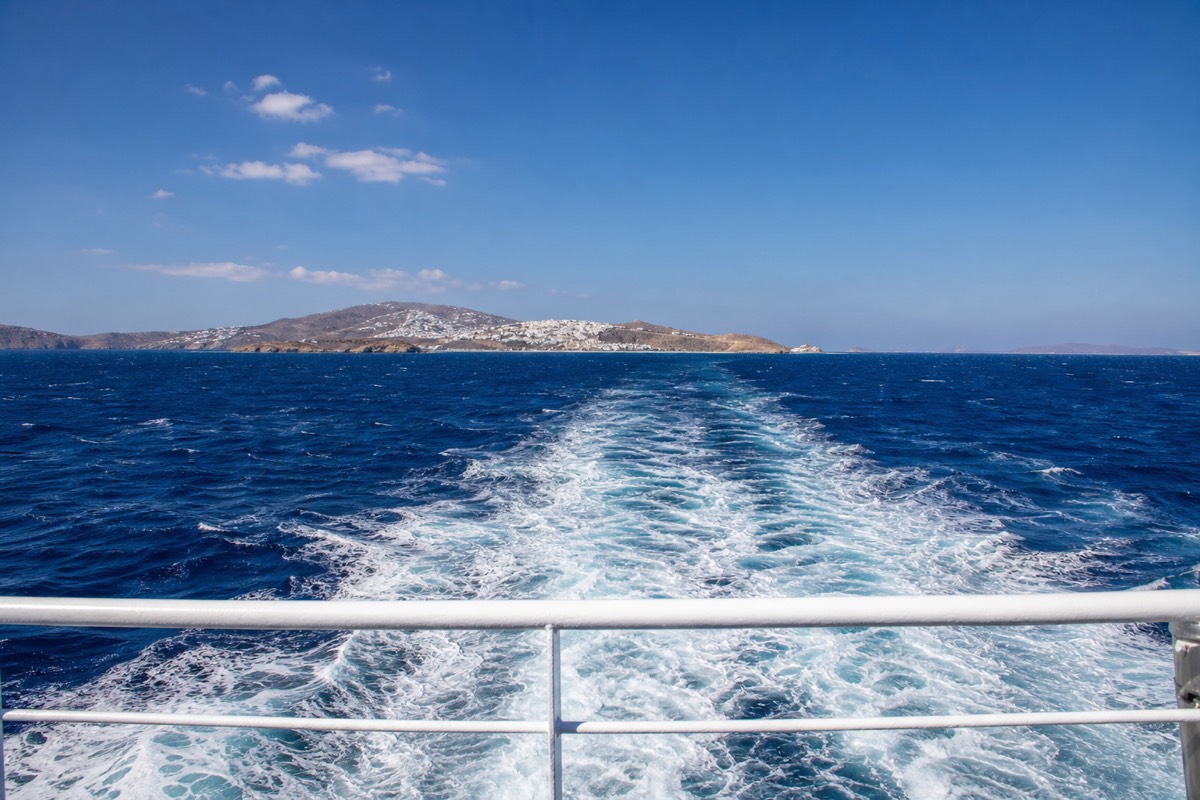
In peak summer, yes: for July and August, for the high-speed catamarans, and for the busy Piraeus routes to Mykonos and Santorini, reserve your Greek island ferries weeks ahead, because the fast morning boats fill from advance bookings well before the date. In the shoulder months of May and September, and on the slower conventional Blue Star ferries, you have more slack, though booking a few days out is still the safer move.
Greece runs one of the busiest ferry networks in the Mediterranean, and the pressure is concentrated in a few summer weeks on a few Cyclades routes. That concentration is the whole answer: the system is easy to use most of the year and genuinely tight in the peak, so the advice changes with the calendar rather than being one fixed rule.
Should You Book Greek Island Ferries In Advance?
Book ahead in peak summer and for high-speed boats on popular routes; you can wait in the shoulder season and on conventional ferries. The fast morning catamarans from Piraeus to Mykonos and Santorini in July and August fill from advance bookings, while May, September and the slower Blue Star ships leave more room to decide late.
The safe default is to book the moment your dates are fixed for a summer trip, and to stay relaxed about it in the quiet months. You can check live schedules and fares for any route on a ferry booking site before you commit, which also shows you how full a given sailing already is.
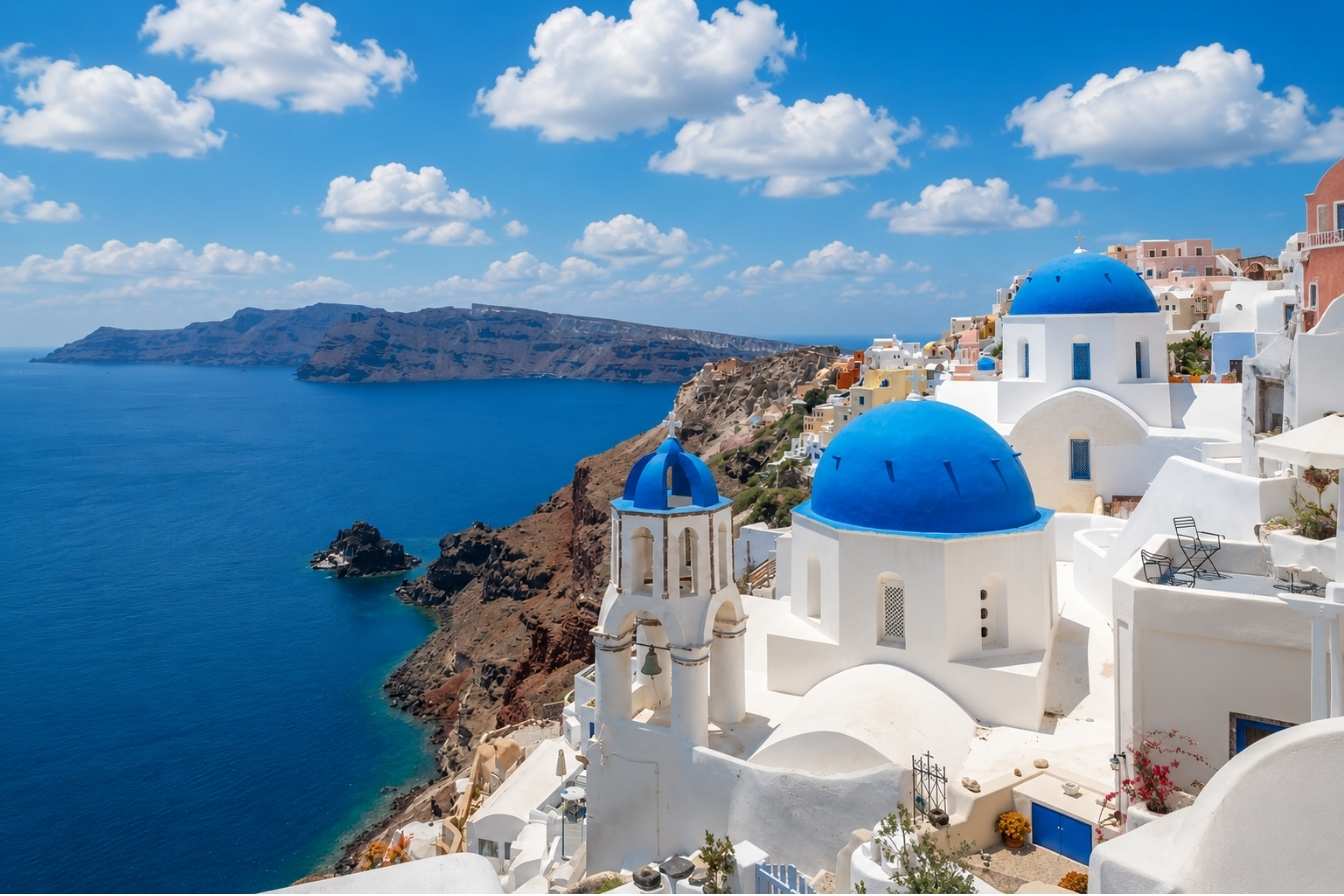
One more reason to book early in summer has nothing to do with sell-outs: the popular sunset-timed arrivals into Santorini and the mid-morning departures fill first, so booking ahead is also how you get the sailing that fits your day rather than the one seat left at an awkward hour. Wait too long and you take what is left, not what you wanted.
It also helps to know how the network is actually shaped. Most of the busy Cyclades traffic funnels through two mainland ports, Piraeus and Rafina, near Athens, and out to the headline islands from there. That funnel is why the same handful of routes appear in every "book ahead" warning: they are where the whole summer crowd converges. Routes that sit off that main artery, the shorter hops between neighbouring islands, feel almost none of the same pressure and stay bookable far later.
When Does Booking Ahead Really Matter?
Advance booking matters most in July and August, on high-speed catamarans, on the Piraeus routes to Santorini and Mykonos, at weekends, and if you are travelling with a car. In those cases the fast boats sell out days or weeks ahead, and vehicle space goes first. Lock these in as soon as your island dates are set.
Santorini is the pinch point. Its high-speed connections carry heavy summer demand, and the island's hotels are just as constrained, filling three to six months ahead in peak, so the whole trip rewards early booking. The table shows how far ahead to reserve by scenario.
| Scenario | How far ahead | Why |
|---|---|---|
| July to August, high-speed to Santorini or Mykonos | Several weeks, more for weekends | Fast boats fill from advance bookings |
| Peak summer, conventional Blue Star ferry | A week or two | More capacity, but popular sailings still sell out |
| Shoulder season (May, September) | A few days out is usually enough | Lighter demand, more open seats |
| Travelling with a car | As early as you can | Vehicle space sells out first |
| Off-season (November to March) | Same day is often fine | Reduced schedules, light passenger loads |
The pattern behind the table is simple: demand and scarcity have to line up for a sailing to sell out. A quiet route in May has neither, so you can walk up; a Santorini fast boat on an August Saturday has both, so it is gone weeks out. Everything else falls between those poles, which is why the same traveller can book one leg on the day and needs to book another a month ahead on the very same trip.
How Far Ahead Should You Book By Route And Month?
Read the answer off two axes: the route and the month. The busy Piraeus-to-Cyclades runs in July and August want weeks of notice; the same routes in the shoulder want only days; quieter routes and the off-season are close to walk-up. Match your specific crossing to the month rather than applying one blanket rule to the whole trip.
A single rule of thumb misleads because the network is not uniformly busy. The matrix below crosses the route type with the month so you can find your exact leg rather than over-booking a quiet crossing or under-booking a hot one.
| Route | Peak (Jul to Aug) | Shoulder (May, Sep) | Off-season |
|---|---|---|---|
| Piraeus to Santorini or Mykonos, high-speed | Several weeks ahead | A few days ahead | Close to departure |
| Cyclades hops (Paros, Naxos) | One to two weeks | A few days | Walk-up usually fine |
| Conventional Blue Star, any Cyclades route | A week or two | A few days | Same day often fine |
| Long crossings (Crete, Dodecanese) | One to two weeks, more with a car | Several days | Reduced schedule, check first |
Package travellers can skip this table entirely, because the crossings are already chosen and prepaid. For everyone else, deciding whether the fast boat is worth its premium in the first place is really the same question as choosing how to move between the islands, since time, cost and weather all pull in different directions.
When Can You Leave Ferry Booking Later?
You can wait in the shoulder and off-season, on high-capacity conventional ferries, and on shorter, less-touristed routes. In May, September and October the fast boats rarely sell out, and the Blue Star ships carry enough passengers that same-week booking is usually safe. Flexibility here is a real perk of travelling outside the peak.
Travelling in the quieter months buys you the freedom to decide your next island over breakfast, which is one of the underrated pleasures of a Greek shoulder-season trip. If you are choosing when to go partly for this reason, see which is the best month for island hopping before you fix the dates, and how the shoulder lines up with the best time to visit overall.
The one caveat is weekends and public holidays, which spike demand even in the shoulder months as Athenians head to the islands. If your flexible plan happens to land a Cyclades crossing on a Friday or a long weekend, treat it like a peak-season leg and book it a little earlier than the rest.
There is a real pleasure to travelling loose like this, and it is one of the strongest arguments for a shoulder-season trip over a peak one. Deciding at breakfast that Naxos deserves another night, then grabbing an afternoon boat onward, is a freedom that simply does not exist in August, when every leg has to be nailed down in advance. The quieter months hand you back the improvisation that peak summer takes away, and that flexibility is itself part of what makes them the better-value time to go.
What Is The Difference Between High-Speed And Conventional Ferries?
High-speed catamarans roughly halve the crossing time but cost more, feel the weather more, and can be cancelled in strong summer winds. Conventional Blue Star ferries are slower, cheaper, steadier in rough seas, and carry more passengers and cars. Fast boats win on tight schedules; conventional ships win on value, reliability and rough-weather days.
The choice is a genuine trade, not a case of one being better. On a tight itinerary the saved hours matter; on a relaxed one the steadier, cheaper conventional ship is often the smarter booking. The table lays the two side by side.
| Factor | High-speed catamaran | Conventional Blue Star ferry |
|---|---|---|
| Crossing time | Roughly half | Longer, but predictable |
| Fare | Higher | Lower |
| Weather sensitivity | More, cancels in strong winds | Steadier in rough seas |
| Capacity | Smaller, sells out sooner | Larger, carries cars |
Because the fast boats are the ones that both sell out first and cancel first, they are exactly the crossings to book ahead and to keep a little slack around. Where the timetable gives you a conventional option at a workable hour, it is usually the calmer booking, and you can compare both for any leg on a route-comparison site.
A useful rule of thumb: use the fast boat when the saved hours genuinely change your day, and the conventional ship when they do not. A morning catamaran that gets you to Santorini in time for an afternoon and a sunset is worth its premium; a fast boat that lands you two hours earlier at a hotel you cannot check into until three is not. On the days when time is not the constraint, the slower ship is cheaper, steadier and often more pleasant, with deck space and a proper seat rather than an airline-style cabin.
What Happens If A Ferry Is Cancelled?
Strong summer winds, the meltemi, can cancel a high-speed sailing at short notice, and it falls to you to rebook, salvage a paid hotel night and reshuffle the day. Conventional ships sail in weather that grounds the catamarans, so keeping a slower option in mind is the practical hedge. On a package, one call to the operator re-sequences it for you.
Cancellations are the real argument for not cutting your connections too fine. A fast boat scrapped by wind can strand you a day from a caldera hotel you have already paid for, and on a self-planned trip you own that whole scramble. Building a buffer day before a flight home, and favouring the weather-hardy conventional ships on exposed routes, is how independent travellers manage it.
This is also where a bundled itinerary quietly proves its worth: when the operator holds every leg, a cancelled crossing becomes their problem to re-solve rather than yours, which is one reason a package feels calmer in a windy August. If you are still weighing the two approaches, whether a package is worth it covers exactly this trade of risk and control.
Which Ferry Routes Sell Out First?
The Piraeus and Rafina departures to Mykonos and Santorini go first, especially the fast morning boats and the popular sunset-timed arrivals. Direct island-to-island links with fewer daily sailings follow. Short, high-frequency Cyclades hops and the big conventional ships hold seats longest. Demand tracks how iconic the island is and how few boats serve the leg.
Two things decide how fast a route fills: how many people want it, and how many sailings there are to spread them across. Santorini loses on both counts in summer, since half the Aegean wants to be there and the fast boats that serve it are smaller than the conventional ships. A quieter island with several daily departures stays open far later. The table ranks the usual routes by how early they tend to close.
| Route type | How fast it fills in summer | Practical move |
|---|---|---|
| Piraeus or Rafina to Santorini, high-speed | First to sell out, weeks ahead | Book as soon as dates are set |
| Piraeus to Mykonos, high-speed | Sells out early, close behind Santorini | Book weeks ahead in peak |
| Direct hops with one or two daily sailings | Fills mid-range, limited by frequency | Book once your island order is fixed |
| Short, frequent Cyclades hops (Paros, Naxos) | Holds seats longer | A few days ahead usually enough |
| Large conventional Blue Star ships | Slowest to fill, most capacity | Safe to book last of your legs |
Sequencing your route with this in mind saves money and stress: pin down the Santorini legs first, then fit the flexible Paros and Naxos hops around them, rather than booking in trip order. If the whole exercise sounds like more than you want to manage, it is worth reading how much island hopping costs as a package, where every one of these legs is already reserved on your behalf.
How Do You Book Greek Island Ferries?
Book online through a ferry aggregator or the operator directly. Compare high-speed and conventional options for your route, since the fast boats cost more and feel the weather. Have passenger names ready, and book vehicle space early if you are bringing a car. Keep some slack around fast-boat legs in case wind cancels a sailing.
Aggregators list every operator on a route side by side, while the ferry lines sell the same crossings directly. You can compare and buy on a route-comparison site, or book the conventional crossings straight from the Blue Star Ferries site. Have the exact passenger names ready, since Greek ferry tickets are issued to named travellers, and keep the confirmation on your phone for the gate.
A few practical habits save the most grief. Buy the e-ticket rather than a paper voucher you have to collect at a port kiosk, because those queues are long on a July morning. Screenshot the schedule so you are not relying on the port wifi. And if a single leg is the linchpin of the whole trip, the boat that has to connect to a flight home, give it the earliest slot of the day, so a weather delay still leaves you a later sailing as a fallback rather than a missed plane.
How Does A Package Handle The Ferries For You?
An island-hopping package sequences and prepays every crossing as part of the itinerary, so the specific boats your route needs are confirmed before you arrive, locked to the right dates, and matched to your hotels and transfers. You never watch a sell-out or a cancellation board; the operator has already reserved the legs and holds the responsibility if one changes.
The quiet advantage is that the package solves the sequencing problem, not just the individual bookings. Because the operator has already matched each crossing to the hotel dates on either side, the whole chain is internally consistent in a way a self-planned trip only becomes after hours of cross-checking. You are not just handed a set of ferry tickets; you are handed a route where every leg is confirmed to connect, which is the part that actually goes wrong when people do it themselves.
The other way to book ferries in advance is to not book them at all yourself. A nine-day Paros, Naxos and Santorini itinerary or an eleven-day semi-guided island hop lands with the ferries, transfers and island hotels all locked to the right dates, and a simpler self-guided Athens, Mykonos and Santorini package does the same across two islands. For how those legs string together across a whole trip, the island-hopping route guide shows the sequence, and the whole done-for-you version is what Greece Tour Packages assembles into one confirmed booking.