Getting Around Greece: Ferry vs Flight Between the Islands
The question sounds simple and it is not: on some legs the ferry wins on every count, on others a short flight saves you a whole travel day, and on more islands than you would expect there is no airport at all, so the boat is the only way in.
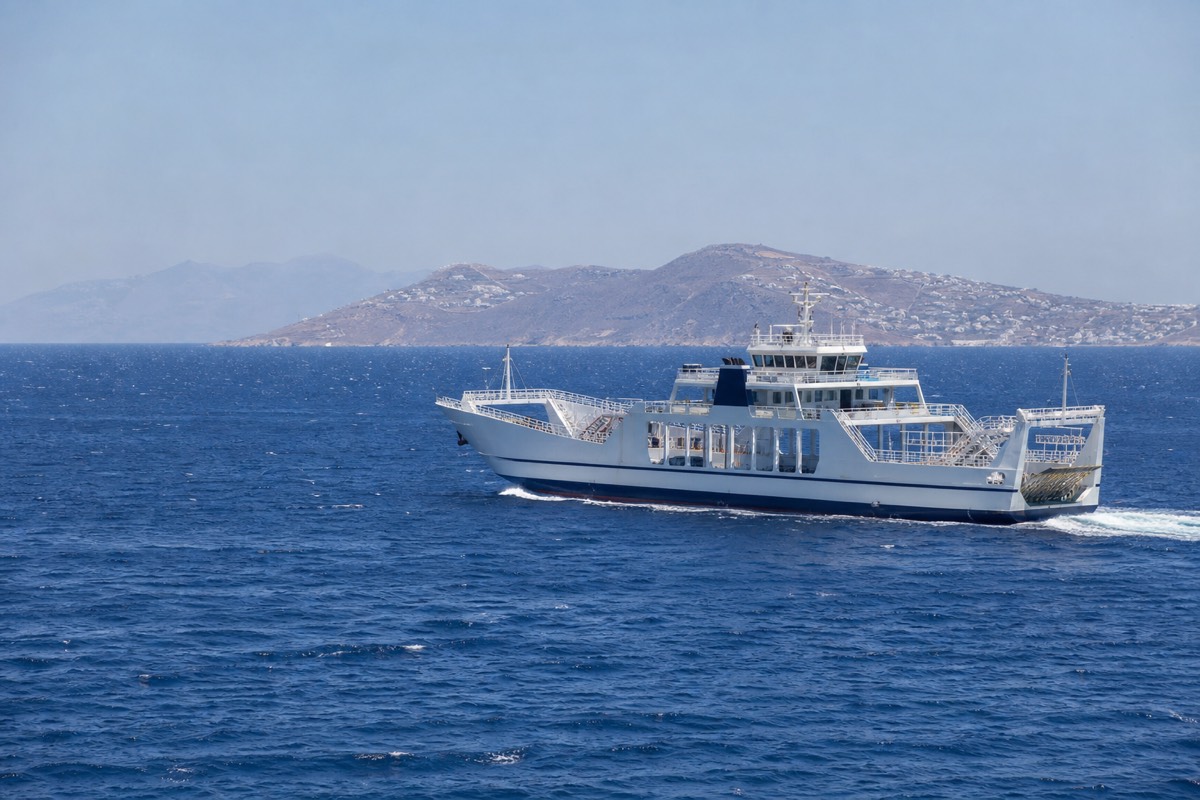
Stand on the top deck as a ferry pulls out of Piraeus and you understand why so many people choose the boat on purpose. The Athens sprawl slides away, the water goes from harbour-grey to deep Aegean blue, and a few hours later an island you only knew from photographs rises out of the sea ahead of you. Then there is the other reality: a fast catamaran packed to the rails in August, a flight that costs more than the hotel, and a small island with no runway at all. Choosing between ferry and flight in Greece is really a series of route-by-route calls, and this guide walks through how to make each one.
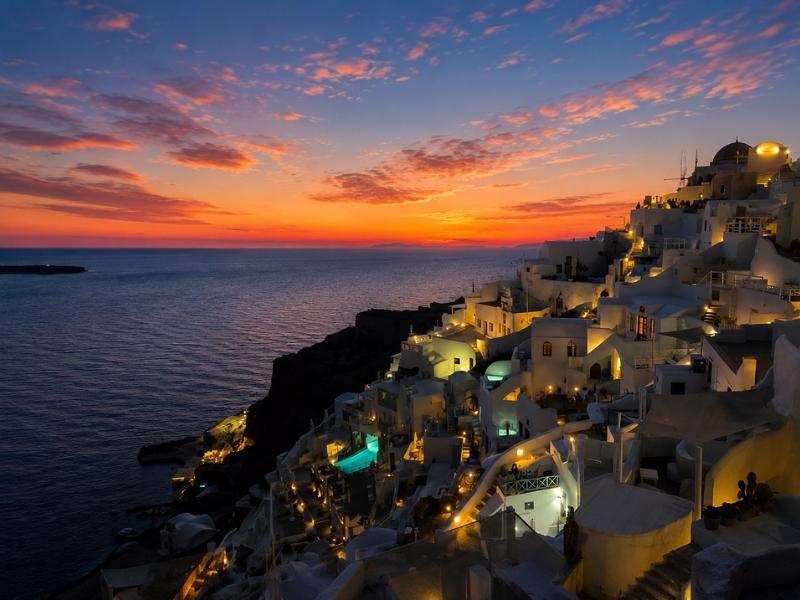
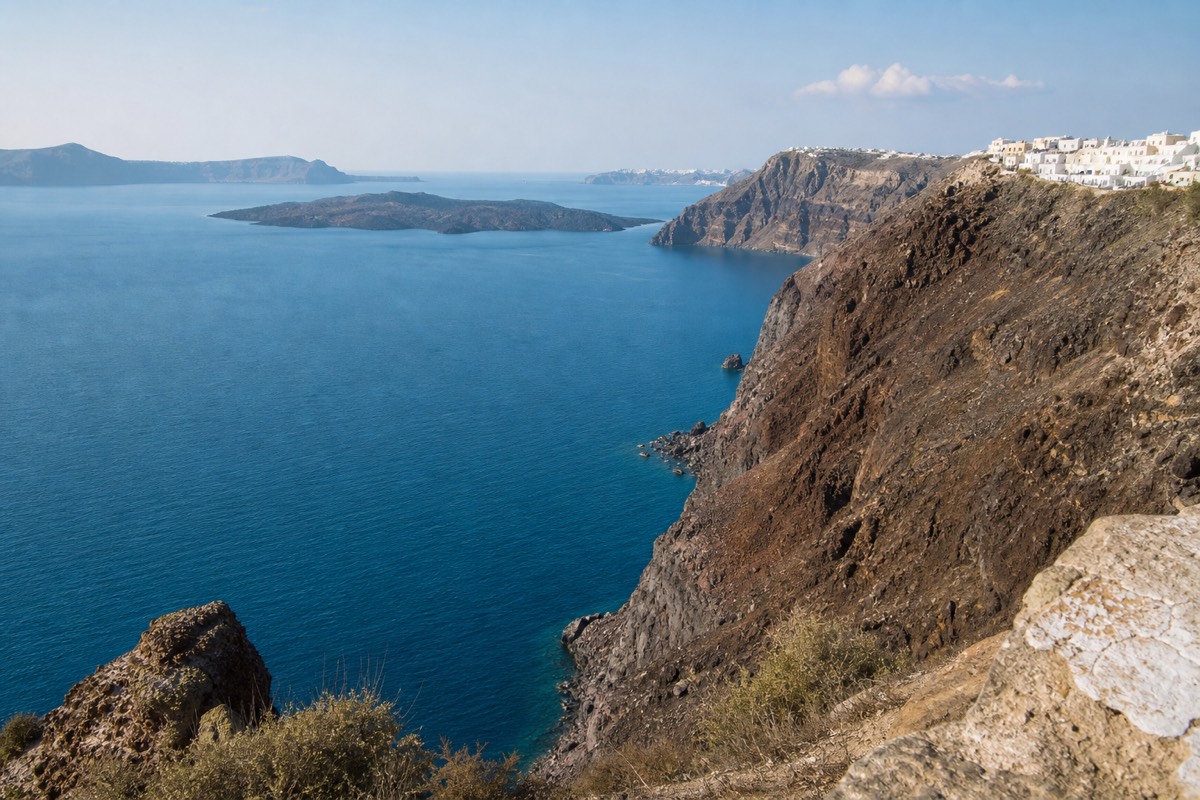
Athens to Santorini, door to door
Planning allowances for one popular leg, not fixed timetables. A flight is fastest once you add airport time at both ends, but it drops you at an airport, while the ferry sets you down right under the caldera. Always check live schedules for your exact date.
Should you take the ferry or fly between the Greek islands?
For most island-to-island travel in the Cyclades, the ferry is the better choice: cheaper, no strict luggage limit, and it drops you right in the port. Fly only when the distance is long, such as Athens to Crete or Rhodes, or when time is worth more than money. On many smaller islands there is no airport at all, so the ferry is not a preference, it is the only way there.
The comparison below sets the two side by side on the things that actually decide a leg. Read it as a starting framework rather than a verdict, because the right answer flips depending on the specific route, your budget and how much luggage you are hauling. A couple with carry-ons doing short Cyclades hops will almost always ferry; a family of five flying home from Crete on a fixed date may well fly one leg.
| Factor | Ferry | Flight |
|---|---|---|
| Journey time | Longer on the water, but no airport rituals | Short in the air, but add check-in, security and transfers |
| Cost | Usually cheaper, especially booked ahead | Can be higher, and swings hard with demand |
| Route coverage | Reaches almost every inhabited island | Only islands with airports, mostly via Athens |
| Luggage | No strict limit; carry your bags aboard | Weight limits and checked-bag fees |
| Comfort in rough weather | Big ships ride swell well; catamarans less so | Unaffected by sea state |
| Scenery | The crossing and the island approach are part of the trip | Fast, but you miss the sea entirely |
| Where it drops you | In the port, in the middle of things | At an airport, a transfer from town |
| Weather risk | Can be delayed or cancelled by strong wind | Rarely affected by the summer meltemi |
The honest headline is that neither mode wins outright. The ferry wins the short and medium Cyclades legs on cost, luggage and the sheer pleasure of arriving by sea; the flight wins the long jumps and the tight-schedule days. Most good island-hopping plans use mostly ferries with the occasional flight, and if you are still shaping the route, our advice on how to map out an island-hopping route pairs directly with this decision.
How long does each island crossing actually take?
From Athens, plan on roughly 5 hours by high-speed ferry to Santorini and about 8 by conventional ship; around 3 to 4 hours to Mykonos, Paros or Naxos by fast boat; and an overnight or long day to Crete. Flights to the big islands are under an hour in the air, but airport time and transfers eat much of that saving. Treat all of these as allowances and check the live schedule.
The routes table gives working allowances for the most-searched legs out of Athens. Greece has two main Athens-area ports: Piraeus, the giant one that serves almost everywhere, and Rafina, smaller and closer to the airport, which is handy for Mykonos, Naxos, Paros and Andros. A third port, Lavrio, serves a few islands. Which port your boat leaves from matters as much as the sailing time, because Piraeus and Rafina are on opposite sides of Athens.
| Route from Athens | High-speed ferry | Conventional ferry | Flight (in the air) | Notes |
|---|---|---|---|---|
| To Santorini | Around 5 hours | Around 8 hours | Under an hour | Busy route; fast boats sell out in peak season |
| To Mykonos | Around 2.5 to 3.5 hours | Around 5 hours | Under an hour | Rafina is often the quicker port for Mykonos |
| To Naxos | Around 3.5 to 4.5 hours | Around 5 to 6 hours | Small airport, limited flights | A natural hub for onward Cyclades hops |
| To Paros | Around 3 to 4 hours | Around 4.5 to 5.5 hours | Small airport, limited flights | Well connected to Naxos, Mykonos and Santorini |
| To Crete (Heraklion) | Daytime fast options exist | Overnight, around 9 hours | Under an hour | The classic overnight ferry saves a night's hotel |
Short island-to-island hops are where ferries really shine. Once you are out in the Cyclades, neighbours sit close together: the multi-island itineraries our operators run, for example, cross from Paros to Naxos in well under an hour and from Naxos down to Santorini in around two, times short enough that a flight would never make sense even if one existed. You can compare operators, departure times and fares for a specific date on a booking platform like Ferryhopper before you commit to a leg.
Which is cheaper, and what should you budget?
Ferries are usually the cheaper option, particularly on short and medium hops and when booked early, while flights swing widely with demand and can undercut a fast ferry on a quiet day or cost far more on a busy one. Budget the ferry as your default and price a flight only for long legs or fixed-date travel days. Fares move constantly, so use ranges, not fixed numbers, until you check live prices.
Because fares change with season, operator and how far ahead you book, the sensible way to budget is by leg type rather than by memorising a price. A short economy-seat hop between neighbouring Cyclades is the cheapest thing you will do; a peak-August fast-ferry seat to Santorini or a last-minute flight is the priciest. The table frames those as allowances to plan around, not quotes.
| Leg type | How to budget the ferry | How to budget the flight | What moves the price |
|---|---|---|---|
| Short Cyclades hop (e.g. Paros to Naxos) | Cheapest option; economy seats | Rarely available; not worth it | Distance is short, so ferry always wins |
| Medium hop (Athens to Mykonos or Paros) | Moderate; fast boats cost more than slow | Sometimes competitive on quiet days | Season, vessel type, how early you book |
| Long high-speed (Athens to Santorini) | Higher for fast boats; cheaper conventional | Can rival or beat the fast ferry off-peak | Peak demand and holiday spikes |
| Athens to Crete | Overnight ferry doubles as a night's lodging | Quick, but adds two airport transfers | Whether you value the saved hotel night |
| Any leg in peak August | Book early; cheap seats vanish first | Prices climb steeply near the date | The 15 August holiday crush |
One money-saver hides in plain sight: the overnight conventional ferry to Crete is also a bed for the night, so it quietly removes a hotel from the bill while moving you across the country. For a fuller treatment of what a multi-island trip actually costs once ferries, hotels and food are added up, see our breakdown of how much Greek island hopping costs.
Ferry types, decoded: which boat are you actually booking?
Greek ferries come in a few distinct kinds. Big conventional car ferries are slower, cheaper, steady in rough seas and carry vehicles; high-speed catamarans are faster and pricier but bounce more in wind and are cancelled first; hydrofoils serve short Saronic runs; and small local boats link neighbouring islands. Knowing which you are on tells you the speed, the price and the ride.
The single most useful thing to check when you book is not just the time but the vessel. A conventional car ferry from an operator like Blue Star Ferries is the workhorse of the network: roomy, stable, able to carry cars and motorbikes, and far less bothered by a stiff afternoon wind. A high-speed catamaran gets you there faster and is worth it on a long leg, but you pay more and feel the sea more.

| Ferry type | Speed | Ride in wind | Carries cars? | Best for |
|---|---|---|---|---|
| Conventional car ferry | Slower | Steady | Yes | Value, comfort, rough days, road trips with a car |
| High-speed catamaran | Fast | Bouncier | Some do | Saving time on long legs in calm weather |
| Hydrofoil (Flying Dolphin) | Fast | Bouncy | No | Short Saronic Gulf hops near Athens |
| Small local ferry | Varies | Varies | Sometimes | Linking close neighbouring islands |
If you are travelling with a lot of luggage, a baby, or anyone prone to seasickness, the bigger conventional ship is the kinder choice even when it is slower. You can walk around, buy a coffee, sit outside, and the extra size smooths out the swell. Fast boats keep you seated and belted more like a plane, which is fine on a calm day and less fun on a rough one.
What is boarding and life on board actually like?
Boarding is quick and a little chaotic, so reach the port around thirty to sixty minutes early, and more in peak season. Once aboard you move around freely: economy seating, air-conditioned lounges, sun decks and cafeterias are standard, overnight boats to Crete add proper cabins, and the whole crossing feels closer to a small cruise than a flight.
The rhythm of a Greek ferry surprises first-timers. Foot passengers walk straight on through the car deck, often only minutes before departure, while the crew loads vehicles and luggage in a fast, practised scramble. Basic economy class rarely has assigned seats, so people spread out across the indoor lounges and open decks and settle in for the ride. Reach the port with time to spare, keep your ticket handy, and do not expect the roped-off queues of an airport.
The ticket classes are worth understanding before you book. A basic deck or economy fare gets you a seat in a shared lounge or a spot outside, which is fine for a short daytime hop. Air-conditioned airline-style seats and business lounges cost a little more and earn it on a long leg. On the overnight run to Crete, a cabin turns the crossing into a night's sleep and quietly takes a hotel off the trip, one of the better-value moves in Greek travel.
One practical point ties the whole network together: Greek ferries are built for walk-on travel. There are no baggage weigh-ins and no drip of checked-bag fees, so you simply carry or wheel your bags aboard and stow them by the seating or on the racks near the car deck. That freedom is a large part of why island hopping by boat stays cheaper and lower-stress than a string of budget flights, where every extra bag adds a charge and a queue.
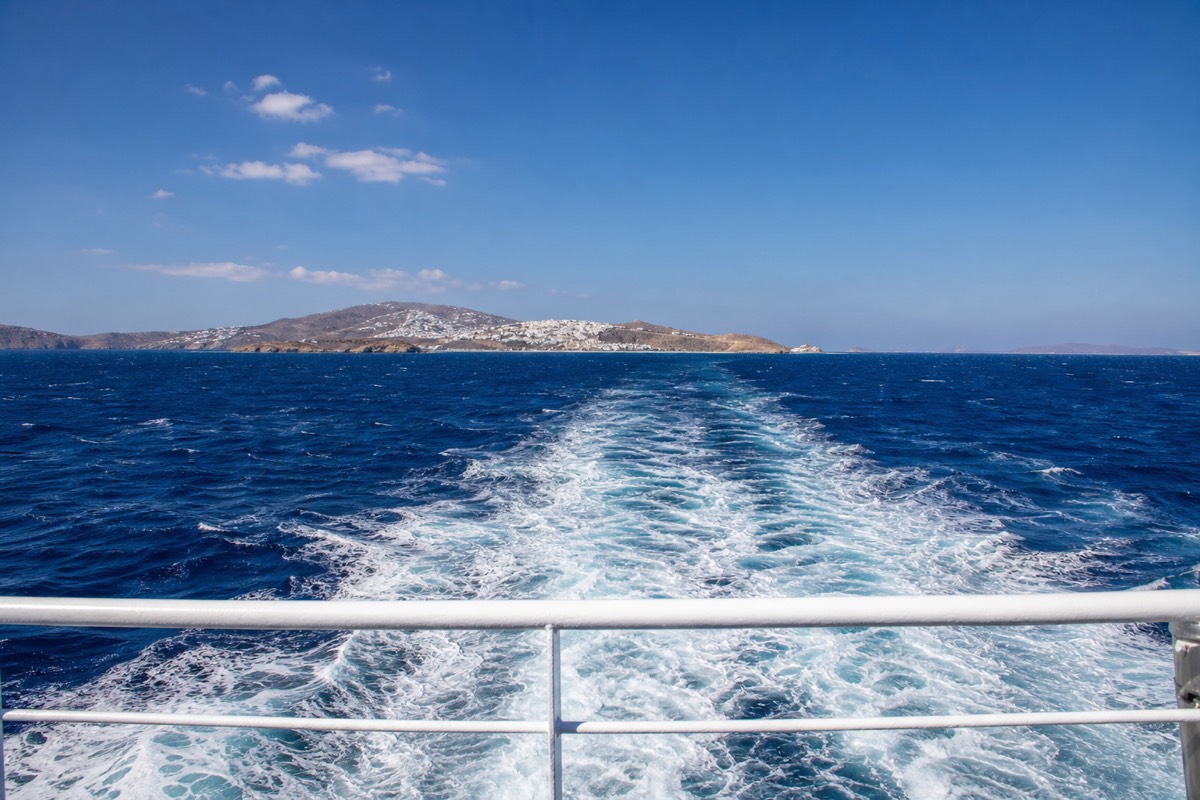
On a calm day the ride is genuinely pleasant. Bigger conventional ships carry cafeterias, bars, small shops and wide sun decks, and the best seat in the house is outside at the rail as your island lifts out of the sea. High-speed catamarans are more enclosed and plane-like, quicker but with less room to wander. Either way, ferries fill up in the same peak weeks that our guide to the best time to visit Greece marks as busiest, so a summer crossing rewards booking ahead and boarding early. And if you are still weighing which islands to string together, our guide to which Greek islands to visit sets the route before you worry about the boats between them.
Will the crossing be rough, and how do you plan around it?
Most Aegean crossings are calm, but summer brings the meltemi, a strong northerly wind that runs from around June to September and peaks in July and August. It builds through the day and eases overnight, so book morning departures on exposed routes, choose a big conventional ferry over a catamaran when wind is forecast, and keep a little schedule slack in case a sailing is cancelled.
Rough seas are the one genuine downside of ferry travel, and they are predictable enough to plan around rather than fear. The meltemi is a known summer feature of the Aegean, not a surprise storm, and it follows a daily rhythm: calmer mornings, windier afternoons and evenings. When operators do cancel, they cancel the small high-speed catamarans first, because those vessels are the most sensitive to swell.
| Factor | What happens | What to do |
|---|---|---|
| Meltemi season | Northerly wind builds July to August | Expect it, and keep plans flexible in that window |
| Time of day | Afternoons and evenings get windier | Book the earliest sensible departure |
| Boat type | Catamarans bounce and cancel first | Pick a large conventional ferry when wind is up |
| If you get seasick | Symptoms worsen on rough, fast boats | Sit low and central, look at the horizon, medicate early |
| A cancelled sailing | Can break a tight connection | Leave a buffer day before any fixed flight home |
None of this should scare anyone off the ferry, which is how the vast majority of island travel happens all summer without incident. It simply argues for a morning-first, big-boat-when-windy approach, and for not stacking a rough afternoon crossing right before a non-refundable flight. That buffer thinking is exactly what a well-built itinerary bakes in for you.
Which islands have airports, and when is flying worth it?
Fly when the leg is long or the clock is tight, and only where an airport exists. Santorini, Mykonos, Crete and Rhodes have real airports with frequent flights; Naxos and Paros have small ones with limited service; and many islands have none. Because most flights route through Athens rather than island to island, flying suits the start and end of a trip more than the hops in the middle.
The airport map is the quiet constraint that shapes a lot of Greek itineraries. You can fly into Santorini or Mykonos to start a trip and fly out of Crete at the end, but you generally cannot island-hop by plane the way you can by boat, because direct inter-island flights are few and most connections go back through Athens. That is why the ferry network, not the airline map, is what makes a multi-island Cyclades route possible at all.
| Island | Airport? | Direct island-to-island flights? | When flying makes sense |
|---|---|---|---|
| Santorini | Yes, sizeable | Few; mostly via Athens | Starting or ending a trip here |
| Mykonos | Yes, sizeable | Few; mostly via Athens | Arriving from abroad or from Athens |
| Crete (Heraklion, Chania) | Yes, major | Some seasonal links | Long jump; skip the overnight ferry |
| Rhodes | Yes, major | Some seasonal links | Far southeast; ferries are very long |
| Naxos | Small | Rare | Rarely; the ferry is usually better |
| Paros | Small | Rare | Rarely; the ferry is usually better |
| Smaller Cyclades (e.g. Milos) | Limited or none | No | Ferry only on most routes |
For distant islands the calculus changes. Rhodes and Crete sit so far from Athens that a flight genuinely saves the better part of a day, and there the plane earns its cost. Within the tight cluster of the central Cyclades, though, the boats are close, frequent and cheap enough that flying rarely pays. If Santorini is your anchor island, our note on how many days to spend in Santorini helps you decide how long to build in before the next crossing.
How do you plan and book so you never miss a connection?
Book peak-season ferries in advance, leave a buffer before any fixed flight home, and mind which port you sail from, since Piraeus and Rafina are on opposite sides of Athens. Check live schedules close to your date, keep your onward tickets flexible where you can, and if the logistics feel heavy, let a package pre-book every leg and time the transfers for you.
The connections are where island hopping goes right or wrong. A single sold-out sailing or a missed transfer can topple the rest of a tight plan, so the safest itineraries build in slack: a spare morning before a flight, a night in Athens rather than a same-day dash from an island to the airport. The official Greek tourism site is a neutral place to check ports and lines, and in peak season it pays to reserve early, as our guide to why you should book your ferry tickets in advance explains.
| Situation | The risk | The buffer to leave |
|---|---|---|
| Ferry then same-day flight home | A delayed boat misses the plane | Overnight in Athens before flying |
| Tight island-to-island transfer | Short gap between arrival and next sailing | Give yourself a couple of hours at minimum |
| Peak-August travel | Popular sailings sell out | Book weeks, not days, ahead |
| Wrong Athens port | Piraeus and Rafina are far apart | Confirm your port before booking transport |
| Luggage on a fast boat | Limited space, quick turnarounds | Board early and keep bags with you |
This is the part travellers most often hand off, and for good reason. A multi-day package pre-books the ferries and any flights, syncs the transfers so a late boat does not strand you, and turns a folder of separate tickets into one plan, which is why the guided and self-guided trips at Greece Tour Packages exist. A structured route like a 15-day self-guided journey across four islands or a 9-day Paros, Naxos and Santorini loop keeps the freedom to roam each island while taking the connection anxiety off your plate. If you would rather cost it all first, our look at how much a Greece trip costs and our advice on how many days you need in Greece round out the plan.