How Many Days Do You Need in Greece?
The number that decides everything else about a Greece trip is how many days you have. It sets how many islands are realistic, whether the mainland fits, and how rushed the whole thing feels. Here is what each length actually buys you, and the trip lengths that consistently work.
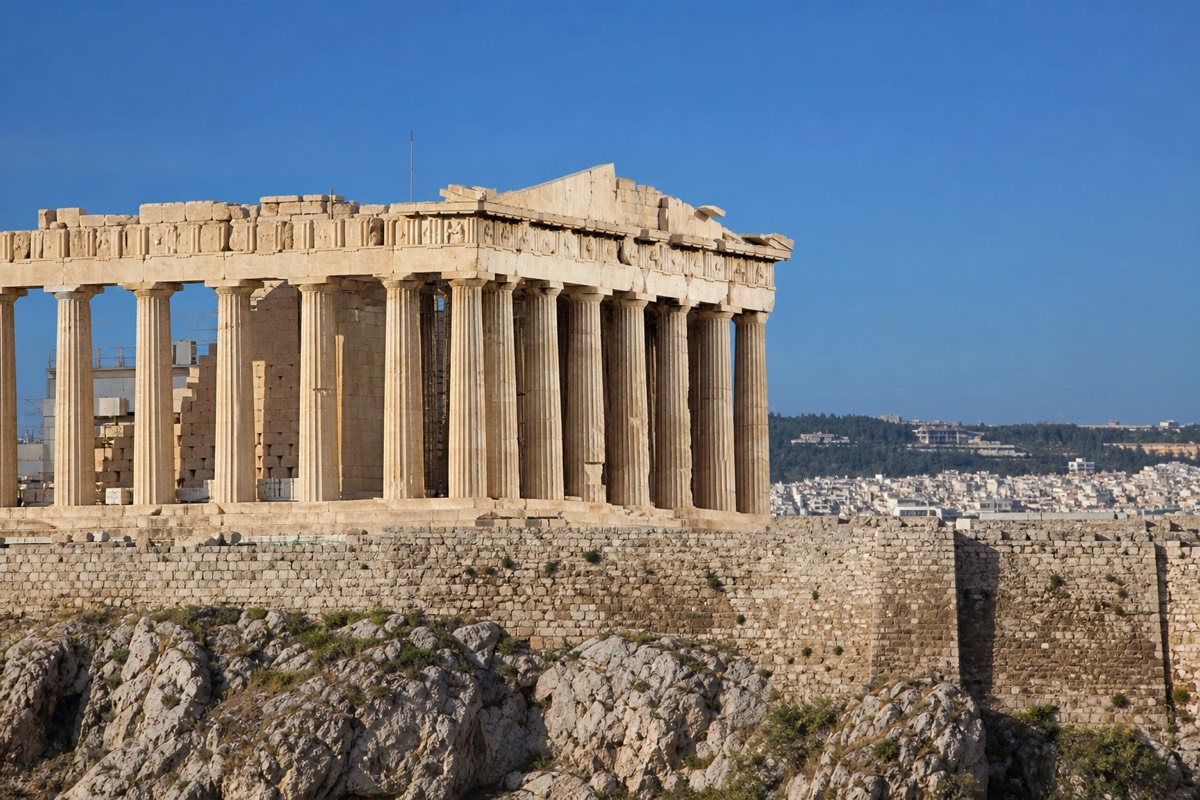
Almost every planning question about Greece traces back to one number. How many islands can you see, whether the mainland ancient sites fit, how many nights Santorini deserves, all of it is really a question about days. Get the length right and the trip has room to breathe. Get it wrong and you spend the whole holiday a step behind the schedule, arriving at the Acropolis at 11am on your only Athens morning and rushing to the ferry by lunch.
The country punishes over-ambition more than most destinations, because so much of the map is separated by water. A ferry is not a taxi across town; it is a half-day commitment. That single fact reshapes the whole calculation, since the islands you can reach on paper are always more than the islands you can enjoy. Work out your days honestly and the rest of the plan, the islands, the pace, the ferries, falls into place around it.
How many days do you need in Greece?
Seven to ten days is the sweet spot for a first trip: two or three nights in Athens plus two islands, with ten days allowing a third island or a slower pace. Five to six days is the workable minimum for Athens and one island, and twelve to fifteen days is what you need to combine the mainland ancient sites with the islands, or to add Crete.
The reason those ranges hold is that Greece splits into two experiences, the mainland and the islands, and each has a natural minimum. Athens wants two days, more if you care about the museums. A single island wants two to three nights to be worth the ferry. String those together and the arithmetic sets the floor: one island trips start around five or six days, two-island trips around seven, and anything with the mainland circuit or a third island wants ten or more. The itineraries at Greece Tour Packages are grouped by length for exactly this reason.
What fits in each trip length?
Five to six days covers Athens and one island. Seven days adds a second island. Nine or ten days is comfortable for Athens plus two or three islands. Twelve days lets you swap in the mainland classical circuit or reach a fourth island, and fourteen or fifteen days is the full trip, islands plus Crete or the ancient sites, without rushing.
The table below is the master map. Read it as what each length buys you, not as a set of rules, because pace and travel style shift the edges. The example column is the most common shape travellers actually book at each length.
| Days | What fits | Example | Best for |
|---|---|---|---|
| 5 to 6 | Athens + 1 island | Athens + Santorini | A short break or taster |
| 7 | Athens + 2 islands | Athens + Mykonos + Santorini | The popular minimum |
| 9 to 10 | Athens + 2 to 3 islands | Athens + Paros, Naxos, Santorini | The comfortable sweet spot |
| 12 | Mainland circuit + Santorini, or 3 islands | Athens + Peloponnese + Santorini | History plus islands |
| 14 to 15 | Athens + 3 to 4 islands, or add Crete | Athens + four islands | The full trip, unrushed |
Each of the popular lengths has a fuller day-by-day breakdown of its own. The seven-day Greece itinerary maps the classic two-island week, and the eight-day itinerary covers the length just above it. The ten-day and two-week versions get their own detailed treatment further down, in the sections on the sweet spot and the full trip.
Is five or six days enough for Greece?
Five or six days is enough for Athens and one island, and no more. It is the right length for a long-weekend-plus trip or an add-on to travel elsewhere in Europe. Give Athens two nights and Santorini three, and you have a complete, if compact, first taste of the country. Trying to squeeze in a second island at this length turns the trip into transit.
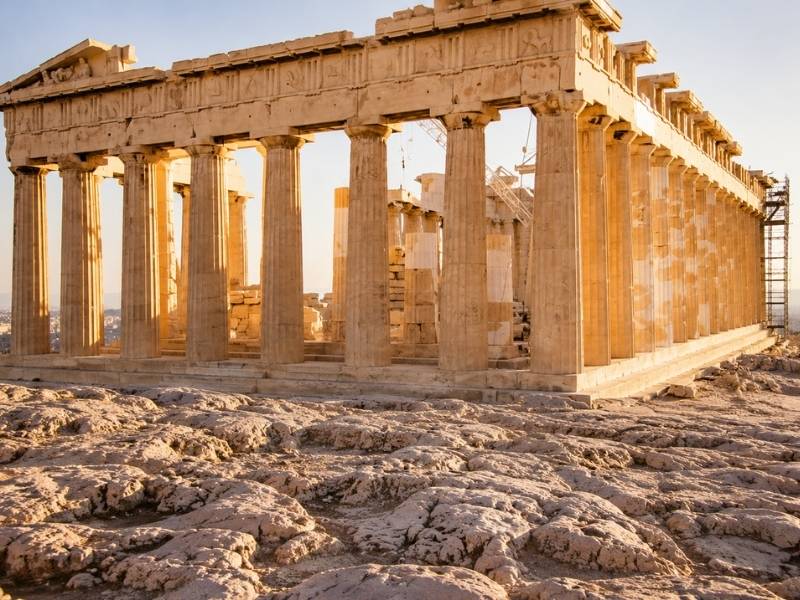
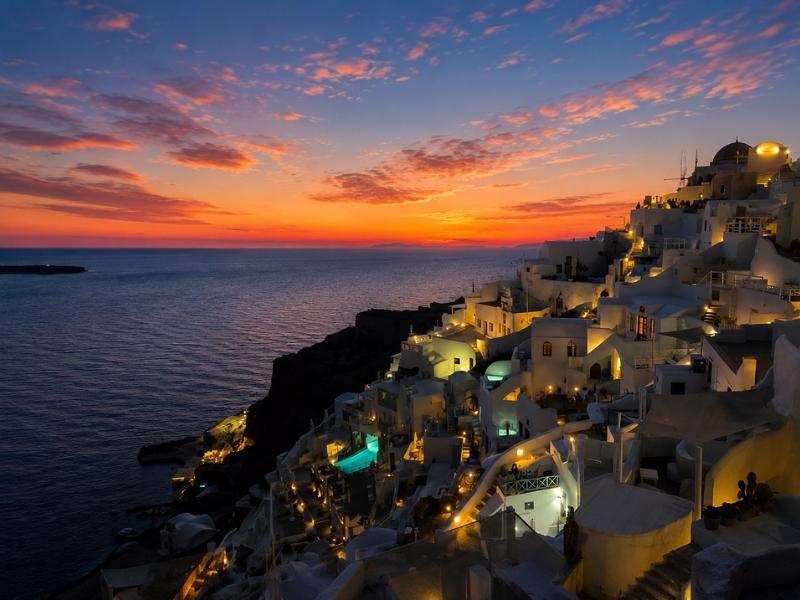
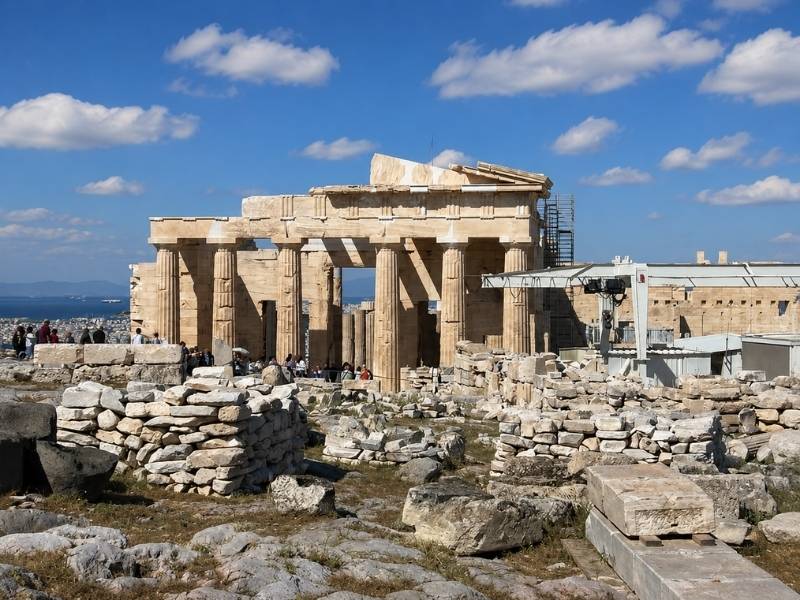
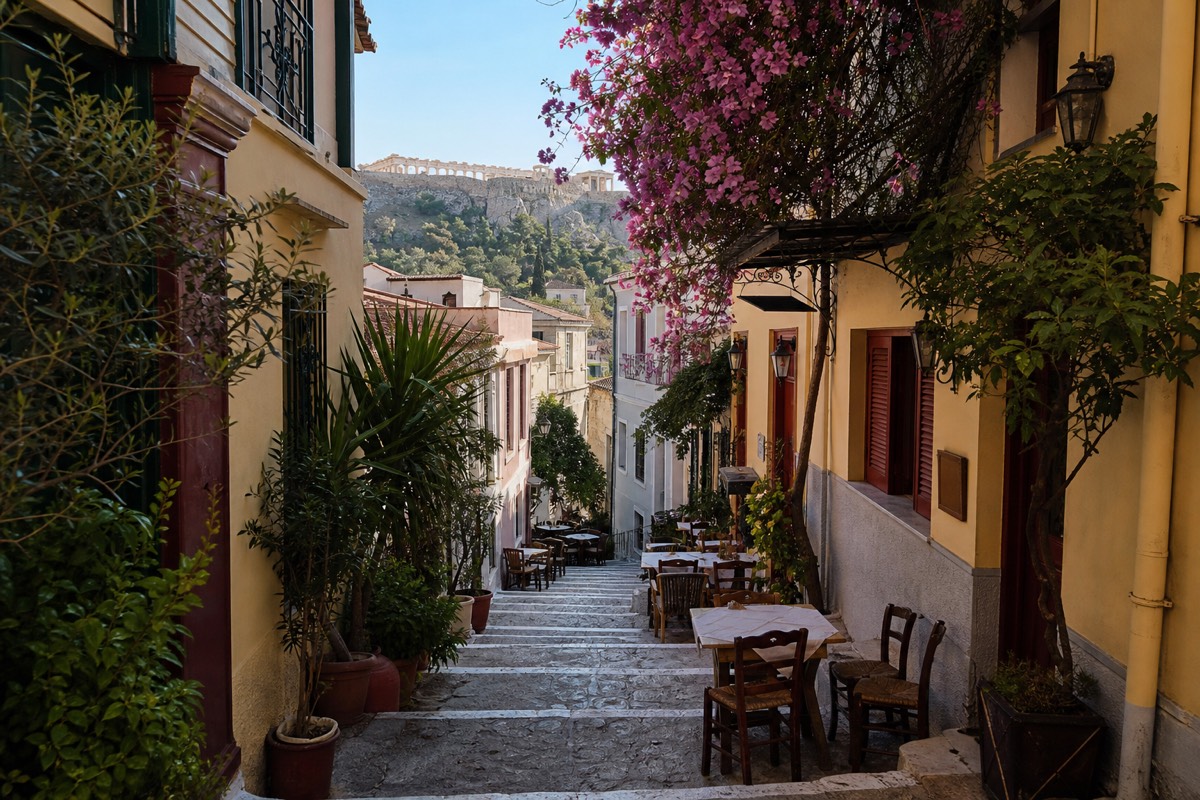
The short trip works best when you resist the urge to add. Athens and Santorini is the natural pairing, since Santorini is the island most people most want to see, and a domestic flight rather than a long ferry keeps the transfer quick. Two nights in the capital covers the Acropolis and the Acropolis Museum, and three on Santorini covers the sunset, a beach and the caldera boat trip.
The compact package built for this length is the six-day Athens, Mykonos and Santorini tour, which manages to fit two islands into six days precisely because the hotels, transfers and ferries are pre-arranged to remove the dead time. On your own, six days is usually one island; with the logistics handled, it stretches to two.
Is seven days the right length for a first trip?
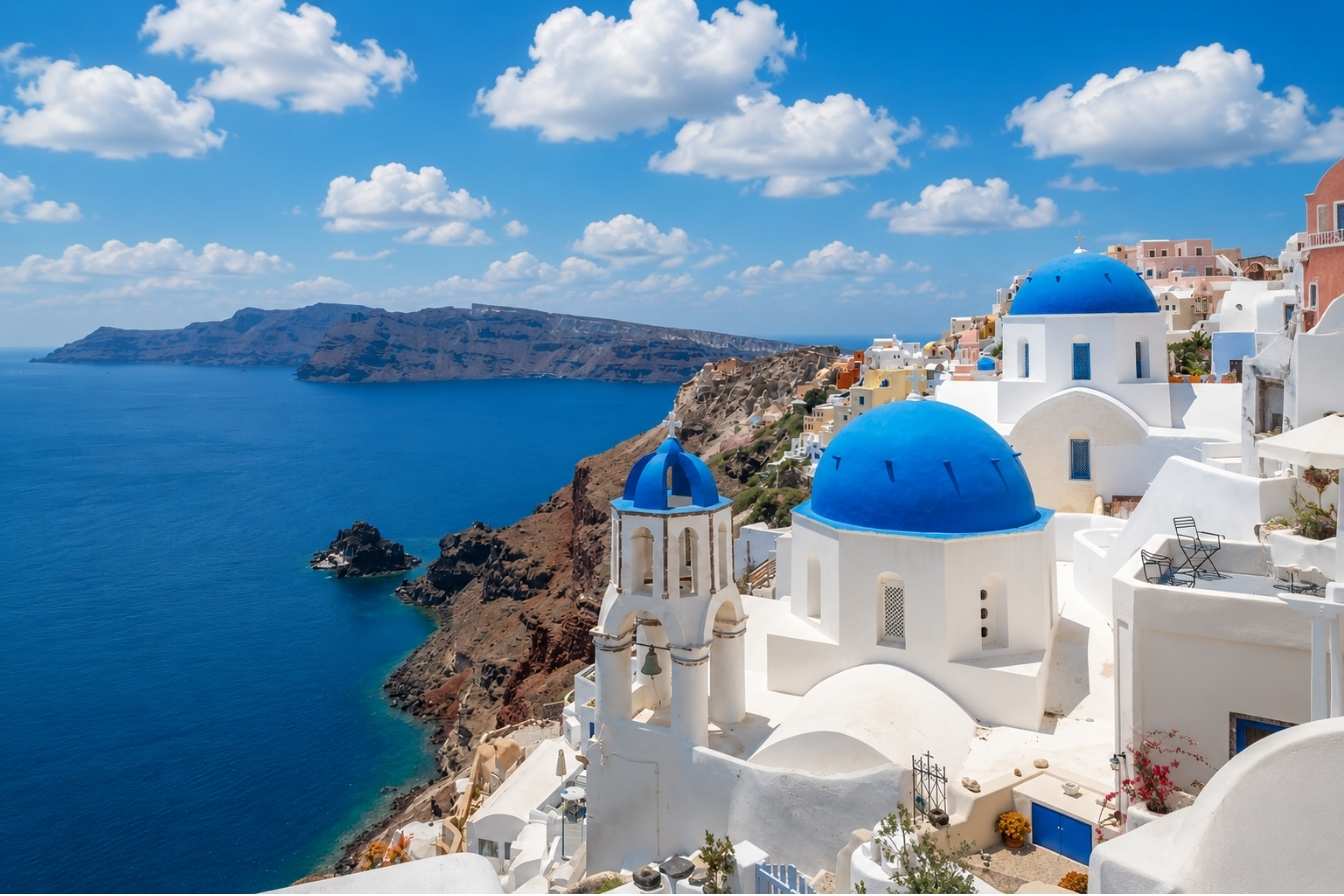
Seven days is the most popular Greece trip length, and for good reason. It fits two nights in Athens and then the two headline islands, Mykonos and Santorini, at a pace that is busy but not breathless. It is the shortest trip that captures both the ancient-capital side of Greece and the island side without cutting either to the bone.
The seven-day shape is so common that the packages are practically designed around it. Two nights in Athens, two to three on Mykonos, three on Santorini, with a ferry linking the islands. What seven days will not stretch to is a third island or the mainland classical sites; attempt either and something has to give, usually Athens, which is exactly the corner most first-time visitors wrongly cut.

The temptation at a week is to swap in a bigger loop, three islands instead of two, and it rarely pays off. A third island on a seven-day trip means an extra ferry day, which eats the very time you were trying to add. If you find yourself wanting three islands, the honest fix is not to cram them into seven days but to give the trip nine or ten. Seven days is a genuinely good length; it just has a firm ceiling.
If you want your days entirely free rather than lightly guided, a seven-day self-guided package hands you pre-booked hotels and ferries across Athens, Mykonos and Santorini from around $1,139 per person, check the live listing for your dates. For the deeper Santorini-versus-Mykonos decision underneath this route, see our guide on choosing between Santorini and Mykonos.
Why is ten days the comfortable sweet spot?
Ten days is where a Greece trip stops feeling rushed. It gives Athens its full two or three nights and still leaves room for two or three islands, or for adding a mainland day, all at a pace that includes actual beach and rest time. If you can take ten days rather than seven, the trip changes from a highlights reel into a holiday.
The extra three days over a week do more than their number suggests, because they absorb the ferry half-days instead of stealing them from sightseeing. Ten days comfortably covers Athens plus a three-island Cyclades line, or Athens plus Mykonos and Santorini with a genuinely relaxed pace and a spare day for weather or a lazy morning. It is the length the operators we work with quietly recommend most.
What ten days really buys is margin. A cancelled fast ferry, a slow morning, an extra afternoon somewhere you did not expect to love, none of these derail the trip when there is slack in the schedule. The same events on a seven-day plan cascade into a missed connection or a skipped sight. If you are choosing between seven and ten days and can find the time, the extra three are the best value in the whole trip.
Two packages sit right here. The nine-day Paros, Naxos and Santorini route is the three-island hopping version, and the ten-day semi-private tour with three guided days adds structure to the Mykonos-and-Santorini pairing without filling every hour. The full day-by-day sits in our ten-day Greece itinerary.
What can you add with twelve to fifteen days?
Twelve to fifteen days is the full trip. It lets you combine the mainland classical circuit, Delphi, Meteora and the Peloponnese, with the islands, or reach a fourth island, or fold in Crete as its own chapter. This is the length for travellers who want depth rather than highlights, and who would rather see fewer places properly than more places briefly.
Two weeks opens up the parts of Greece a one-week trip has to skip. The ancient mainland is the big unlock: the monasteries perched on the rock pillars of Meteora, the sanctuary at Delphi on the slopes of Mount Parnassus, and the Bronze Age citadels of the Peloponnese. Alternatively you spend the same days going deeper on the islands, adding Crete with its Minoan palaces and mountain gorges to a Cyclades route.
The packages at this length show both directions. The fifteen-day self-guided route across four islands runs Athens, Syros, Mykonos, Santorini and Crete, while a grand mainland-and-islands tour weaves the Peloponnese and the northern mainland together with Santorini. For the day-by-day of the island-focused version, see the two-week Greece itinerary.
How do the trip lengths map to a package?
The packages sort cleanly by length, which is the fastest shortcut through the whole decision. Six and seven days cover Athens and two islands, nine and ten days add a third island or guided structure, and fifteen days reaches four islands including Crete. Fix your available days first, and the shortlist of packages that fit becomes short quickly.
Because the packages already respect the arithmetic in this guide, matching your dates to one is often quicker than assembling a trip from scratch. The table below lines up the common lengths against the package built for them, what each covers, and the style it runs in.
| Days | Package | What it covers | Style |
|---|---|---|---|
| 6 | Athens, Mykonos & Santorini | 2 islands | Guided sightseeing |
| 7 | Self-Guided Athens + Mykonos & Santorini | 2 islands, free days | Self-guided |
| 9 | 9-Day Island Hopping | 3 islands: Paros, Naxos, Santorini | Self-guided hopping |
| 10 | Semi-Private with 3 guided tours | 2 islands, guided plus free time | Semi-private |
| 15 | 15-Day Best of Greece | 4 islands including Crete | Self-guided |
The spread of styles at each length matters as much as the number of islands. A seven-day trip can be lightly guided or entirely self-guided, and a ten-day trip can lean toward free beach days or toward guided sightseeing. The style you pick changes the feel of the days far more than a single night here or there, so weigh it alongside the raw length.
What is the least time you need for what you want to see?
Work backward from what you most want to see. Athens plus one island needs five or six days, the classic Athens, Santorini and Mykonos trip needs seven, a three-island Cyclades hop needs nine or ten, adding the mainland ancient sites pushes it to ten or twelve, and folding in Crete wants twelve to fifteen. Each ambition has a floor below which the trip becomes transit.
These are minimums, not targets, and the honest advice is to add a day or two of slack to any of them. The table below is the quick lookup from what you want to the least time it realistically takes.
| What you want to see | Minimum days |
|---|---|
| Athens plus one island | 5 to 6 |
| Athens, Santorini and Mykonos | 7 |
| A three-island Cyclades hop | 9 to 10 |
| Mainland ancient sites plus islands | 10 to 12 |
| Crete added to the islands | 12 to 15 |
If island hopping is the part you care about most, the guide to planning an island-hopping route shows how each extra island stretches the calendar, and it pairs with the nights-per-island floor in the next section.
How many days should you give each place?
Give Athens two nights, three if you can, Santorini three, Mykonos two to three, and each smaller Cyclades island about two. Add one buffer night somewhere for the day a ferry or the weather steals. Build your total from these minimums rather than from a round number, and the trip will not feel rushed.
Planning by place rather than by a headline number is what separates a smooth trip from a frantic one. The single most common mistake, flagged on the homepage and echoed by every operator, is one night in Athens: arriving, seeing the Acropolis in a hot rushed morning, and leaving before the city becomes legible. The table below is the floor for each of the core stops.
| Place | Nights | Why |
|---|---|---|
| Athens | 2 (3 is better) | Acropolis, the museum and Plaka, not one rushed morning |
| Santorini | 3 | The sunset, a beach and the caldera boat trip |
| Mykonos | 2 to 3 | The town and a couple of beaches |
| Paros or Naxos | 2 each | A harbour, a beach and a village |
| Crete | 3 to 4 | It is a large island with real distances |
| Buffer | +1 | A day lost to ferries or weather |
The Santorini figure is worth holding to, since it is the island people most often shortchange and most regret rushing. The blog on how many days to spend in Santorini makes the case in detail. Whichever islands you choose, our guide to choosing which islands to visit pairs naturally with this one.
How does trip length change with travel style?
Add days for a slower pace. Families with young children do better with fewer transfers and more beach time, so they want nine to twelve days for a trip a couple could do in seven. First-timers should add a buffer for jet lag and the learning curve, while repeat visitors can go shorter and deeper on one region. Ferry days always cost more time than the timetable suggests.
The same islands take different amounts of time depending on who is travelling. A couple can move quickly; a family with a toddler cannot, and should not try. The table below adjusts the recommended length by traveller, and the reasoning behind each is the same: the more transfers you build in, the more the trip needs slack to stay enjoyable.
| Traveller | Recommended length | Why |
|---|---|---|
| First-timers | 8 to 10 days | Time for Athens plus two islands without rushing |
| Families | 9 to 12 days | A slower pace and fewer transfers |
| Couples and honeymooners | 7 to 10 days | Athens, Santorini and one more |
| History-focused | 10 to 12 days | Room to add the mainland classical circuit |
| Repeat visitors | 5 to 7 days | One region, explored deeper |
The hidden cost in every plan is how much of the calendar disappears into travel. The table below is the honest accounting most itineraries skip, and it is why the number of islands you can enjoy is always fewer than the number you could technically reach.
| Travel event | Time it costs |
|---|---|
| Arrival day | Half to a full day, with jet lag |
| Each ferry hop | Around half a day, port to check-in |
| Athens to an island by flight | Around half a day with transfers |
| Departure day | Usually a write-off |
Subtract those from your calendar and what is left is your real sightseeing time. It is the clearest argument for the pace this whole guide keeps returning to: fewer places, more nights each. Families in particular do better with extra slack and fewer transfers, and the season you travel in nudges the numbers as well. If you are still deciding whether to book a set package or assemble the days yourself, the blog on whether a Greece package is worth it weighs the trade-off.