Two Weeks in Greece: The 14-Day Itinerary
Two weeks is the length that changes what a Greece trip can be. Instead of Athens and two islands, you can add a whole second region, four islands and Crete, or the Cyclades plus the mainland's ancient heart. It is the difference between seeing the highlights and actually living in the country for a fortnight. Here is how to spend the fourteen days.
What does a two-week Greece itinerary look like?
Two weeks lets you add a second region to the standard Athens and Cyclades route. The most rewarding shape is Athens, three Cyclades islands, and Crete, with a fifty-minute flight home from Heraklion. History-leaning travellers can swap the island-heavy back half for the mainland classical circuit of Delphi, Olympia and Meteora.
Fourteen days finally gives Greece room to breathe. You are no longer choosing between the islands and the ancient mainland, or between Santorini and Crete; you can have a real slice of both. The island-and-Crete route below mirrors the fifteen-day self-guided Best of Greece package, which strings Athens, the Cyclades and Crete together with a domestic flight built in. Those who lean toward antiquity should look instead at the Grand Tour of Greece across the Peloponnese and northern Greece.
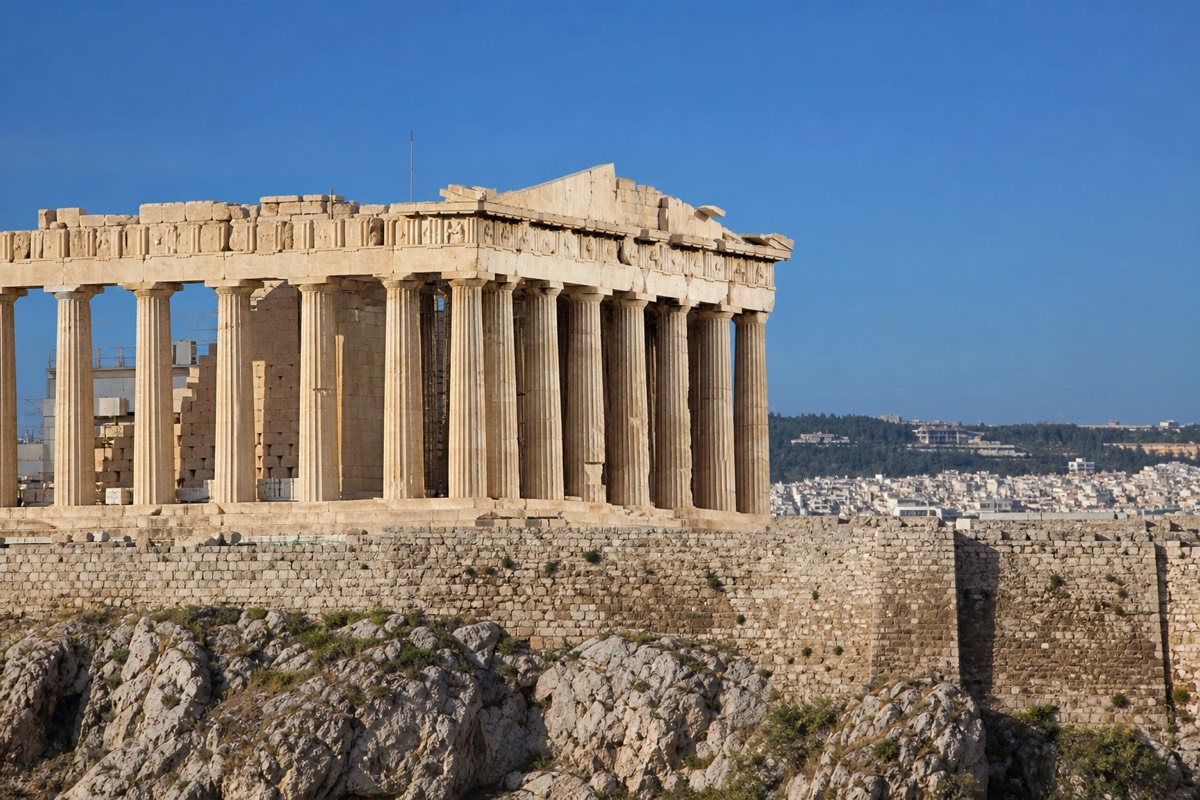
| Day | Base | The plan |
|---|---|---|
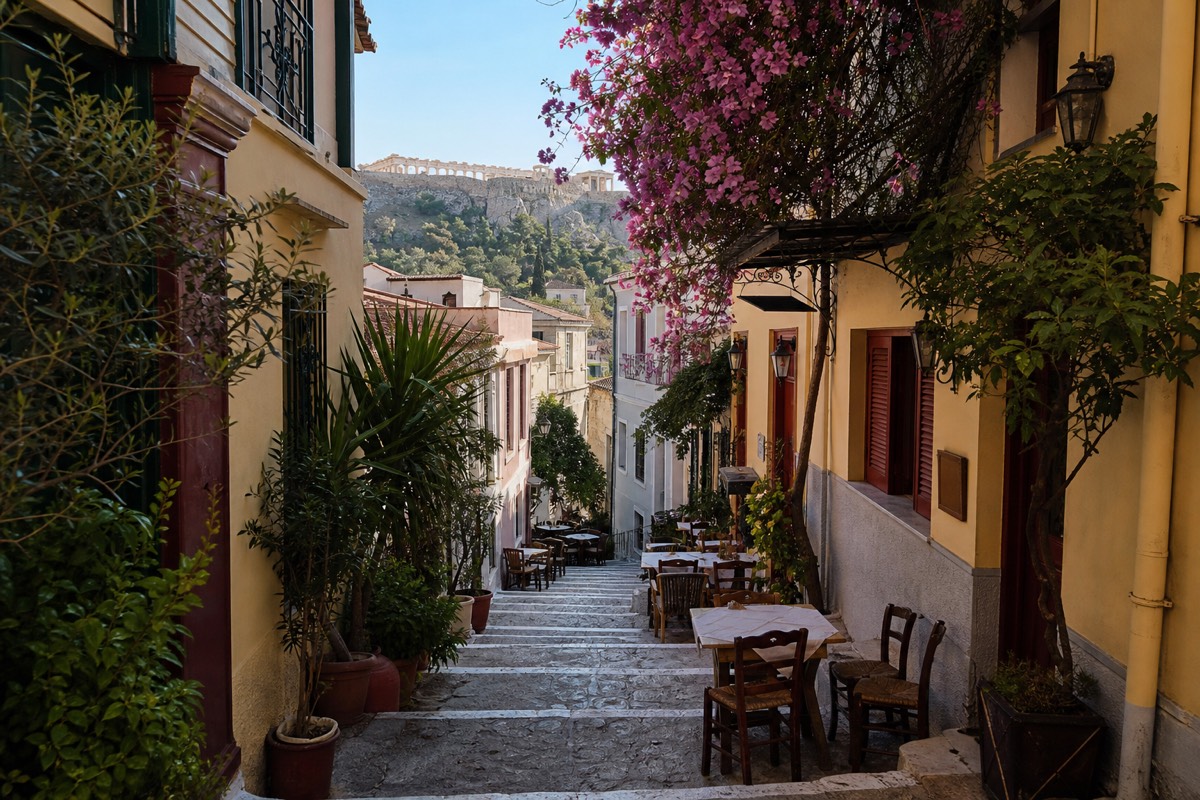
| 1 | Athens | Arrive, transfer in, evening in Plaka. |
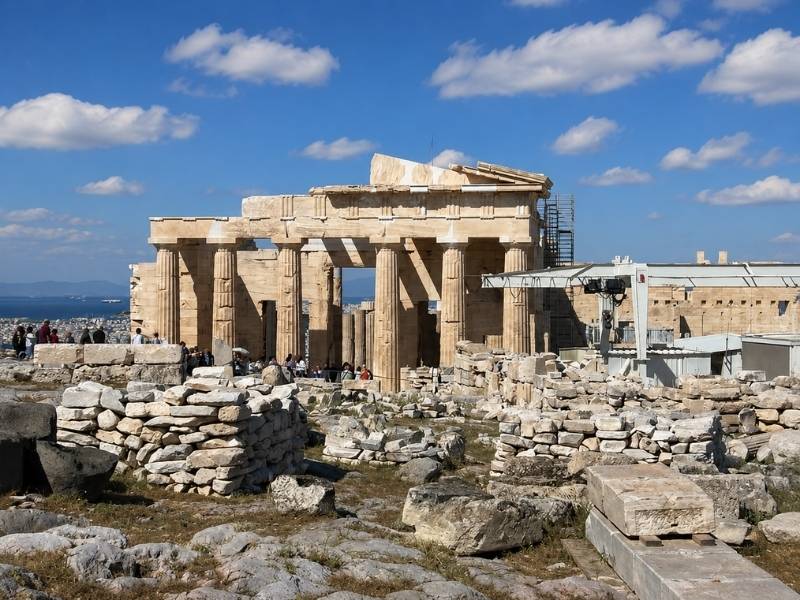
| 2 | Athens | Acropolis at opening, the Acropolis Museum, the Agora. |
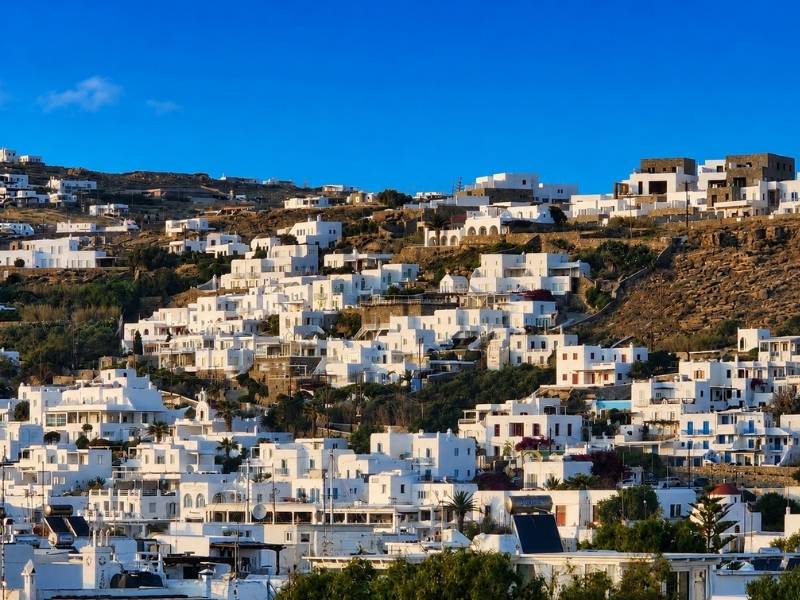
| 3 | Mykonos | Ferry out, settle, Chora and the windmills. |
| 4 | Mykonos | Beaches, or a boat to the ruins on Delos. |
| 5 | Naxos | Short ferry across, the Portara gateway and the old kastro. |
| 6 | Naxos | Mountain villages of Apeiranthos and Filoti, then a west-coast beach. |
| 7 | Santorini | Ferry south, first Oia sunset. |
| 8 | Santorini | Caldera boat trip to Nea Kameni and the hot springs. |
| 9 | Santorini | Akrotiri, a winery, a black-sand beach, a slow last day. |
| 10 | Crete | Ferry to Heraklion, settle on the north coast. |
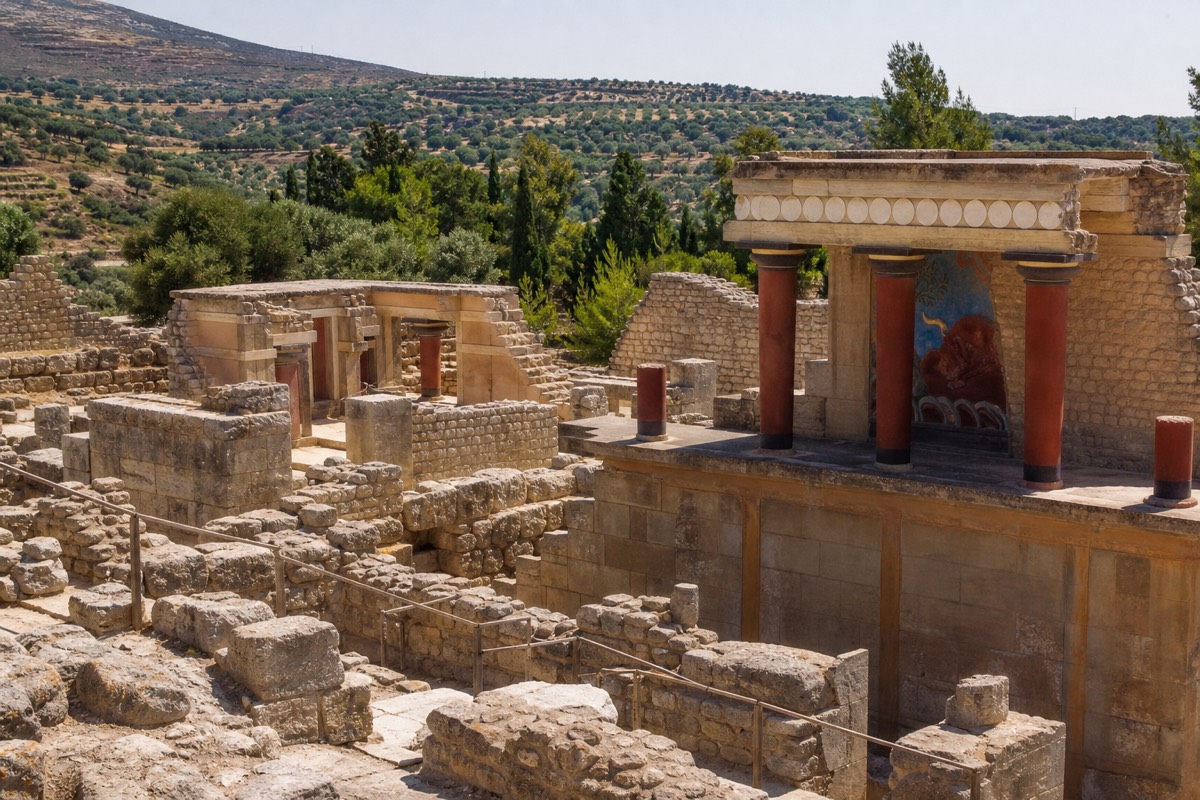
| 11 | Crete | The Minoan palace of Knossos and the Heraklion museum. |
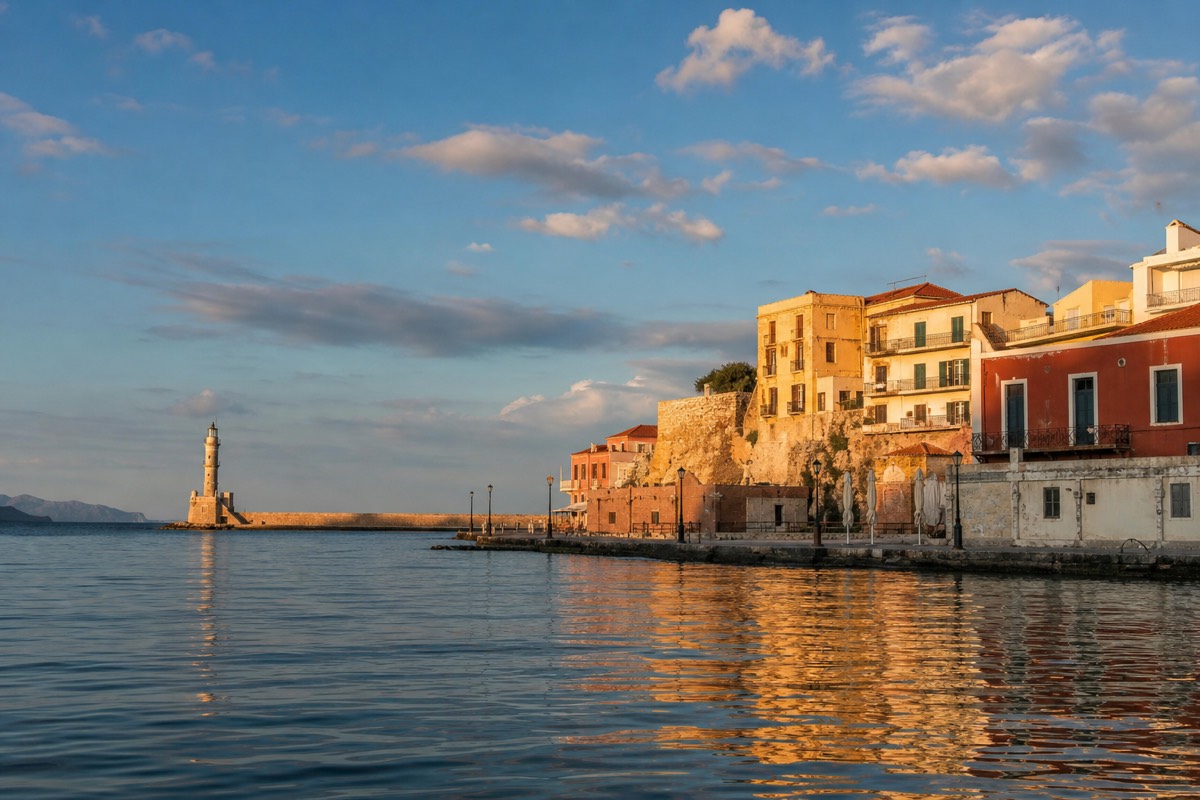
| 12 | Crete | Chania's Venetian harbour, or the Samaria Gorge for the fit. |
| 13 | Athens | Fifty-minute flight from Heraklion, last evening in the city. |
| 14 | Depart | Transfer to the airport for the flight home. |
Two weeks also means you never have to make a two-night stop feel like transit. Every island here gets two or three nights, and Crete gets three or more because it is really a country-sized island. If you want the same relaxed island rhythm without Crete, the eleven-day semi-guided island-hopping tour spreads four Cyclades islands across a fortnight-lite pace.
The islands on this route are chosen for range, not repetition. Naxos, the largest of the Cyclades, grows its own food and wine and has the highest mountain in the island group, so a couple of nights there feels like a different country from Santorini's cliff villages. Swap it for Syros and you get Ermoupoli, the neoclassical capital of the Cyclades, with marble squares and grand 19th-century mansions that look nothing like the usual cubist white houses. Two weeks is what lets you collect contrasts like these rather than variations on one theme.
If antiquity pulls harder than beaches, keep the front of the trip in Athens and the Cyclades and give the back half to the mainland classical loop instead of Crete. The rhythm is the same, two regions across fourteen days, but the second region becomes Delphi, Olympia and the monasteries of Meteora rather than a fifth island. Either way the trip stays two-paced and unhurried, which is the whole reason to take two weeks in the first place.
What can 14 days add that a week or ten days can't?
A fortnight buys a second region and a slower pulse. A week manages Athens and two islands; ten days stretches to three islands or a guided layer; but only two weeks fits Crete, or the full mainland classical circuit, on top of the Cyclades, with three-night island stops instead of rushed overnights.
The jump from ten days to fourteen is not just more of the same. It is a change in kind, because you finally have the four or five spare nights that a whole extra region demands. That is what lets you reach the Minoan ruins on Crete or the oracle at Delphi without robbing the islands. If you are still deciding between lengths, our ten-day itinerary and seven-day itinerary show exactly where the shorter trips have to compromise.
The other thing a fortnight buys is recovery time. A two-week trip can absorb a slow morning, a rained-off afternoon, or a day given entirely to a single beach without the whole schedule tipping over. On a week that slack does not exist, which is why shorter trips feel busy even when the route is sensible. Fourteen nights is the first length where you can build in deliberately empty days and still see everything you came for.
| Trip length | Regions | Islands | Pace |
|---|---|---|---|
| 7 days | Athens plus the Cyclades | Two, brisk | Tight, one region only |
| 10 days | Athens plus the Cyclades | Two or three | Comfortable, one region |
| 14 days | Athens, the Cyclades, plus Crete or the mainland | Three to four, plus Crete | Relaxed, two regions |
Crete or the Peloponnese: which second region?
Choose Crete for a fifth island of Minoan palaces, Venetian harbours and gorge hikes reached by a short ferry or flight. Choose the Peloponnese and the mainland classical circuit for Delphi, Olympia, Mycenae and the clifftop monasteries of Meteora by coach. Beach and food travellers lean Crete; ancient-history travellers lean mainland.
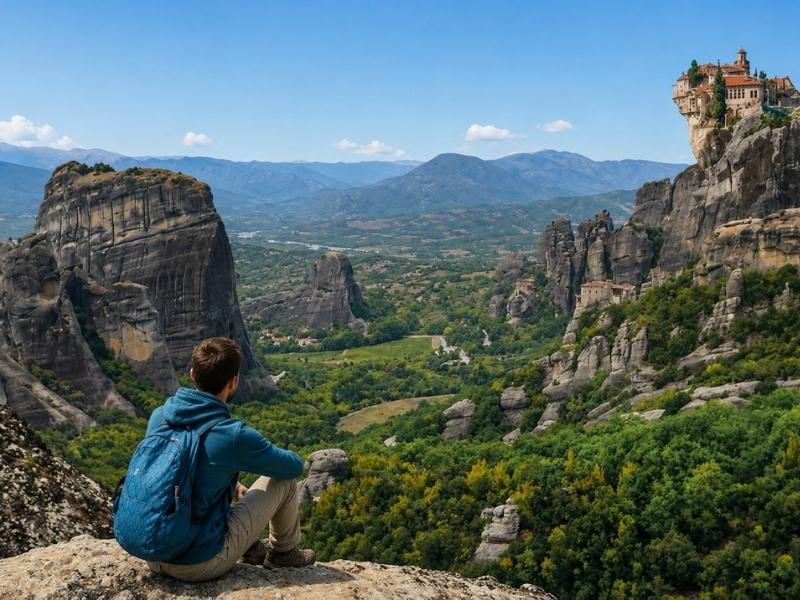
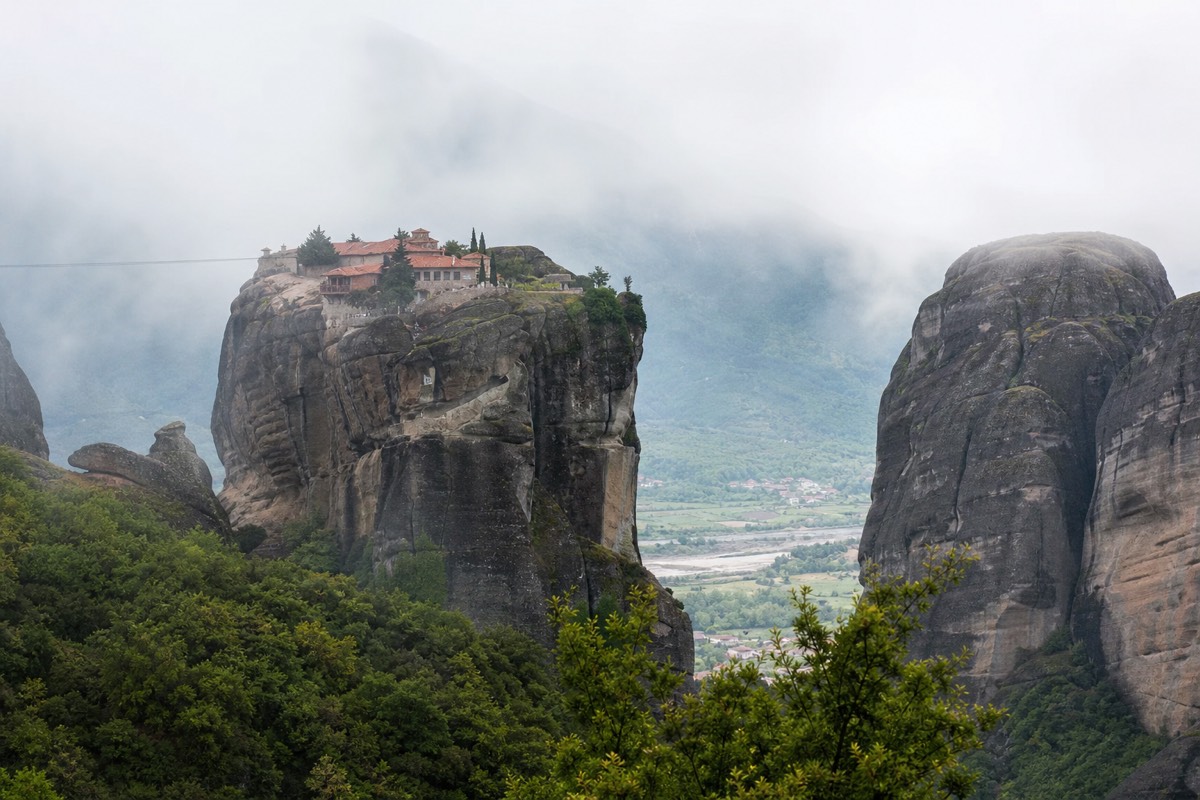
Both add roughly the same number of days, but they add very different trips. Crete is warm sea, the palace of Knossos, the old town of Chania, and the 16-kilometre Samaria Gorge for those who want a hard day's walk. The mainland circuit is the spine of classical Greece: Olympia where the games ran from 776 BC, Delphi on the slopes of Mount Parnassus, and the monasteries of Meteora perched on sandstone pillars 400 metres above the plain. For a deeper look at the mainland option, see our guide to the classical Greece mainland tour.
Crete is really a country pretending to be an island, which is why it wants three to five days of its own. The north coast puts you within reach of Knossos and the Heraklion museum, the Venetian harbour town of Chania, and, for the fit, the 16-kilometre descent of the Samaria Gorge. The mainland alternative can run much further north than Delphi too: the fully guided grand tour reaches Thessaloniki, the royal Macedonian tombs near Vergina, and Pella, the birthplace of Alexander the Great, which is history few first-timers ever reach.
| Crete | Peloponnese and mainland classical | |
|---|---|---|
| Headline sights | Knossos, Chania, Samaria Gorge, Arkadi | Delphi, Olympia, Mycenae, Meteora |
| How you travel it | Ferry or short flight, then a hire car | Coach circuit from Athens |
| Best for | Beaches, food, one big island to explore | Ancient history, dramatic landscapes |
| Days it needs | 3 to 5 | 4 to 5 |
How many islands realistically fit in two weeks?
Three Cyclades islands plus Crete is the natural two-week limit, or four smaller islands if you skip the mainland. Each Cycladic stop earns two to three nights, and Crete earns three to five on its own. Beyond that you are back to packing and unpacking every other day, which undoes the whole point of a fortnight.
The luxury of two weeks is that you can add islands without the trip fraying, but the limit still exists. Four islands is a happy number when they are all Cycladic and close together; add Crete and you are better dropping to three Cyclades stops so Crete gets the time it needs. A route that includes the neoclassical capital of Syros, then Mykonos, Santorini and Crete, is a good example of range without churn. Our guide to which Greek islands to visit helps you build the shortlist, and the mechanics live in our island-hopping routes and planning guide.
The pack-and-unpack tax still applies, just with more room to absorb it. A good two-week rule is a minimum of two nights per island and three on any island you actually want to know, with Crete treated as a region rather than a stop. Front-load the busier islands like Mykonos while your energy is high, and end on Santorini or Crete where a slower pace suits the last stretch of a long trip.
There is one more reason not to over-collect islands: the best two-week memories tend to come from the places you gave time to, not the number of ferries you caught. A fortnight that lingers on four islands and one region beats one that ticks off seven and remembers none of them clearly. Build the route around the two or three stops you most want, then let the rest of the days settle around them.
| Two-week shape | Islands | Verdict |
|---|---|---|
| Islands only | Four Cyclades (e.g. Paros, Naxos, Mykonos, Santorini) | Relaxed, all-beach fortnight |
| Islands plus Crete | Three Cyclades plus Crete | The best all-rounder |
| Islands plus mainland | Two Cyclades plus the classical circuit | History and beaches balanced |
| Everything at once | Five islands plus mainland | Too much; you never settle |
Getting around: ferries, a domestic flight, or a mainland coach?
Use all three. Ferries link the Cyclades in two to five hours and are half the fun; one domestic flight, such as Heraklion to Athens in about fifty minutes, saves a long sea day at the end; and a coach handles the mainland classical loop most efficiently. Two weeks has the slack to mix modes without any leg dragging.
On a fortnight you do not have to be a purist about transport. Sail the short Cycladic hops for the deck views, then take the internal flight for the one long leg that would otherwise cost you a whole day, most often the run back from Crete. If your second region is the mainland, a coach circuit is simply the sensible way to link Delphi, Olympia and Meteora, which are hard to reach by public transport. You can check ferry schedules across operators on Ferryhopper, and our comparison of ferry versus flight between the islands covers when each wins. The figures below are planning allowances only.
The single internal flight is the detail that makes a four-island-plus-Crete fortnight work. Sailing from Crete back to Athens would cost the best part of a day at sea, while the flight from Heraklion covers the same distance in about fifty minutes and hands that day back to the islands. Two weeks has enough sea time already, so spending it where the crossings are short and scenic, and flying the one long leg, is the balance most travellers settle on.
| Leg | Mode | Time (allowance) | When to use it |
|---|---|---|---|
| Piraeus to first Cyclades island | Fast ferry | ~3 hours | Always; part of the trip |
| Island to island in the Cyclades | Ferry | ~45 min to 3 hours | Short, scenic, frequent |
| Santorini or Cyclades to Crete | Ferry | ~2 to 4 hours | Links the islands to Crete |
| Heraklion (Crete) to Athens | Flight | ~50 min | Saves a long sailing day at the end |
| Mainland classical circuit | Coach | Multi-day loop | Delphi, Olympia, Meteora by road |
When is the best time for a two-week trip?
May, June, September and early October are the strongest fortnights: warm seas, everything open, and crowds you can live with. A two-week trip in July or August works but sits at peak heat, price and busyness, and needs ferries and island hotels booked months ahead. Late autumn thins out island services.
Because a fortnight spans a wider slice of the calendar, it also softens the risk of any single bad-weather day. Late spring and early autumn are the sweet spots: warm enough to swim, cool enough to walk the ancient sites, and quiet enough that the Oia sunset is a pleasure rather than a scrum. If your second region is the mainland, those shoulder months are also when the haze clears at Meteora and the archaeological parks are comfortable to walk. Our month-by-month guide to visiting Greece and the note on the worst time to visit Greece together cover the edges.
A longer trip also lets you play the season to your advantage. Start in the cooler, quieter half of spring for the mainland sites and museums, when walking the archaeological parks is a pleasure rather than an endurance test, then move to the islands as the sea warms into late May and June. In autumn the order reverses: ride the warm September sea first, then finish inland once the midday heat has eased off the ruins.
| Window | Islands | Mainland sites | Verdict |
|---|---|---|---|
| Apr to mid-May | Cooler sea, quiet | Ideal walking weather | Great for a history-leaning fortnight |
| Late May to Jun | Warm, swimmable | Warm, clear | Excellent all-round |
| Jul to Aug | Hot, packed | Very hot at midday | Book far ahead, start early |
| Sep to mid-Oct | Warm sea, calmer | Comfortable | The best overall window |
What does two weeks in Greece cost, and who is it for?
Two-week packages run from around $2,300 per person for a self-guided four-island route to about $3,900 for a fully guided grand tour, with hotels, ferries, the internal flight and transfers included. Two weeks suits travellers who want more than the highlights: repeat visitors, slow travellers, and anyone set on Crete or the ancient mainland.
The self-guided four-island route is priced from $2,289 per person, which is notably good value for a fortnight because it uses the independent format throughout; the fully guided grand tour of the mainland and Santorini is from $3,874. On top of either you pay locally for meals, site entries, tips and the overnight city tax charged per room per night. Every version here is bookable as one done-for-you package through Greece Tour Packages, with the island hotels, ferries, the internal flight and airport transfers already arranged. If two weeks feels like more than you need, our eight-day itinerary shows the shortest trip that still fits an extra day of ancient sites. And for a sense of the on-the-ground spend, see how expensive Greek island hopping runs.
As with the shorter trips, the package price covers the fixed costs and the local spend is yours to control. Across these two-week formats that fixed cost includes every hotel with breakfast, all the ferry crossings, the internal flight where there is one, and the airport transfers. Paid on the ground are meals, site and museum entries, tips, and the overnight city tax the hotel adds per room per night on a scale from about 1.50 to 15 euros. Over fourteen nights those small daily sums add up, so plan a realistic allowance rather than guessing.
| Two-week format | Package from (per person) | Best for |
|---|---|---|
| Self-guided, Athens and 4 islands with Crete | $2,289 | Independent travellers, best value |
| Semi-guided island hopping, 4-star hotels | $3,197 | Comfort-first island lovers |
| Fully guided grand tour, mainland and Santorini | $3,874 | History-first travellers who want guides |