Greek Island Hopping: Routes, Ferries & How to Plan
Island hopping in Greece is less about which islands you pick and more about the order you string them in. Get the ferry geography right and the trip flows; get it wrong and you lose whole afternoons to the sea. This is how the routes actually work, and how to plan one that does not fall apart at the port.
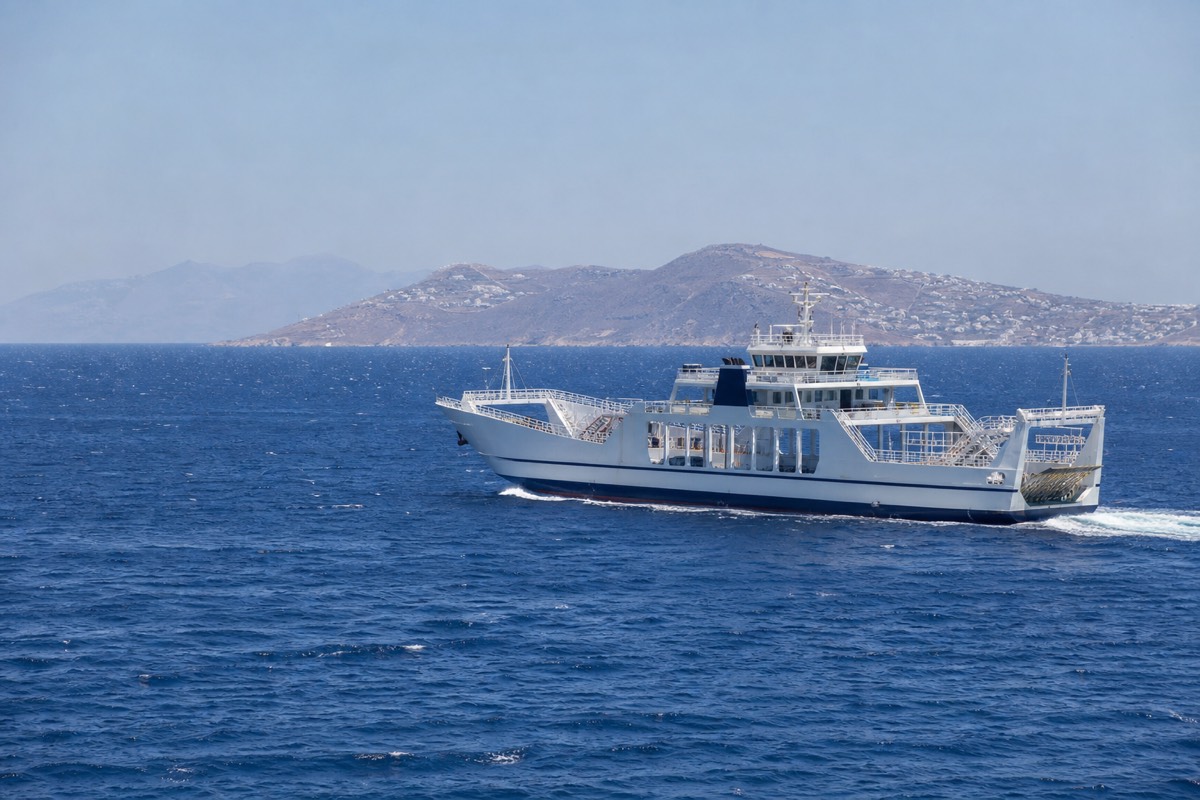
The classic Greek island-hopping experience is real: sitting on the rear deck as the port of Piraeus recedes, the open Aegean widening around you, and the next island rising on the horizon a couple of hours later. What the photographs leave out is the planning underneath it, the ferry that reshuffles its timetable, the 6am transfer to the port, the connection that only works if you booked it a month ago. Get that layer right and island hopping is one of the best trips in the Mediterranean.
How does Greek island hopping actually work?
You base the trip out of Athens and its port at Piraeus, then hop a chain of islands by ferry, spending two or three nights on each before moving to the next along the same corridor. Most hopping happens inside the Cyclades, where the islands sit close together. High-speed ferries cut crossing times roughly in half compared to the conventional boats.
The mechanics are simpler than they look. Piraeus is the hub, and the Cyclades fan out from it in a rough line, so a route is really a matter of choosing your islands and then sequencing them so each crossing is short. You are not doubling back across the Aegean; you are stepping from one neighbour to the next. The islands closest together, Paros and Naxos for instance, are only about 45 minutes apart, while the reach out to Santorini at the far end is the longest regular leg.
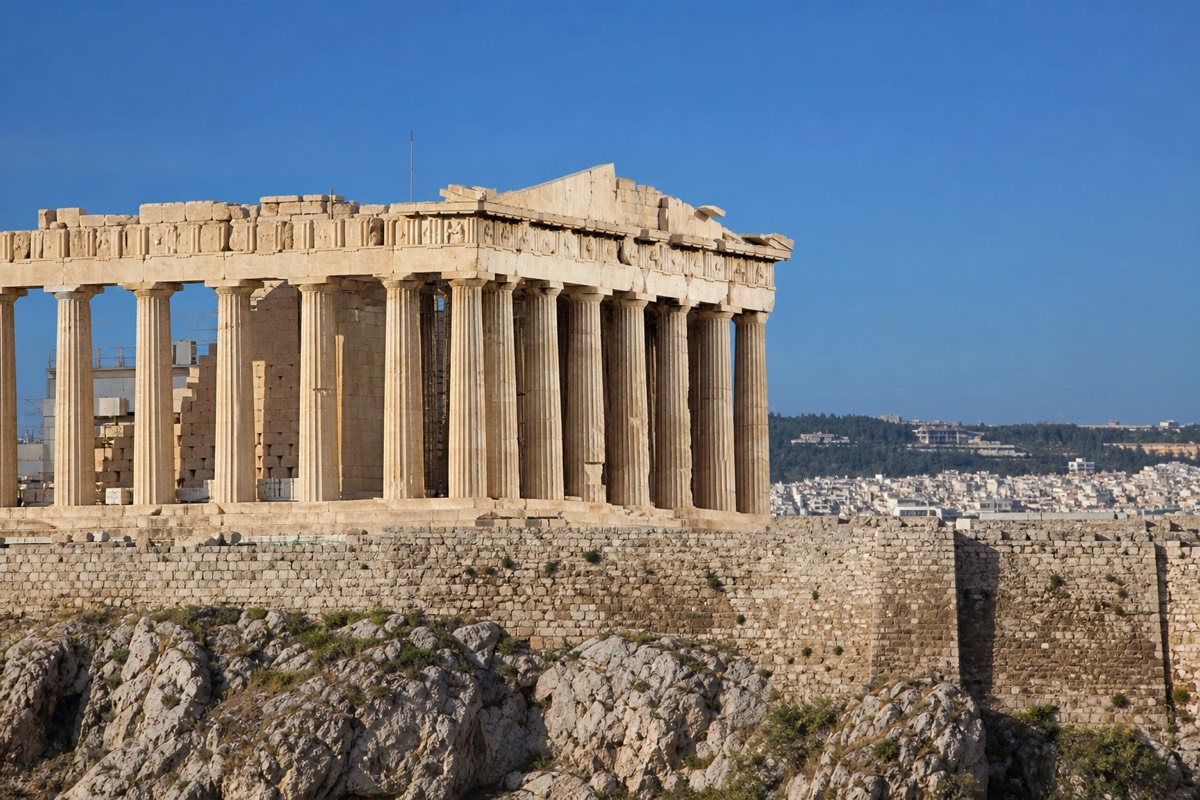
Two ferry types run these routes. Conventional car ferries are big, stable and cheaper, with open decks and space to move around, and they are the ones that give you the classic sea-crossing feel. High-speed catamarans are enclosed, faster and pricier, and can feel choppier in wind. Most hopping trips mix the two depending on the leg and the timetable.
The daily rhythm settles quickly once you are in it. You check out in the morning, transfer to the port, board with your luggage, and cross to the next island in time for an afternoon check-in and a first swim. Greek ports are busy and a little chaotic during arrival windows, with foot passengers and cars unloading at once, so the habit worth forming early is arriving with time in hand rather than sprinting for the gangway. On the conventional ferries you carry your own bags on and stow them on racks near the doors; on the high-speed boats you usually have a numbered seat.
What are the classic Greek island-hopping routes?
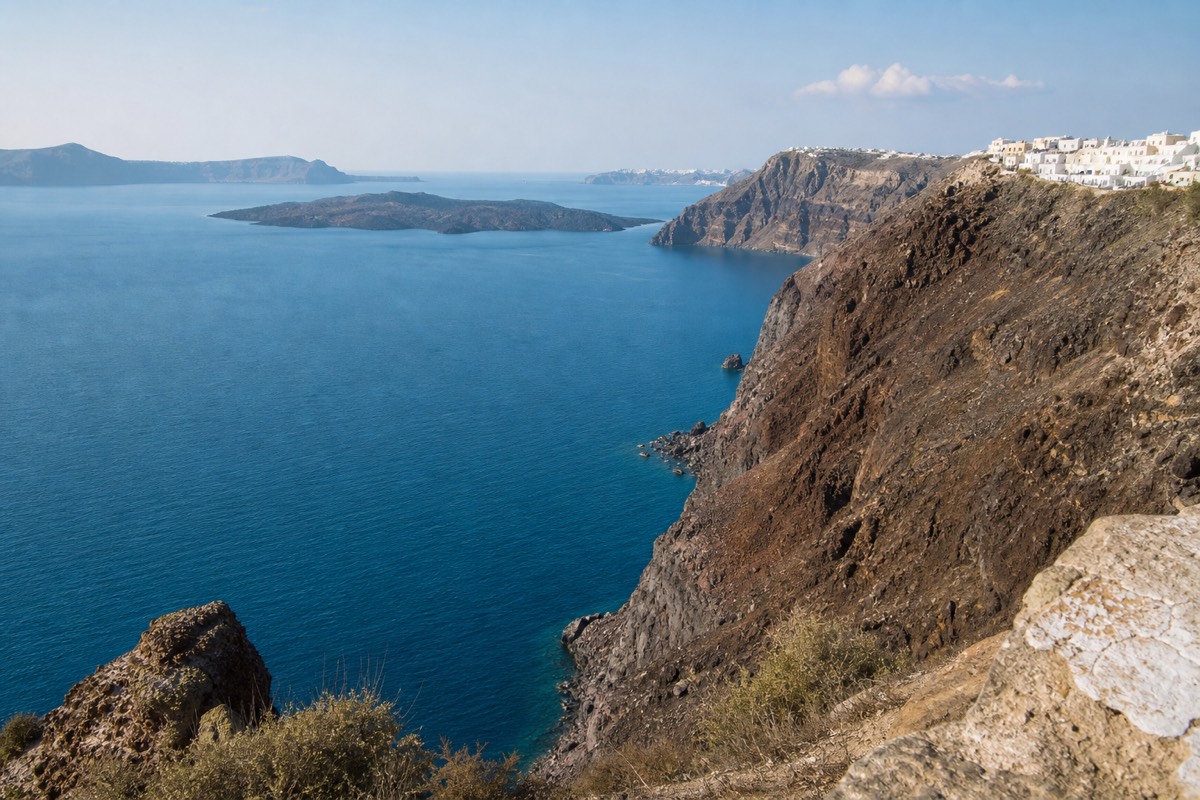
The classic routes all stay inside the Cyclades. The short one is Santorini and Mykonos. The three-island version strings Paros, Naxos and Santorini. The fuller line adds Mykonos to make four. For two weeks, you can extend a Cyclades route out to Crete. Each keeps the individual crossings short by following the islands' natural geography.
Routes are named by their islands, but what really defines them is pace. A five-to-seven-day route wants two islands; stretch to nine or eleven days and three or four become comfortable. The table below is the menu the operators we work with build from, and every one of them keeps the sea legs manageable.
| Route | Islands | Days | Pace | Best for |
|---|---|---|---|---|
| The classic duo | Santorini + Mykonos | 5 to 7 | Easy | First-timers, short trips |
| Cyclades trio | Paros, Naxos, Santorini | 8 to 9 | Moderate | Quiet first, a big finish |
| Four-island line | Mykonos, Paros, Naxos, Santorini | 10 to 11 | Moderate | A varied Cyclades sampler |
| Cyclades plus Crete | Mykonos or Santorini + Crete | 12 to 15 | Fuller | Beaches, history and a big island |
| Off-peak quiet | Milos + Santorini, or Naxos + Paros | 7 to 9 | Relaxed | Fewer crowds |
The direction of a route matters as much as the islands on it. Running the quiet islands first and Santorini last builds the trip toward its high point and leaves you at the island with the easiest flight home. The reverse, opening on Santorini, front-loads the busiest sightseeing while you are freshest and winds down on a calmer beach island. Both work; what does not work is a zig-zag that crosses the same water twice, which is why the corridor order in the table is worth keeping.
The trio and four-island lines are the workhorses. The nine-day Paros, Naxos and Santorini route follows the corridor from Athens out through the quieter islands and closes on Santorini, and the eleven-day semi-guided version adds Mykonos at the front. If you are still weighing which islands belong on your list in the first place, start with choosing which islands to visit.
How do the ferries work, and how do you book them?
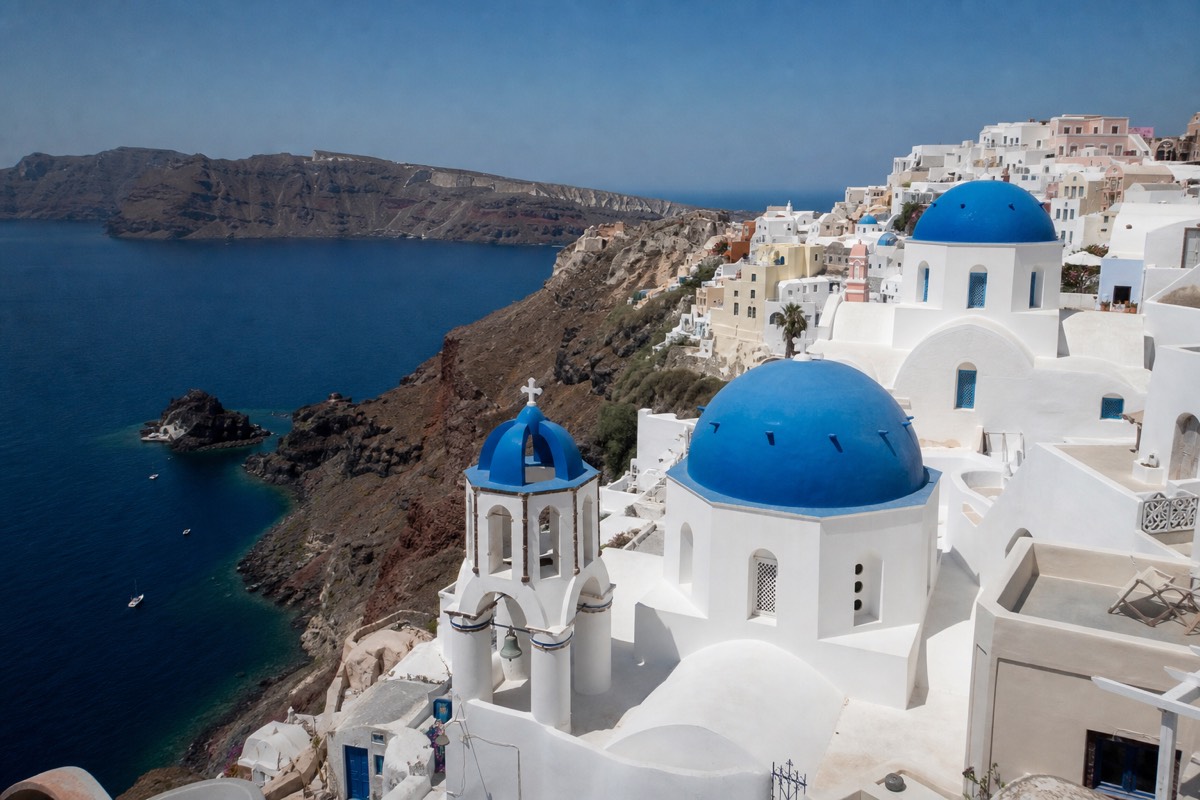
Ferries leave from Piraeus and connect the Cyclades on frequent summer schedules, with high-speed and conventional vessels on most routes. Crossings between neighbouring islands run under two hours; the long return from Santorini to Athens can take seven or eight hours by conventional ferry, or around five by high-speed. In peak season, book the popular legs ahead.
Booking is straightforward once you know the pattern. Timetables for the coming season are published in the spring, and you can compare vessels and times across operators on aggregators like Ferryhopper or directly with major lines such as Blue Star Ferries. The figures below are planning allowances drawn from typical Cyclades timetables; the exact times move with the season and the vessel, so confirm the live schedule for your dates.
| Leg | Conventional ferry | High-speed |
|---|---|---|
| Piraeus to Mykonos | Around 4 to 5 hours | Around 2.5 to 3 hours |
| Piraeus to Paros | Around 4 hours | Around 3 hours |
| Mykonos to Paros | Short hop | Around 45 minutes |
| Paros to Naxos | Around 1 hour | Around 45 minutes |
| Naxos to Santorini | Around 2 hours | Around 1.5 to 2 hours |
| Santorini to Piraeus (return) | Around 7.5 to 8 hours | Around 5 hours |
The one leg worth planning around is that long return from Santorini. If Santorini is your last island, a smart route flies you home from its airport instead, turning an eight-hour ferry day into a short hop. Whether to fly or sail on any given leg is its own call, covered in our guide to ferry or flight between the islands, and the timing question of when to book gets its own answer in the blog on reserving ferries in advance.
Should you base yourself on one island or keep moving?
Classic island hopping is linear: you move on every two or three nights and never backtrack. The alternative is to base on one central island, like Naxos or Paros, and take day trips out from it. Basing suits travellers who hate repacking; a linear route suits those who want to wake up somewhere new. Most Cyclades trips are linear, because the islands sit in a line rather than a circle.
The geography nudges you toward moving on. The Cyclades string out from Athens rather than ringing a central hub, so a pure hub-and-spoke trip means covering the same water twice. That said, a central island like Paros or Naxos does make a reasonable base for a few days, with short hops out to a neighbour and back. Naxos in particular has enough of its own beaches, villages and mountain interior to justify a longer stay without feeling stuck.
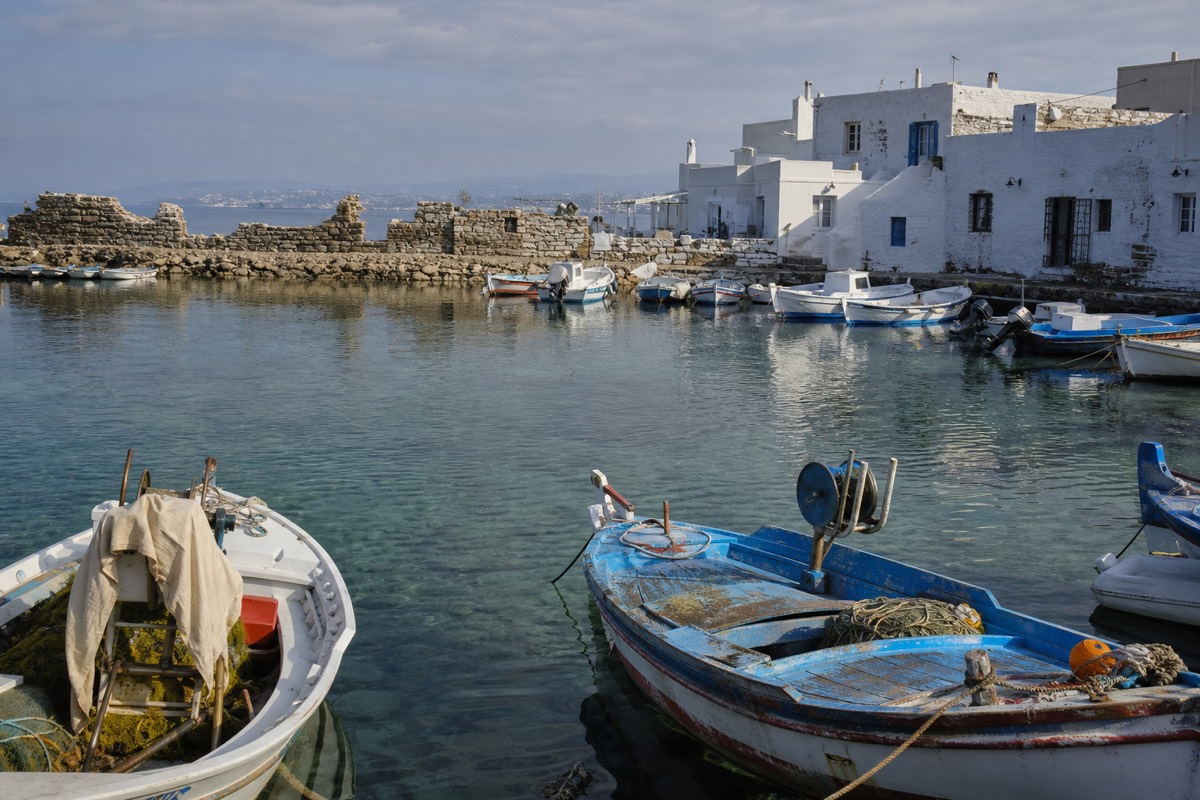
Day trips are the other half of this question. From Mykonos, a short morning ferry reaches the sacred island of Delos, the ancient sanctuary and mythological birthplace of Apollo and Artemis, which has no hotels of its own and is visited as a half-day. From Santorini, the boat trip across the caldera to the active volcanic cone at Nea Kameni and the hot springs is effectively a day trip by sea. Building one or two of these into a route adds variety without adding a hotel change, which is the sweet spot for travellers who want to see more but pack less.
How many islands should you actually fit in?
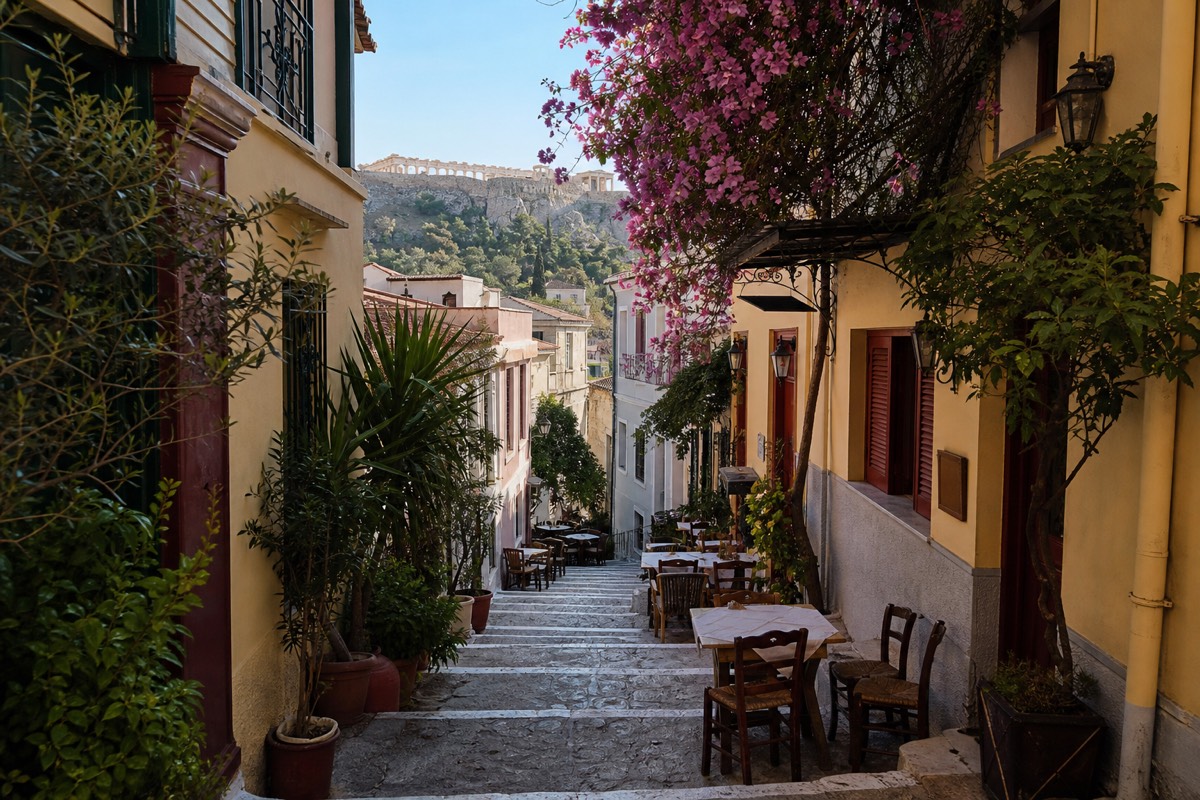
Plan roughly one island for every three to four days of trip, after setting aside two nights for Athens at the start. That means two islands in a week, three in nine or ten days, and four in eleven or more. Over-hopping is the most common mistake, because every ferry leg quietly eats half a day at each end.
The temptation is always to add one more island, and it almost always backfires. A crossing is not just the time on the water; it is the checkout, the transfer to the port, the wait, the sail, and the transfer and check-in on the far side. Bundle those and a single hop routinely costs a half-day of usable time. Add three hops to a seven-day trip and you have spent a day and a half in transit before counting the arrival and departure days.
| Trip length | Islands to fit | Example |
|---|---|---|
| 5 to 6 days | 1 island plus Athens | Athens + Santorini |
| 7 days | 2 islands | Athens + Mykonos + Santorini |
| 9 days | 2 to 3 islands | Athens + Paros, Naxos, Santorini |
| 11 days | 3 to 4 islands | Athens + Mykonos, Paros, Naxos, Santorini |
| 14 to 15 days | 3 to 4 islands, or add Crete | Athens + four islands |
If the numbers here are your main question, our dedicated guide to how many days you need in Greece turns any trip length into a realistic island count, and the blog on the cost of island hopping shows how each extra island moves the budget.
What is the best time of year for island hopping?
Late May, June and September are the best windows for island hopping. The ferries run their full summer schedule, the sea is warm enough to swim, and you dodge both the unsettled seas of early spring and the August scramble for cabins and hotel rooms. July and August work too, but they demand booking further ahead and living with bigger crowds.
The reason timing matters more for hopping than for a single-island stay is the ferry schedule itself. Outside roughly late May to September, sailings thin out, some high-speed routes pause, and a few smaller islands lose their direct connections entirely, which can force a long detour back through Athens. The summer meltemi wind is the other seasonal factor: it blows hardest in July and August and can slow or cancel the high-speed catamarans, while the sturdier conventional ferries keep running. The table below is the routing-focused view of the season.
| Window | Ferry schedule | Crowds | Notes for hopping |
|---|---|---|---|
| April to mid-May | Building up | Low | Fewer sailings, some routes not yet daily |
| Late May to June | Full summer schedule | Low to moderate | Warm sea, easy connections, good value |
| July to August | Fullest, most frequent | High | Book ahead; meltemi can disrupt fast ferries |
| September | Still full | Moderate | Warm sea, thinner crowds, the quiet favourite |
| October onward | Winding down | Low | Routes drop off, plan around fewer sailings |
If you want the month-level detail rather than the season view, the blog on the best month for island hopping narrows it down, and our broader guide to the best months to visit Greece covers the mainland side of the same question.
How do you plan the route step by step?
Fix your Athens start and pick one anchor island, usually Santorini, then sequence the rest by ferry geography so each crossing is a short hop to a neighbour. Book the peak-season ferries and hotels well ahead, and always leave a buffer day before your flight home so a cancelled sailing does not cost you the plane.
The order of operations matters more than any single choice. Start from the fixed points, your arrival in Athens and your flight out, then build inward. The table below is the sequence the smoothest trips follow, whether you book them yourself or let a package handle it.
| Step | What to do | When |
|---|---|---|
| 1 | Fix the Athens start and your anchor island | At booking |
| 2 | Sequence the islands by ferry geography | Before booking crossings |
| 3 | Book high-summer ferries and hotels | Weeks to months ahead |
| 4 | Leave a buffer day before your flight home | Always |
| 5 | Add flexible fares or travel insurance | Before peak season |
Where the anchor island sits in the route is worth its own thought, because it changes the whole shape of the trip. The table below shows the roles each position plays.
| Position in the route | Good choice | Why |
|---|---|---|
| Start | Athens | Flights, ancient sites, the natural gateway |
| Middle | Paros, Naxos or Mykonos | Central hubs with easy onward hops |
| Finish | Santorini | The showstopper, then fly out and skip the long ferry back |
The buffer day in step four is the one people cut first and regret most. Ferries are weather-dependent, and a single cancelled sailing with no slack in the plan turns into a missed flight and a scramble for a same-day replacement. Building one spare day into a hopping route, ideally on your last island so it doubles as extra beach time, is cheap insurance against the one thing you cannot control. It is the difference between a hiccup and a ruined end to the trip.
What are the mistakes that wreck an island-hopping plan?
The four that recur: fitting too many islands into too few days, booking a ferry on the same day as your international flight, ignoring the summer meltemi wind that can disrupt high-speed sailings, and leaving Santorini for a slow ferry back to Athens instead of flying. Each one is easy to avoid once you know to look for it.
The pattern the operators we work with see most is the seven-day trip crammed with four islands, where travellers spend a third of the holiday in ports and on decks. Right behind it is the traveller who books an afternoon ferry into Athens on the morning of a late flight and loses the plane when the boat runs late. The Aegean's summer meltemi wind is the wildcard: it can slow or cancel high-speed catamarans while the sturdier conventional ferries keep running, which is one reason a route with a buffer day survives contact with reality.
The fix for all four is slack in the schedule and sensible sequencing. Fewer islands, a spare day before the flight, and Santorini positioned as a fly-out finale rather than a ferry marathon. If you want the wider list of pitfalls, the blog on common island mistakes to avoid collects them in one place.
Can a package handle the island hopping for you?
Yes, and it removes the part most likely to go wrong. A hopping package pre-books every ferry in the right order, arranges the port transfers and island hotels, and gives you someone to call when a sailing is cancelled. You keep your days free to explore; the operator carries the logistics that turn a good route into a stressful one.
This is the real trade-off between doing it yourself and booking a route. The coordination, the 6am transfer, the ferry that reshuffles, the hotel that needs confirming before it sells out, is exactly what a package absorbs. A done-for-you route from Greece Tour Packages books the ferries and island hotels in the sequence that keeps every crossing short, so the only thing you plan is what to do once you land.
What a package does not do is fill your days. The good ones handle the moving parts, the transfers, the ferry tickets, the hotels, and then leave you free to swim, wander and eat where you like. That is the difference between a package and a rigid escorted tour: you get the logistics without surrendering the days. For anyone who loves the idea of island hopping but dreads the spreadsheet of ferry times behind it, that split is the whole appeal.
Which package fits depends on how much structure you want. The self-guided cultural trip hands you pre-booked ferries and hotels but leaves the days entirely open, from around $1,139 per person, check the live listing for your dates. The nine-day and eleven-day routes above add more islands, and a two-week version opens up Crete at the end of a Cyclades run. Whichever you choose, the trick that makes island hopping work is the same: short hops, a light schedule, and Santorini saved for last.