7 Days in Greece: A First-Timer's Itinerary
A week is the length most first-timers actually have, and it is enough for a genuinely good trip as long as you resist doing too much. The winning move is Athens plus two islands, not three, with the ferries booked and the last leg flown. This is how the seven days fall into place.
What does a realistic 7-day Greece itinerary look like?
A week works best as Athens plus two islands. Two nights in Athens for the Acropolis, a morning ferry to Mykonos for two nights, a crossing south to Santorini for two more, then a short flight back to Athens for the trip home. That is six nights well spent, with no leg wasted on backtracking.
Seven days does not leave room to improvise, so the itinerary has to be tight and deliberate. The route below is the one the operators build for first-timers, and it maps almost exactly onto the seven-day self-guided cultural Athens and island-hopping package, which pre-books the hotels, ferries and transfers so the only thing you carry is a daypack. The guided-sightseeing alternative, the six-day Athens, Mykonos and Santorini package, covers the same three places with a licensed guide added.
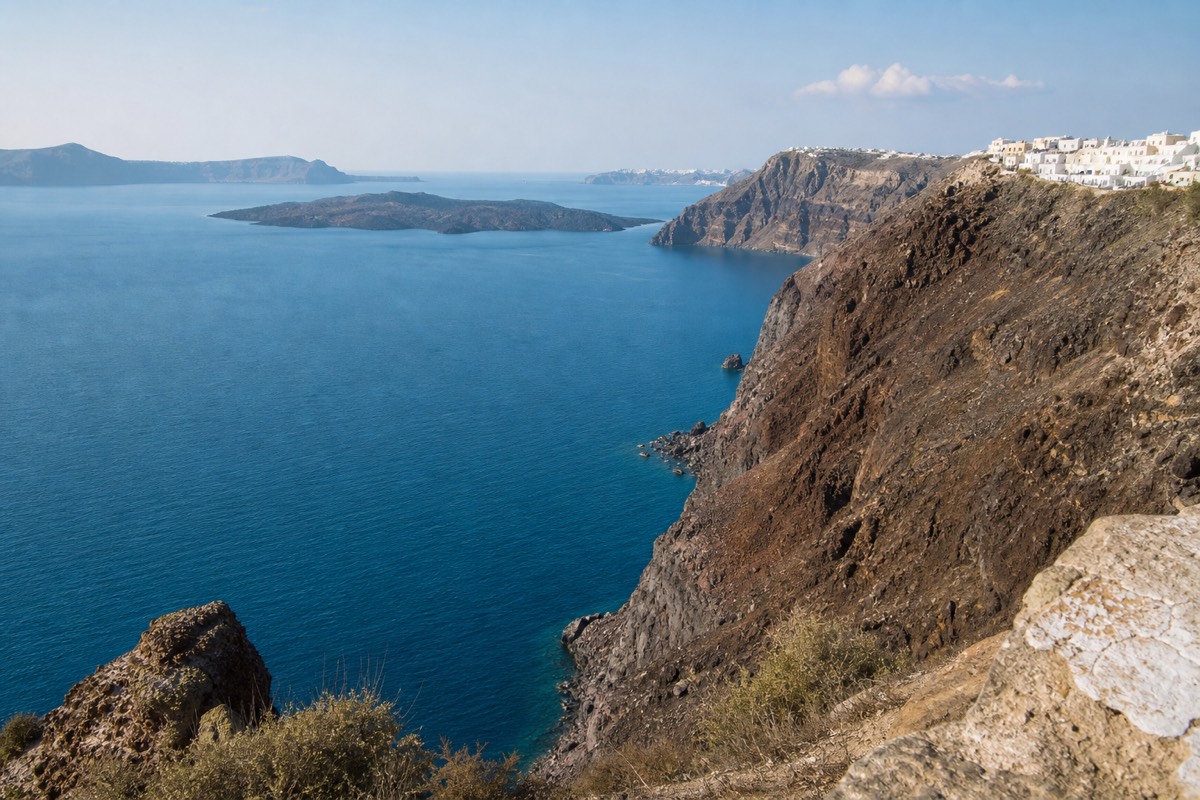
| Day | Base | The plan |
|---|---|---|
| 1 | Athens | Land, transfer in, settle. Evening in Plaka and Monastiraki under the lit Acropolis. |
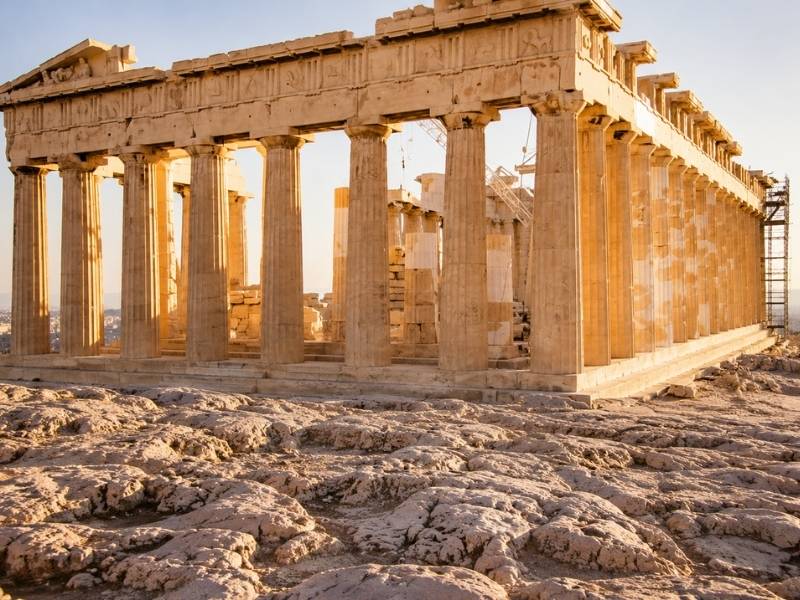
| 2 | Athens | Acropolis at the 8am opening, the Acropolis Museum, then the Agora and a sunset from Filopappou Hill. |
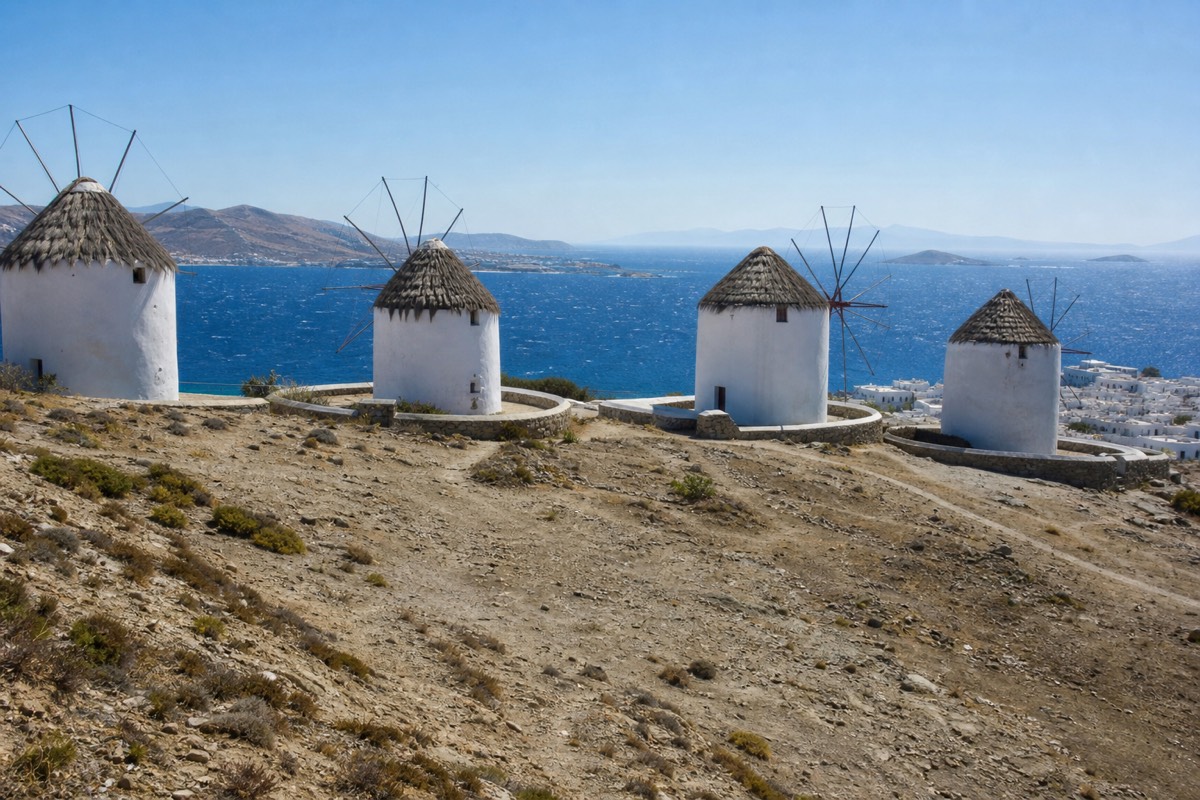
| 3 | Mykonos | Morning ferry from Piraeus. Afternoon in Chora, the windmills and Little Venice. |
| 4 | Mykonos | South-coast beaches, or a half-day boat to the ancient ruins on Delos. |
| 5 | Santorini | Ferry south, climb the caldera road, first sunset from Fira or Oia. |
| 6 | Santorini | Caldera boat trip to Nea Kameni, a winery tasting, then the Oia sunset. |
| 7 | Depart | Fifty-minute flight back to Athens, connect to the flight home. |
The one structural compromise here is Athens, which effectively gets its two nights at the front and no more. That is the right call on a week, because the islands are the reason most first-timers come. If cutting Athens short bothers you, the fix is not to reshuffle the week but to add a day, which is exactly the case our eight-day itinerary makes.
One practical note on the first day: give yourself an arrival buffer if the flights allow it. The metro from Athens airport reaches the city centre at Syntagma in about 40 minutes, and a fixed-tariff taxi runs roughly 40 to 50 euros, so even an evening landing leaves time to settle. Arriving the day before the sightseeing starts, rather than the same morning, protects your one real Athens day from jet lag and a slow start.
How many islands can you fit in a week?
Two islands is the sensible maximum for a week, and one is a genuinely good option. Six nights split as two in Athens and two each on two islands is brisk but works. A third island would drop every stop to one real day, so the week stops being a holiday and starts being a series of ferry queues.
The temptation on a first trip is to see as much as possible, and it is the fastest way to ruin a week. Arrival and departure days on every island are half-days lost to ferries, port shuttles and check-in, so two nights buys you a single full day in each place. Add a third island and you are unpacking four times in seven nights. The better instinct is to slow down: pick two islands you actually want, or commit fully to one. For help choosing, our guide to the best Greek island for first-timers weighs the usual contenders.
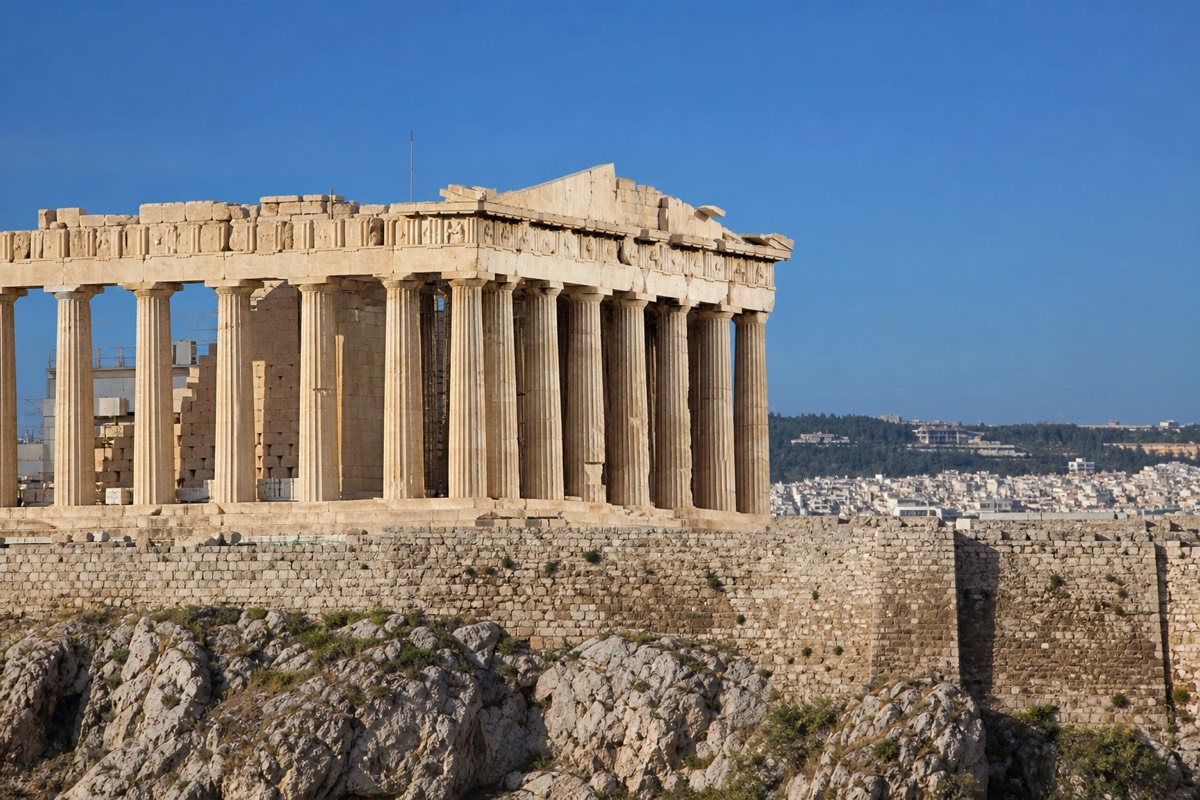
The one-island week is underrated. Committing all six island nights to a single place, whether that is Santorini for the caldera or Naxos for its beaches and mountain villages, means you unpack once and actually learn the island rather than skim it. It is the most relaxing way to spend a first week, and it removes ferry planning almost entirely, which matters when a single sold-out summer crossing could swallow a big share of a short trip.
If you do run two islands, keep the order sensible: sail from Athens out to the livelier island first, then finish on Santorini, whose sunset makes a natural last act before you fly home. The route above does exactly that, and it never backtracks, so no ferry is wasted retracing water you have already crossed. That discipline, one direction, two islands, a flight home, is what lets a week feel full rather than frantic.
| Islands in a week | Night split | Full days per island | Verdict |
|---|---|---|---|
| One island | Athens 2, island 4 | 3 | Relaxed and deep; ideal if you want to actually settle |
| Two islands | Athens 2, islands 2 + 2 | 1 each | The classic first-timer week; brisk but rewarding |
| Three islands | Athens 1, islands 2 + 2 + 1 | Under 1 each | Too much; save three islands for ten days or more |
How much of the week should Athens get?
Give Athens two nights and one full sightseeing day, no less. That covers the Acropolis at opening, the Acropolis Museum, and a walk through the Ancient Agora and Plaka. Any less and you arrive at the Parthenon hot, tired and in a crowd, then rush to the port having barely seen the city that anchors the whole trip.
Athens is where the classic first-timer error happens: one hurried morning, an 11am arrival at a heat-soaked Acropolis, and a mid-afternoon dash to the ferry. The city rewards a little patience. Book the first Acropolis entry, walk the site while the marble is cool, then spend the afternoon in the museum that was purpose-built to hold its sculpture. The nearby Temple of Hephaestus in the Agora is the most complete ancient Greek temple standing, and it shows you what the Parthenon once looked like. Our overview of how many days you need in Greece makes the same case in more detail.
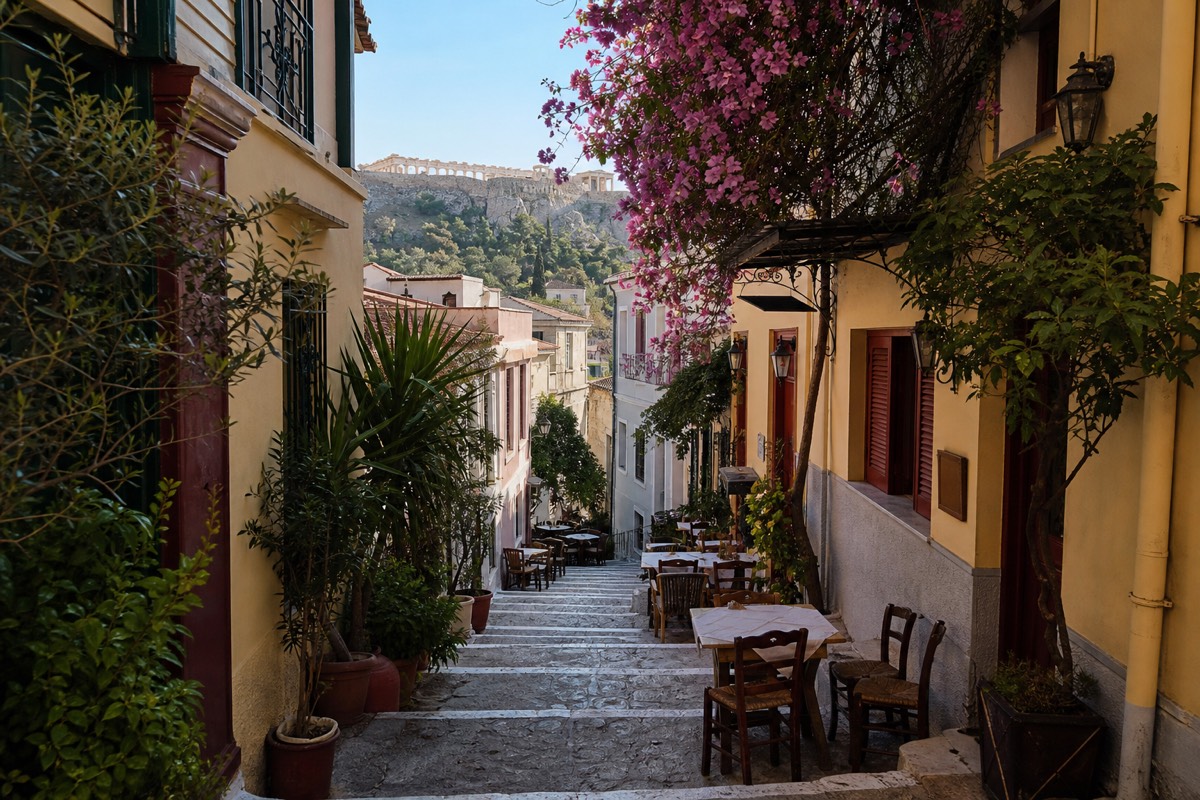
If you have a slow start on arrival day, use it for the parts of Athens that do not need fresh legs: the Plaka lanes, a rooftop with an Acropolis view, or the National Archaeological Museum, which holds one of the great collections of ancient art anywhere and rewards a couple of unhurried hours. Save the Acropolis climb itself for a proper morning, booked for the first entry slot before the heat and the coach groups arrive together.
Which two islands suit first-timers?
Mykonos and Santorini is the default first-timer pairing: one for beaches and buzz, the other for the caldera and the sunset. For a calmer, cheaper week, swap Mykonos for Naxos or Paros, which keep the Cycladic look with fewer crowds and more everyday Greek life. Santorini almost always earns the finale.
First trips usually want the famous names, and Mykonos with Santorini delivers exactly that contrast. But the quieter alternatives are worth a serious look on a short trip, because they cost less and feel less packaged. Naxos is the largest of the Cyclades and grows its own food and wine; Paros offers the same coastline as Mykonos at a gentler pace around the fishing harbour of Naousa. Whichever you choose, our comparison of Santorini or Mykonos covers the trade-offs the photos hide.
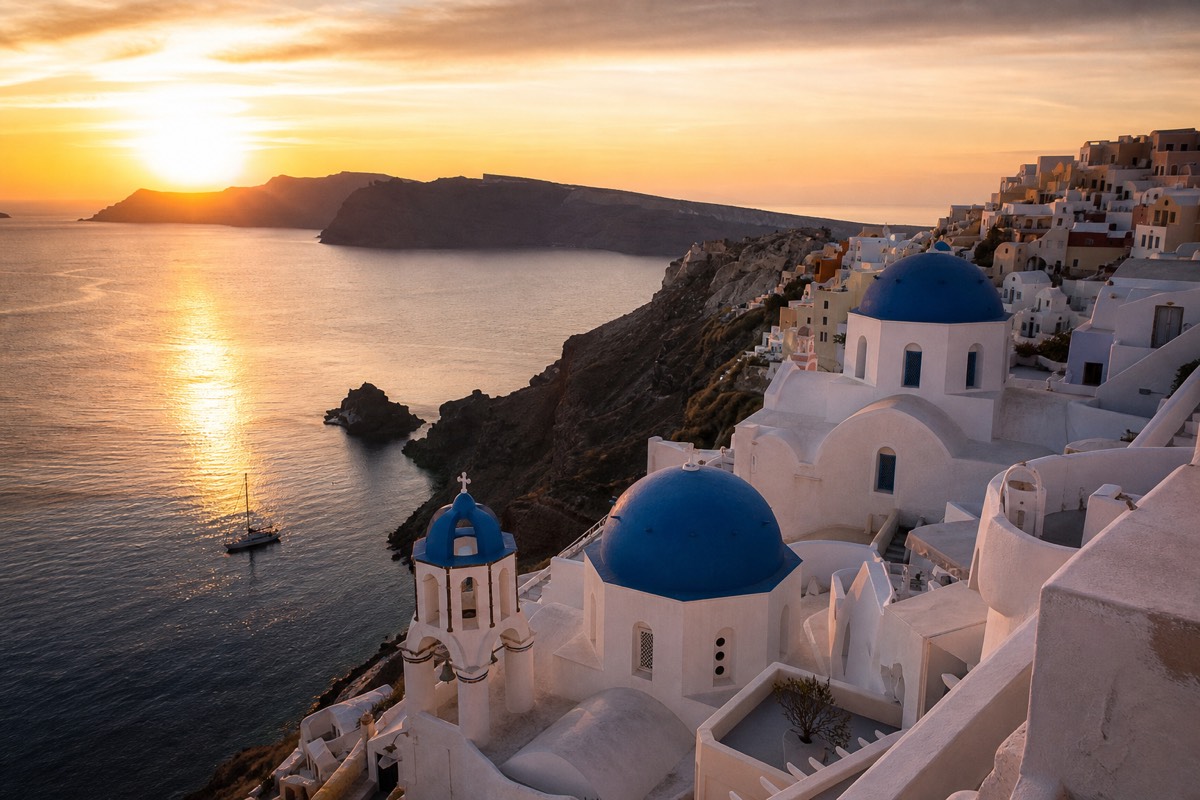
Two small upgrades lift a first-timer week. From Mykonos, a half-day boat to Delos puts you among the ruins of one of the most important sanctuaries of the ancient Aegean, a genuine antidote to the beach-club side of the island. And if you choose Naxos over Mykonos, do not miss the Portara, the giant marble doorway of an unfinished temple that frames the sunset from a spit beside the harbour, or the medieval kastro that crowns the old town.
Paros deserves a mention as the quiet compromise. It has the whitewashed Cycladic look of Mykonos without the price or the crowds, a pretty fishing harbour at Naousa built around a half-submerged Venetian castle, and beaches like Kolympithres and Golden Beach that are easy to reach. As a first island before Santorini, it gives you the postcard without the pressure, and frequent ferries connect it on to the rest of the Cyclades.
| Island | Why first-timers pick it | Watch-out |
|---|---|---|
| Santorini | The caldera view, the sunset, the wine; the postcard is real | Crowded and priciest; the Oia sunset is a scrum in summer |
| Mykonos | Beaches, nightlife, an easy pretty Chora, the Delos day trip | Expensive; can feel more about the scene than Greece |
| Naxos | Real local life, great beaches, family-friendly, better value | Less famous, so slightly less on-the-nose glamour |
| Paros | Cycladic looks, relaxed, well connected by ferry | Fewer marquee sights than Santorini |
How do the ferries work on a one-week trip?
You take one ferry from Athens out to the first island, one between the islands, and ideally fly the last leg back. On a week the crossings are short, roughly two to five hours, but you must book them ahead in summer. There is no spare day to recover from a sold-out or cancelled boat.
The Cyclades are well connected, and the fast catamarans keep the island-to-island hops under three hours. The leg that catches people out is the return: the slow ferry from Santorini to Piraeus runs close to eight hours and lands near midnight, which is no way to end a week with a flight to catch. Fly that final leg instead. Reserve every crossing early; you can browse live times and prices on Blue Star Ferries, and our note on whether you should book Greek island ferries in advance explains why a week gives you no margin. The times below are planning allowances that shift with operator and season.
Booking early is not only about the boats. On the islands, the most-reviewed hotels in Oia and Fira on Santorini and around Little Venice on Mykonos fill their summer inventory three to six months ahead, so a July trip decided in May finds the best rooms already gone. A package sidesteps both problems at once, since the ferry tickets and the island hotels are confirmed together the moment you book.
| Leg | Fast ferry (allowance) | Conventional | Notes |
|---|---|---|---|
| Piraeus to Mykonos | ~3 hours | ~5 hours | Morning departures fill first in summer |
| Mykonos to Santorini | ~2.5 to 3 hours | Limited direct | Fast ferry is the sensible pick |
| Santorini to Athens | ~5 hours | ~7.5 to 8 hours | Fly instead if your onward flight is close |
When should first-timers go on a week-long trip?
Aim for late April to June or September to mid-October. A week is short, so the weather matters more, and the shoulder months give you warm days, open islands and short queues at the Acropolis. July and August still work but demand early starts, booked-ahead ferries and a higher budget.
On a longer trip a rainy day or two barely registers; on a week it is a real dent, which is why the shoulder seasons suit a first visit so well. May brings pleasant 20 to 26°C days and thin crowds, and September hands you a sea still warm from summer without the August press. The best month for island hopping lines up with these same windows. Our full month-by-month guide to visiting Greece has the finer detail on each.
The trade-off in high summer is not the weather, which is reliably hot and sunny, but the volume of people and the price of everything. July and August fill the Oia sunset viewpoints to a crush and push hotel rates to their yearly peak, so a summer week rewards early starts and rooms booked well ahead. At the other end, from November to March many island hotels, ferries and cruises wind down, and the official Greek tourism site is the place to confirm what is still running before you commit a short trip to the off-season.
| Window | Feel for a 7-day trip | Crowds | Verdict |
|---|---|---|---|
| Apr to mid-May | Mild days, cooler sea | Low | Great for sightseeing, light swimming |
| Late May to Jun | Warm, swimmable, long days | Low to medium | Ideal all-round |
| Jul to Aug | Hot and busy | Very high | Works, but book everything ahead |
| Sep to mid-Oct | Warm sea, softer light | Medium | The best value week |
What does a week in Greece cost, and what can it fit?
A self-guided week with hotels, ferries and transfers included runs from around $1,100 to $1,400 per person, with guided formats higher. A week fits Athens and two islands; it does not fit Crete, the mainland classical circuit, or three-plus islands. Knowing what to leave out is what makes the budget and the schedule hold.
The most-booked seven-day option here, the self-guided cultural route, is priced from $1,139 per person and pre-books everything but your meals; the guided six-day version is from $1,386. On top sits your daily spend for food, entries and the overnight city tax, which is charged per room per night at the hotel. If you find yourself wanting more than a week can hold, the honest answer is to add days rather than pack tighter: compare what the ten-day itinerary unlocks. Our cost breakdown of a seven-day Greece trip puts real numbers on the extras.
The overnight city tax is the extra people forget. It is charged by the hotel per room per night, on a sliding scale from roughly 1.50 to 15 euros depending on the star rating and the season, and it is paid on the spot rather than folded into the package. Beyond that, a self-guided week already covers your hotels with breakfast, all the ferry crossings and the airport transfers, so the daily cash you actually need is mostly meals, the odd site ticket and tips.
| A week can fit | A week cannot fit |
|---|---|
| Athens (2 nights) plus two Cyclades islands | Crete, which needs its own three to five days |
| The Acropolis, its museum, one island beach day each | The mainland classical circuit (Delphi, Olympia, Meteora) |
| One caldera boat trip and one Oia sunset | Three or more islands at a civilised pace |
| A single relaxed base if you pick one island | Both the ancient mainland and the islands together |
When these routes start to feel like a real trip, the multi-day itineraries at Greece Tour Packages fold the hotels, ferries and transfers into one confirmed booking.