Santorini or Mykonos: Which to Choose (or Do Both)?
It is the single most-asked question in Greek island planning, and the honest starting point is that these two islands are not competing for the same traveller. One sells a view, the other sells a scene. Here is how to tell which one is yours, and why most people end up doing both.
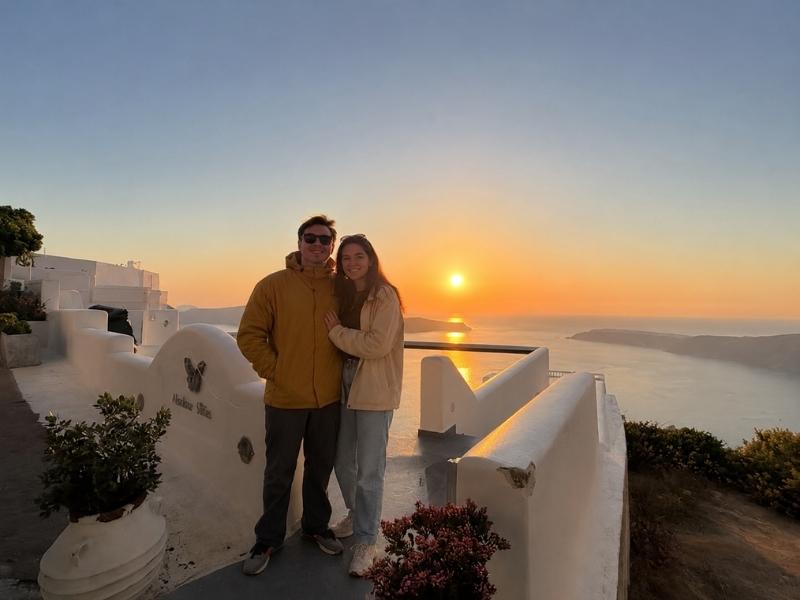
Ask a room of past travellers whether Santorini or Mykonos is better and you will get an argument, because they are answering different questions. The Santorini people are talking about a view and a sunset. The Mykonos people are talking about a beach club at four in the afternoon and a bar at midnight. Both are right about their own island, which is exactly why the smartest plan for most trips is not to choose at all.
Santorini or Mykonos: which should you choose?
Choose Santorini for scenery, romance and sunsets, and Mykonos for beaches, nightlife and energy. Santorini is the more photogenic and the better pick for couples and first-timers; Mykonos is the livelier, more beach-driven island for groups and party travellers. Most trips do both, one ferry apart, because they complement rather than duplicate each other.
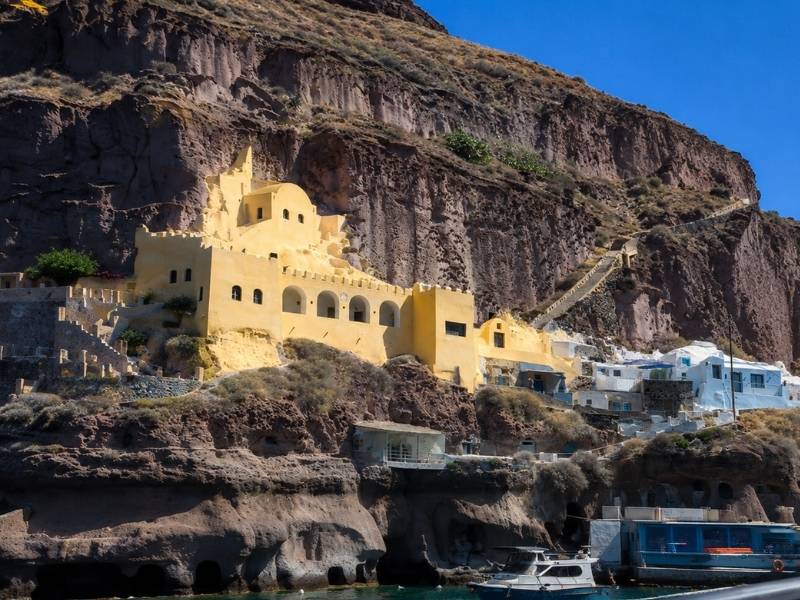
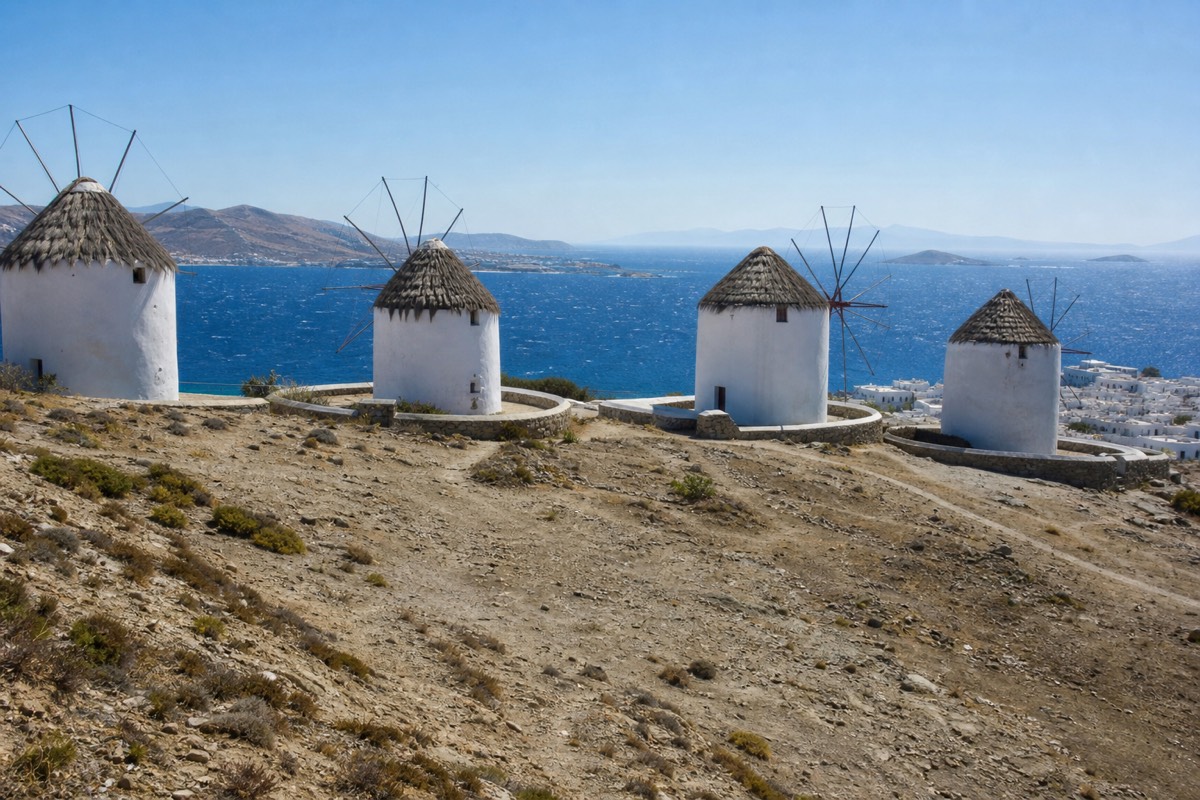
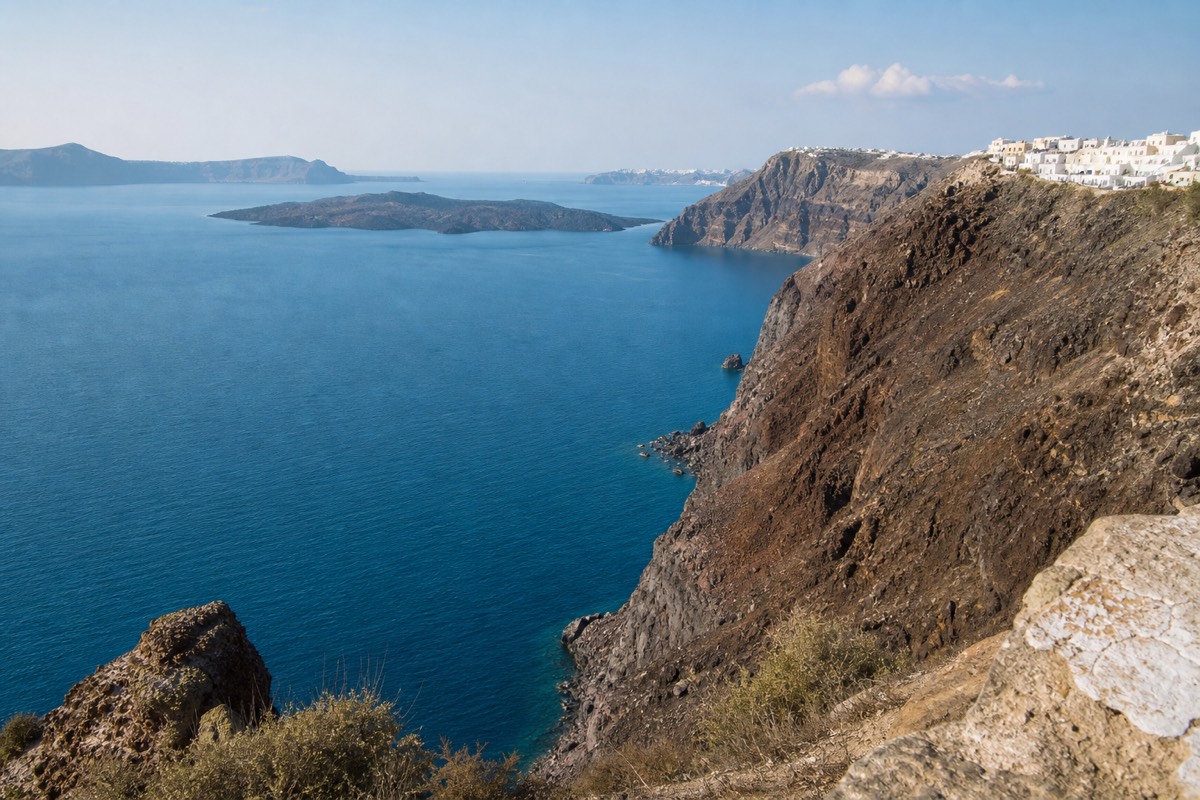
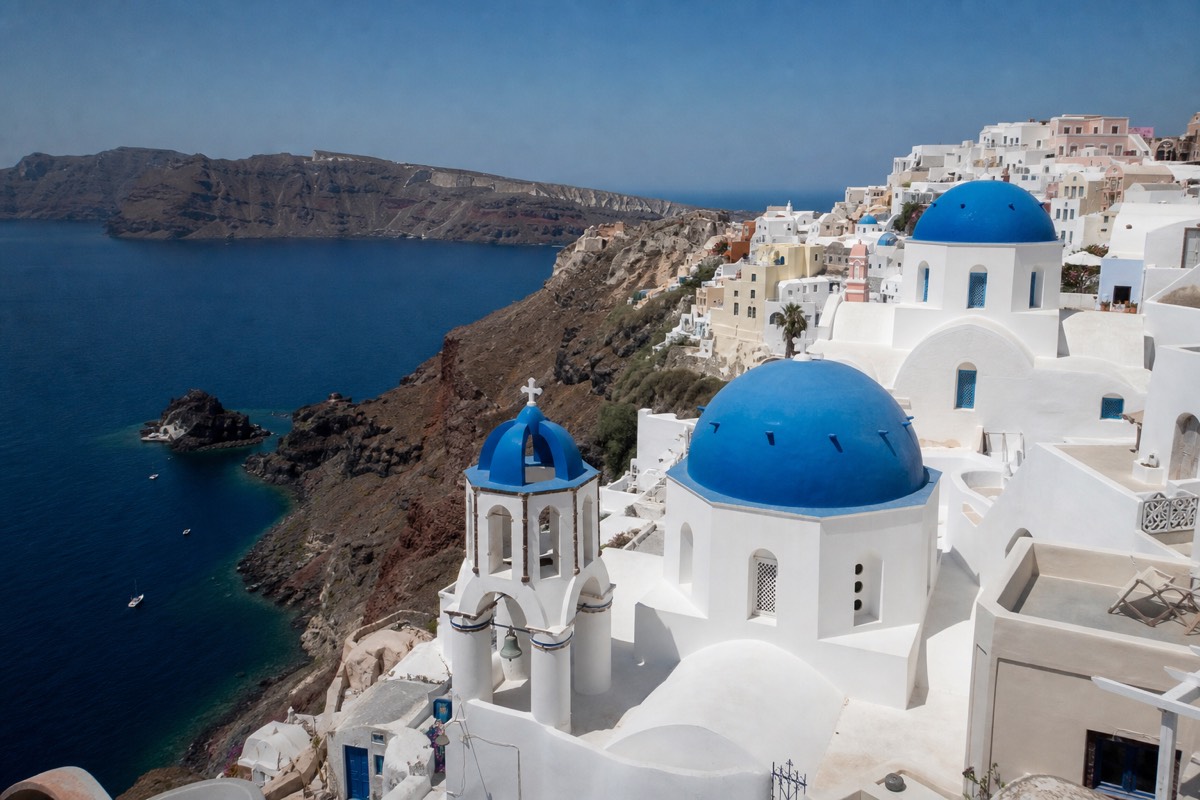
The two islands are the classic Cycladic duo for a reason. Santorini is vertical: a collapsed volcanic caldera with whitewashed towns clinging to the cliff edge and a sunset over the water that draws a crowd every evening. Mykonos is horizontal: flatter, sandier, with a maze-like old town, the famous windmills, and a south coast lined with beach clubs. Put them together and you get contrast; pick only one and you should pick the one whose defining pleasure matches your holiday. Both sit on almost every itinerary at Greece Tour Packages, usually as the same pairing, so the real decision is how many nights each gets.
How do Santorini and Mykonos compare side by side?
Across the measures that decide a trip, Santorini leads on scenery, romance and photography, while Mykonos leads on beaches and nightlife. They tie on crowds and cost, both being among the busiest and priciest islands in Greece. Getting around is easier on flatter Mykonos; Santorini's cliff towns mean stairs and steep paths.
The table below is the head-to-head most people are really looking for. Read down the column that matches what you care about most, and the choice usually makes itself. If two rows pull you in opposite directions, that is the clearest signal that you should do both.
| Measure | Santorini | Mykonos |
|---|---|---|
| Scenery | Caldera cliffs, the defining Greek view | Pretty Cycladic town, good but not dramatic |
| Beaches | Volcanic black and red sand, striking not soft | Long sandy beaches, the best beach scene in the Cyclades |
| Nightlife | Low-key, sunset bars and long dinners | Loud, late, beach clubs; the party island |
| Crowds | Very high, funnels to Oia at sunset | Very high in summer, spread across the beaches |
| Cost | High, caldera-view rooms command a premium | High, beach clubs and dining add up |
| Getting around | Steep, stairs, cliff towns; bus or ATV | Flatter, bus or taxi to the beaches |
| Best for | Couples, first-timers, photographers | Beach-and-party travellers, groups |
| Nights needed | 3 | 2 to 3 |
What the table cannot show is how the two feel at the end of a day. Santorini winds down into dinner with a view; Mykonos is only warming up. If that difference sounds like a plus rather than a problem, you already know you want both.
Which island has better scenery and views?
Santorini, without much argument. Its caldera, a flooded volcanic crater ringed by cliffs with whitewashed villages on the rim, is the single most distinctive landscape in the Greek islands and one of the few famous views that is better in person than in photos. Mykonos is charming and photogenic, but it does not have a natural set piece on that scale.
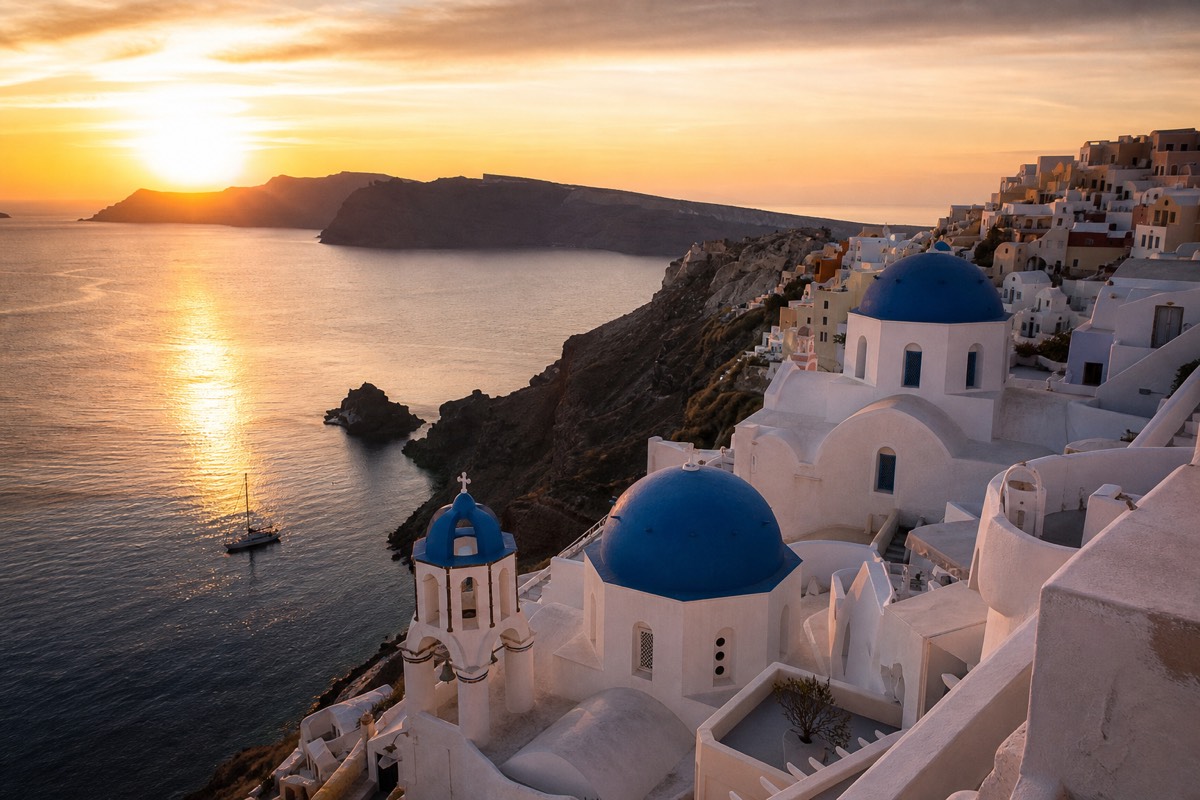
The Santorini view works because of the geometry. From Oia or Fira you look across the curved inner cliff face to the sea far below and the small volcanic islets at the caldera's centre. The Discover Greece tourism board leans on that image for a reason: it is the shot that defines the country visually worldwide. Three nights lets you see the sunset from Oia without racing back for a ferry, spend a morning on a black-sand beach at the caldera's base, and take the boat trip around the crater to the active volcanic cone and the hot springs.
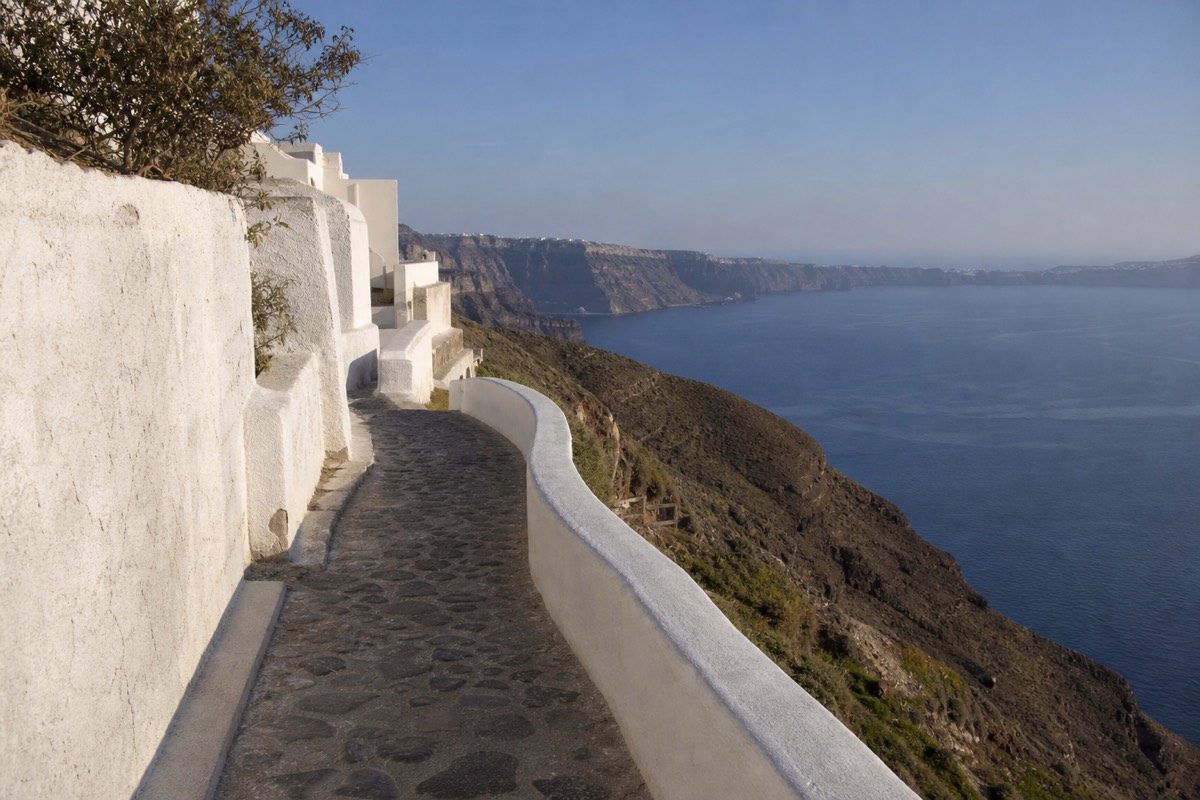
The two main towns split the experience. Fira is the busy capital, with the widest choice of hotels and restaurants and the cable car down to the old port. Oia is the quieter, prettier village at the northern tip where the sunset crowd gathers, and it holds the most photographed blue domes. The clifftop path between them is one of the best walks in the Cyclades, a couple of hours along the rim with the caldera dropping away on one side the whole way. That walk, more than any single viewpoint, is what three nights buys you and a rushed overnight does not.
Mykonos answers with texture rather than scale. Its old town is a genuinely lovely tangle of whitewashed lanes, blue doors and bougainvillea, and the windmills above the harbour at dusk are a real photograph. It is beautiful at eye level; Santorini is beautiful at the scale of a landscape.
Which island has better beaches?
Mykonos, clearly, if you want to swim and lie on sand. Its south coast has the long, organised, sandy beaches the Cyclades are known for, many of them fronted by beach clubs. Santorini's beaches are dramatic strips of black and red volcanic sand and pebble, worth seeing, but they are for the setting more than for a soft day by the water.
This is the cleanest split between the two islands. If a beach holiday is the core of your trip, Mykonos delivers it and Santorini does not really try to. The Mykonos beaches range from party-central to quieter family coves, so you can dial the scene up or down within the same island. Santorini's coast, by contrast, is a byproduct of the volcano: striking to look at, occasionally sharp underfoot, and secondary to the caldera towns above.
The range within Mykonos is the real advantage. Platis Gialos and Ornos are the easy, family-friendly sandy bays with shallow water and tavernas behind them, while Paradise and Super Paradise are the loud, all-day party beaches. You can pick your scene by choosing your beach, which is not something Santorini offers. Santorini's swimming spots, the black sand at Perissa and Kamari and the striking Red Beach near the ancient site of Akrotiri, are worth an afternoon for the setting, but they are volcanic strips rather than soft resort sand.
That is why couples who want both a view and beach time often split their days, giving Santorini to the scenery and Mykonos to the swimming. It is also why families with beach-focused kids frequently weight the trip toward the Mykonos side.
Which island has better nightlife and atmosphere?
Mykonos owns the nightlife. It has the beach clubs, the late bars and the reputation as the party capital of the Cyclades, and it earns all three. Santorini's evenings are about sunset drinks and long dinners with a view rather than dancing until dawn. Choose Mykonos for a scene, Santorini for a mood.
Mykonos has effectively decided that pleasure, not history, is its purpose, and it is excellent at it. The afternoon beach clubs roll into evening bars and late clubs, and in high summer the whole island runs on that rhythm. If that is the holiday you want, no other Greek island does it better.
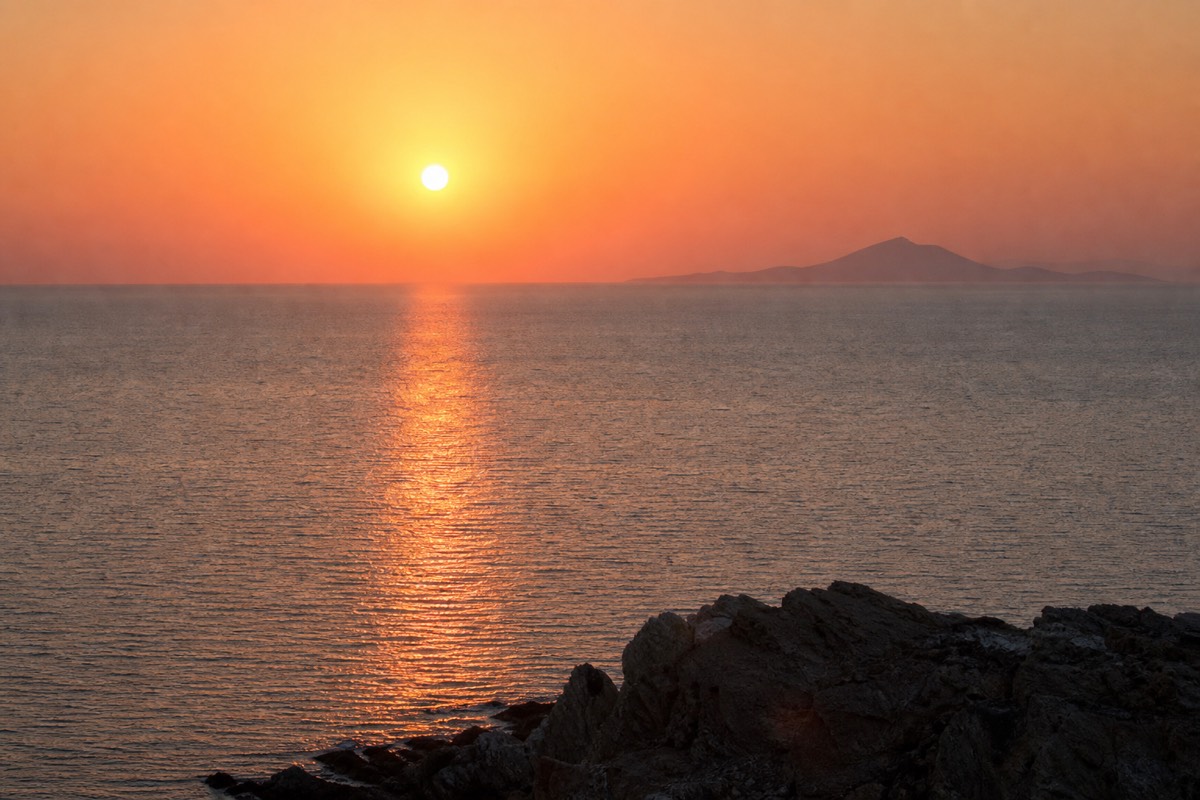
Santorini is not lifeless after dark, it is simply pointed elsewhere. The evening event is the sunset, followed by dinner somewhere with a caldera view and a bottle of Assyrtiko, the island's crisp volcanic white. It is romantic rather than raucous, which is precisely why it tops honeymoon lists and why party groups sometimes find it quiet. Our guide to a Greece honeymoon leans on that Santorini mood.
Which island is more expensive?
Both are among the most expensive islands in Greece, and in peak summer they run close. Santorini loads its premium into caldera-view hotel rooms, where the view is literally what you pay for. Mykonos spreads the cost across beach clubs, dining and taxis to the beaches. Shoulder season eases both noticeably while the islands stay fully open.
The way you spend money differs even though the totals are similar. On Santorini, the big lever is the hotel: a room on the caldera edge in Oia can cost multiples of an identical room a short walk back from the rim. On Mykonos, the accommodation range is wider, but the daily costs, a sunbed and drinks at a beach club, dinner in town, taxis, add up fast. The table below shows where the money actually goes on each island.
| Cost driver | Santorini | Mykonos |
|---|---|---|
| The signature splurge | A caldera-view room is the premium | Beachfront or a Chora address is the premium |
| Dining | Sunset-view restaurants priced up | Beach-club food and drinks priced up |
| Getting around | Bus or ATV, short distances | Taxis to the beaches add up |
| The classic add-on | The caldera boat cruise | A beach-club sunbed for the day |
Within each island there is a clear way to spend less without losing the point of the place. On Santorini, a room in Firostefani or Imerovigli, a short walk back from the Oia crowds, gives you the same caldera view for less than a front-row Oia suite. On Mykonos, staying in or near the town rather than on a designer beach, and treating the beach clubs as an occasional splurge rather than a daily habit, keeps the total in check. The islands are expensive; they are not uniformly expensive.
If cost is your deciding factor rather than a tie-breaker, the bigger saving is timing, not island. A shoulder-season trip to either beats a peak-August trip to the other. Our month-by-month guide to the best months to visit Greece shows where those windows fall.
Which island is better for couples, families and first-timers?
Couples and honeymooners lean Santorini for the view and the sunset. Families with young children often find Mykonos easier, because Santorini's cliff towns mean stairs and steep paths that are hard with strollers. First-timers who want the icons should simply do both, since together they capture the two sides of Greece in one trip.
The family angle is the one that surprises people. Santorini is romantic but vertical, and Oia and Fira are built on cliffs with a lot of steps, which is tiring with toddlers and awkward with a pushchair. Mykonos is flatter, its beaches are gentler for swimming, and the pace suits kids better. Our guide to travelling to Greece with kids goes deeper on which island combinations avoid the worst of the stairs.
| Traveller | Pick | Why |
|---|---|---|
| Honeymoon and couples | Santorini | The view and the sunset are the romance |
| Friends and nightlife | Mykonos | The beach-club and bar scene |
| Families with young kids | Mykonos, or weight the trip that way | Santorini's stairs are hard with strollers |
| First-timers wanting the icons | Both | They capture two different sides of Greece |
| Photographers | Santorini | The caldera is the shot |
How do you get to each island, and between them?
Both islands connect to Athens by ferry and by a short flight, and to each other by a high-speed ferry of roughly two to three hours. Mykonos is the quicker reach from Athens; Santorini's ferry leg is longer but its flight is still around 50 minutes. The crossing between the two is short and scenic, which is what makes the pairing so easy.
The times below are planning allowances rather than fixed figures, since they shift with the season and the vessel. Flying is worth it if your days are tight, but the ferry between the islands is part of the pleasure of the trip, not a chore to skip. The one leg to plan around is the long conventional ferry from Santorini back to Athens; if Santorini is your finale, flying home from its airport is the smarter move.
| Leg | By ferry (approx) | By air |
|---|---|---|
| Athens to Santorini | Around 5 to 8 hours, faster by high-speed | Around 50 minutes |
| Athens to Mykonos | Around 2.5 to 5 hours by vessel type | Around 40 to 50 minutes |
| Mykonos to Santorini | Around 2 to 3 hours by high-speed ferry | No direct flight |
The full case for boat versus plane, leg by leg, sits in our guide to ferry or flight between the islands. For this pairing specifically, most travellers ferry between Mykonos and Santorini and only consider flying for the Athens legs.
Can you visit both Santorini and Mykonos in one trip?
Yes, and most people do. The two islands are roughly two to three hours apart by high-speed ferry, which makes them the easiest famous pairing in the Cyclades. Give Santorini three nights and Mykonos two or three, add your Athens days, and the whole trip lands at about seven to ten days. Which island you visit first barely matters.
The order is a minor decision, but there is a mild case for each direction. Ending on Santorini lets the caldera be the finale and lets you fly home from its airport rather than backtrack. Starting on Santorini gets the busy sightseeing island done while you are freshest, leaving Mykonos beaches for a wind-down. Either works, and the ferry between them, bookable in advance through aggregators like Ferryhopper, is a short and scenic leg rather than a slog.
| Trip style | Santorini | Mykonos | Matching package |
|---|---|---|---|
| Short taster | 2 to 3 nights | 2 nights | 6-day Athens, Mykonos & Santorini |
| Free-time self-guided | 3 nights | 2 to 3 nights | 7-day self-guided |
| Fuller trip with guided days | 3 to 4 nights | 2 to 3 nights | 10-day semi-private |
The split of nights is worth getting right, because it is the one lever that shapes the trip. Three nights on Santorini is close to non-negotiable, since two leaves you rushing the sunset and the caldera boat trip. Mykonos is more flexible: two nights is enough for the town and a beach, and a third only matters if the beach-club scene is a priority. When time is tight, borrow from Mykonos before Santorini, not the other way around.
The packages exist in those exact shapes because the pairing is so common. The six-day Athens, Mykonos and Santorini tour is the compact version with hotels and ferries handled, the self-guided cultural trip leaves your days free, and the ten-day semi-private tour with three guided days adds structure without filling every hour.
So which should you book first?
If you genuinely have to pick one, book Santorini first: it is the more distinctive island, the safer bet for a first trip, and the one people most regret missing. Choose Mykonos first only if beaches and nightlife are the entire reason you are going. For everyone else, book both and let the pairing carry the trip.
The reason Santorini is the default first choice is not that it is objectively better, it is that it is more singular. Nowhere else in Greece gives you that caldera, and travellers who skip it on a first trip tend to wish they had not. Mykonos, wonderful as it is, has closer substitutes, since other Cyclades islands offer sandy beaches and pretty towns even if none quite matches its after-dark scene.
Still, the pairing beats either island alone for most trips, which is exactly why the packages are built around both rather than one. If you want to see how these two fit into a wider island run, our guide to choosing which islands to visit places them in the full Cyclades context.
When should you go, and does it change the answer?
Late May to early June and September are the best windows for both islands: warm enough to swim, open and running, but past the peak-August crush on prices and crowds. Mykonos in particular quietens sharply in winter, when much of the beach-club scene closes, so if nightlife is your reason to go, aim for the summer months.
Timing narrows the gap between the two islands in one specific way. Santorini's appeal, the view and the sunset, holds up almost year-round, even when the sea is too cool to swim. Mykonos, whose draw is beaches and the scene, is much more seasonal, so a shoulder or off-season trip favours Santorini by default. The table below is the quick version.
| Island | Best window | What to avoid |
|---|---|---|
| Santorini | May to June, September | Midday crowds at Oia in August |
| Mykonos | June to September for the scene | Winter, when much of it closes |
| Both together | Late May or September | Peak August prices |
Once you have settled the two-island question, the wider route is worth a look. Our guide to how to plan an island-hopping route shows how to slot a quieter third island around this pair, and how many days you need in Greece turns your available time into the right number of nights on each. For a gut-check on how long Santorini alone deserves, the blog on how many days to spend in Santorini is a fast read.