8 Days in Greece: The Perfect Itinerary
Eight days is a week with the pressure taken off. That one extra night is enough to change the whole trip: it buys either the mainland's ancient circuit, from Delphi to Meteora, or a proper third night on each island instead of a rushed overnight. Here is how to spend the eight days depending on which pull is stronger.
What does the perfect 8-day Greece itinerary look like?
Eight days splits cleanly two ways. The ancient-sites route loops Athens, the Peloponnese, Olympia, Delphi and Meteora, then closes with a Saronic islands cruise. The island route pairs Athens with two Cyclades islands at three nights each. Pick the lean that matches you rather than trying to force both into eight days.
What makes eight days feel generous is that the eighth night removes the compromise a week forces on you. The mainland circuit below is the one to book if history is why you are coming; it follows the eight-day Ancient Greece tour with the Saronic cruise almost day for day, with a licensed guide and all monument entries included. If beaches win, the same eight days map onto the self-guided cultural Athens and island route with an extra island night added.
| Day | Base | The ancient-sites plan |
|---|---|---|
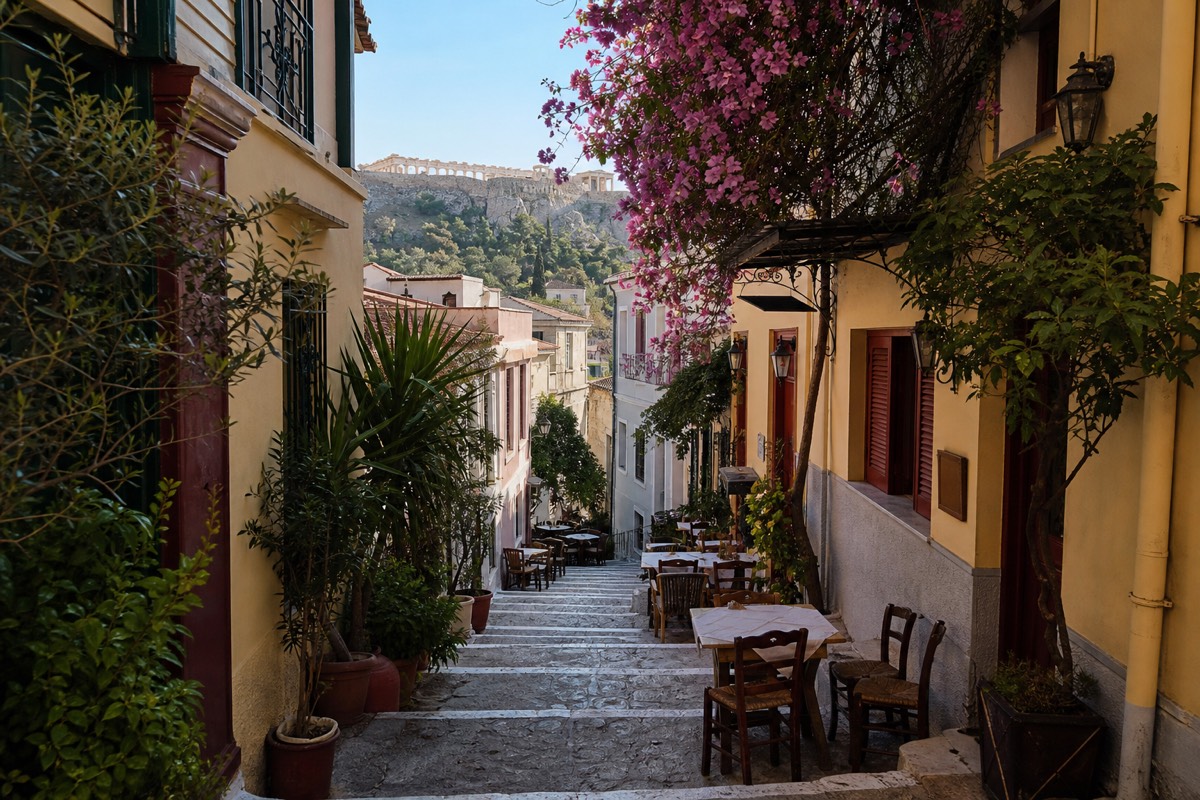
| 1 | Athens | Arrive, transfer in, settle. Evening in Plaka. |
| 2 | Olympia | Corinth Canal, the theatre at Epidaurus, Mycenae and Nafplio, then west to Olympia. |
| 3 | Delphi | Ancient Olympia and its museum, cross the Rio-Antirion bridge, on to Delphi. |
| 4 | Kalambaka | The Delphi ruins and the bronze Charioteer, then north to the foot of Meteora. |
| 5 | Athens | The Meteora monasteries, then south past Thermopylae back to Athens. |
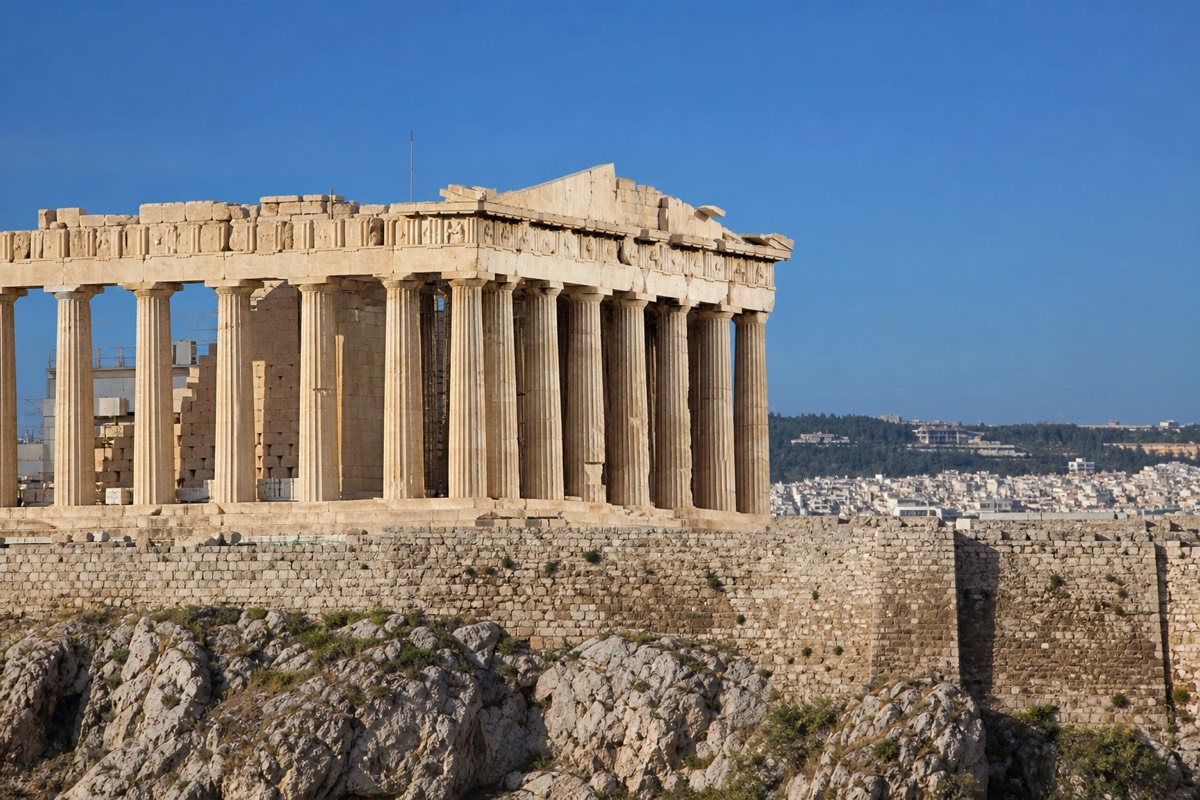
| 6 | Athens | City tour, the Acropolis and the Acropolis Museum, the Panathenaic Stadium. |
| 7 | Athens | Full-day cruise to the Saronic islands: Hydra, Poros and Aegina. |
| 8 | Depart | Transfer to the airport for the flight home. |
The island version keeps Athens for two nights, then gives Mykonos or Naxos and Santorini three nights each, which is the single upgrade a week cannot afford. Either way, the eighth day is doing real work rather than padding the trip.
Whichever track you choose, day one is an arrival-and-settle day rather than a sightseeing one. The metro from Athens airport reaches the city centre at Syntagma in about 40 minutes, and a fixed-tariff taxi runs roughly 40 to 50 euros, so an evening flight still leaves time to check in and find dinner in Plaka. Treating the first night as a buffer keeps the real work of the trip, whether that is the coach circuit or the ferry out, starting on rested legs.
Ancient sites or islands: which way should 8 days lean?
Lean ancient if the Acropolis, Delphi and Meteora are the pull, and take the coach circuit that covers them in one loop. Lean islands if the caldera and the beaches are the pull, and give two Cyclades islands three nights each. Eight days does one of these well; splitting the difference leaves both halves rushed.
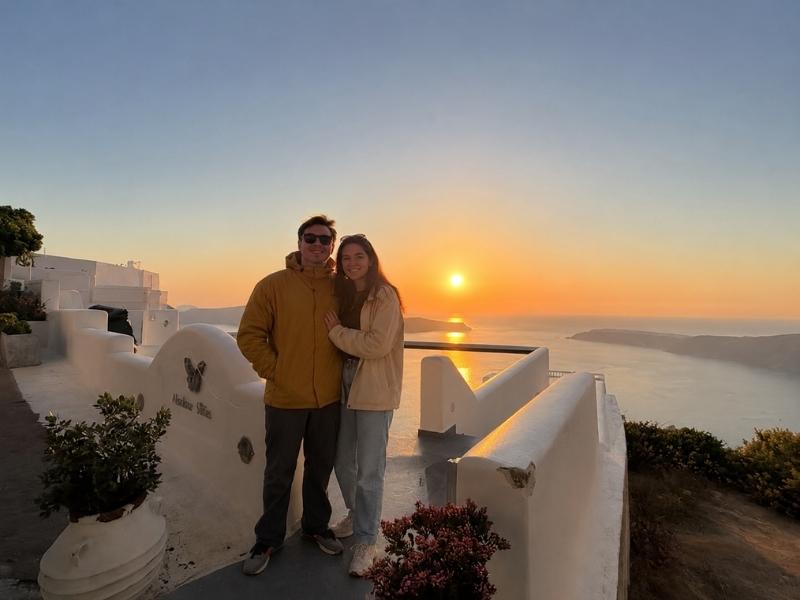
The clearest way to decide is to ask which photos you already have saved. If they are ruins, monasteries and museums, the mainland circuit is your trip and it packs an astonishing amount of history into a week-plus-one. If they are blue domes, cliff-top sunsets and beach coves, the islands are your trip and the extra night is what stops it feeling like the rushed seven-day version. A small third group wants a taste of both, and for them the honest advice is to add days, which our ten-day itinerary lays out.
Be honest with yourself about the coach circuit's pace. The mainland loop is full and fairly structured, with long stretches of driving between sites and few hours on a beach; it is a history trip, not a rest. What you get in return is context no self-guided visit matches, a licensed guide connecting Mycenae, Olympia, Delphi and Meteora into one story across a thousand years. If that trade sounds right, it is the most rewarding way to spend eight days; if it does not, the island track is the better fit.
| Ancient-sites lean | Island lean | |
|---|---|---|
| Core route | Athens, Peloponnese, Olympia, Delphi, Meteora, Saronic cruise | Athens plus two Cyclades islands |
| How you move | First-class coach loop | Fast ferries |
| Pace | Full, guided, few beach hours | Relaxed, self-directed |
| Best for | History lovers, first-timers who want context | Couples, beach and sunset seekers |
What does the mainland classical circuit include?
The eight-day mainland loop covers the spine of classical Greece: the Corinth Canal, the theatre at Epidaurus, the Bronze Age gates of Mycenae, ancient Olympia where the games began in 776 BC, the oracle at Delphi on Mount Parnassus, and the clifftop monasteries of Meteora, before finishing with the Acropolis in Athens.
This is the circuit most first-timers do not realise they want until they are standing in it. Epidaurus has acoustics so precise you can hear a coin drop on the stage from the top row. Mycenae holds the Lion Gate and the beehive tomb long called the Tomb of Agamemnon. Meteora produces the strongest physical reaction of any site in the country: two dozen sandstone pillars rising off the plain with a monastery balanced on each. Bring modest clothing for the monasteries, where knees and shoulders must be covered. Our dedicated classical Greece mainland guide walks the whole loop in depth.
Two logistics are worth knowing before you go. The Meteora monasteries are working religious houses with a firm dress code: knees and shoulders covered, and long skirts rather than trousers expected of women at some, so a light wrap in the daypack saves a turned-away moment at the gate. The circuit also threads real landscape between the ruins, crossing the vast Rio-Antirion bridge over the Gulf of Corinth and pausing at Thermopylae, where the monument to Leonidas marks the pass held against the Persians in 480 BC.
The loop also folds in stops that are easy to overlook on a list but memorable in person. The Corinth Canal, a narrow vertical slot cut through solid rock, makes a striking first photo stop out of Athens. Nafplio, the elegant first capital of modern Greece, is the prettiest town on the route for a walk through neoclassical streets below a Venetian fortress. Neither is a headline name, but together they give the drive between the big ancient sites a rhythm and a sense of the country in between.
| Site | What it is | Why it earns the stop |
|---|---|---|
| Epidaurus | Ancient theatre and healing sanctuary | The finest surviving acoustics of the ancient world |
| Mycenae | Bronze Age citadel | The Lion Gate and the Tomb of Agamemnon |
| Olympia | Birthplace of the Olympic Games | The original stadium and the Sanctuary of Zeus |
| Delphi | The oracle on Mount Parnassus | The sanctuary, the theatre and the bronze Charioteer |
| Meteora | Clifftop Byzantine monasteries | Monasteries on pillars 400m above the plain |
If you choose the island track, which islands and how long?
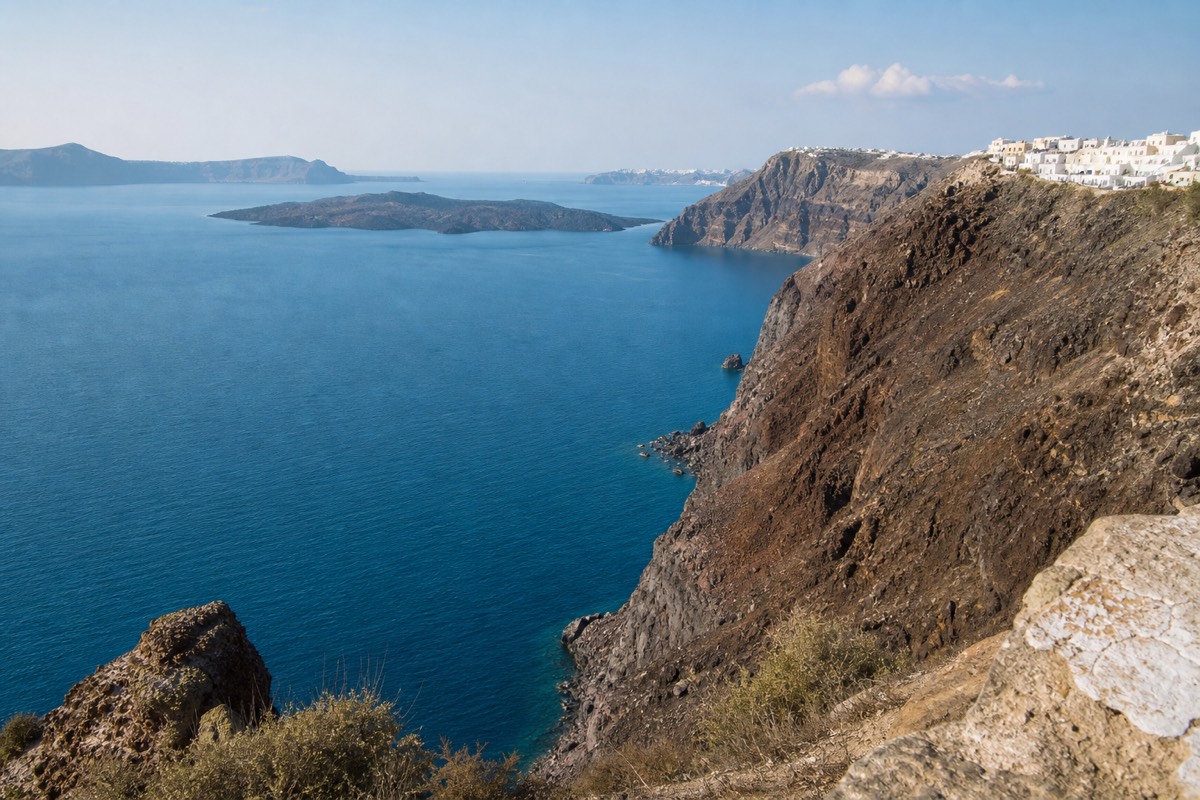
On the island track, eight days is Athens for two nights plus two Cyclades islands for three each. Mykonos and Santorini is the famous pairing; Naxos or Paros with Santorini is the quieter, better-value one. The extra night over a week is what gives each island two full days instead of one rushed afternoon.
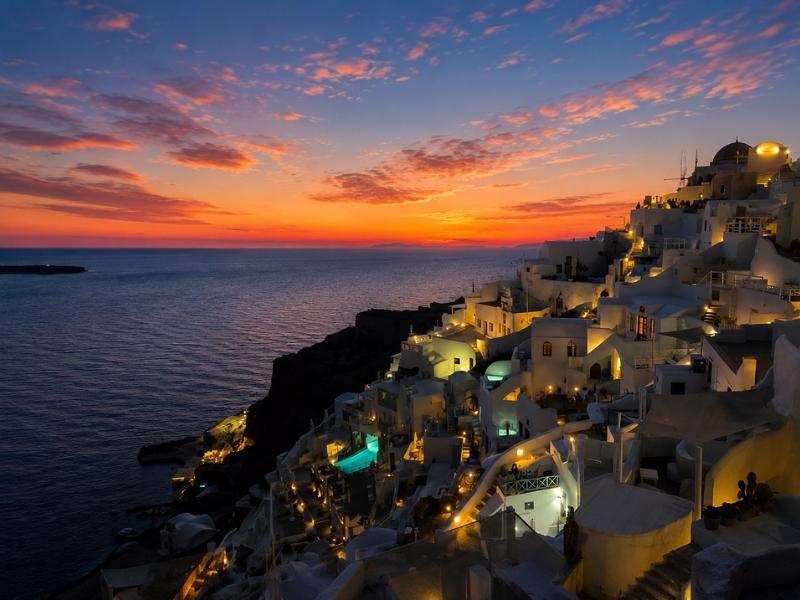
The three-night island stop is the whole reason to add the eighth day. Two nights buys one usable day; three nights buys two, which is the difference between seeing Santorini and actually enjoying it, with the caldera boat trip on one day and the Oia sunset unhurried on another. If you want a slightly longer, dedicated hopping route with a third island, the nine-day Paros, Naxos and Santorini route is the natural step up. Our comparison of Santorini or Mykonos helps you pick the first island.
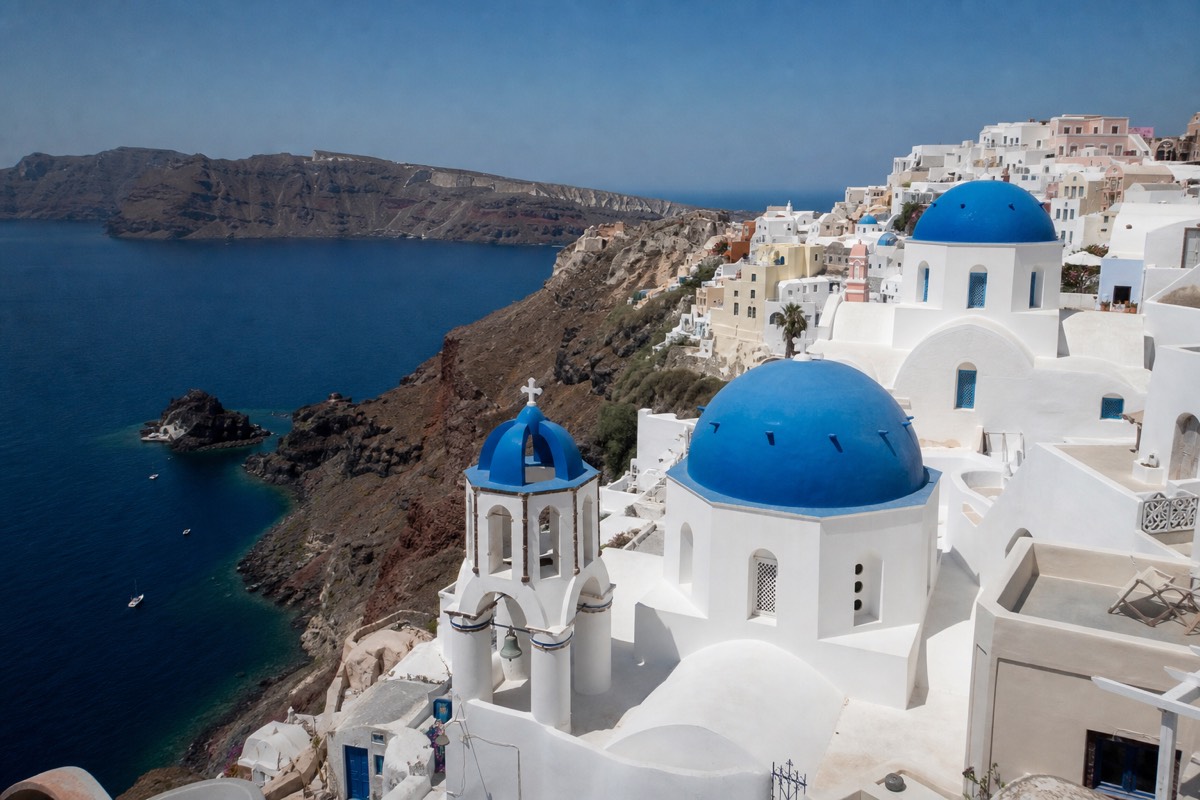
The three-night stop pays off most clearly on Santorini. With two full days you can give the caldera boat trip its own morning, walking the still-steaming crater of Nea Kameni and soaking in the Palea Kameni hot springs, then keep a separate evening for the Oia sunset without a ferry hanging over it. The middle island, whether Mykonos, Naxos or Paros, gets its own beach day and a proper evening in town rather than a single rushed afternoon.
The island track also leaves room for one unstructured day that a week never can. Use it to do nothing in particular: a slow morning on a black-sand beach at Kamari or Perissa, a walk out to a quiet caldera viewpoint away from the Oia crowds, or a lazy lunch that runs into the afternoon. On a short trip that single loose day is often the one people remember most fondly.
| Pairing | Feel | Best for |
|---|---|---|
| Mykonos + Santorini | Buzz then drama, the classic contrast | First-timers who want the famous names |
| Naxos + Santorini | Real local life then the caldera | Value, food, families |
| Paros + Santorini | Quiet Cycladic charm then the sunset | Relaxed travellers avoiding crowds |
How does the eighth day change the trip versus a week?
One extra night is the highest-value day on the whole trip. On the islands it converts two one-day stops into two-day stops. On the mainland it lets the circuit reach Meteora and add the Saronic cruise instead of turning back. It is the cheapest way to remove the rush that defines a seven-day trip.
People underrate how much a single night changes the feel of a short trip. A week is always fighting the clock; the eighth night hands that time back at exactly the point where it matters most, the middle of the trip where the days would otherwise blur into ferries and check-ins. If you are torn between seven and eight, the answer is almost always eight. Our side-by-side look at how many days you need in Greece and the note on the biggest Greek islands mistakes to avoid both come down on the same side.

There is also a quieter benefit: eight days lets the trip end on a high note rather than a scramble. On the island track the last full day is a relaxed Santorini day instead of a pack-and-sail rush; on the mainland track it is the gentle Saronic cruise to Hydra, Poros and Aegina rather than a final hard drive. Ending a short trip on something easy is worth more than most people expect when they are comparing day counts on a spreadsheet.
Getting around on eight days: coach or ferry?
The two tracks travel differently. The ancient-sites circuit runs on a first-class coach that loops the mainland and needs no planning from you. The island track runs on fast ferries you book ahead, with the Saronic cruise handled as a day trip. Eight days does not need a domestic flight unless you are stretching to a far island.
On the mainland loop, the coach is simply the right tool: Delphi, Olympia and Meteora are scattered and awkward to reach independently, and a guided circuit ties them together with the history in between. On the island track, the fast catamarans keep the Cyclades hops short, and the only leg to watch is a slow return from Santorini, which is best flown if your flight home is close. You can check live ferry times on Blue Star Ferries, and our guide to ferry versus flight covers when each pays off. The allowances below vary by operator and season.
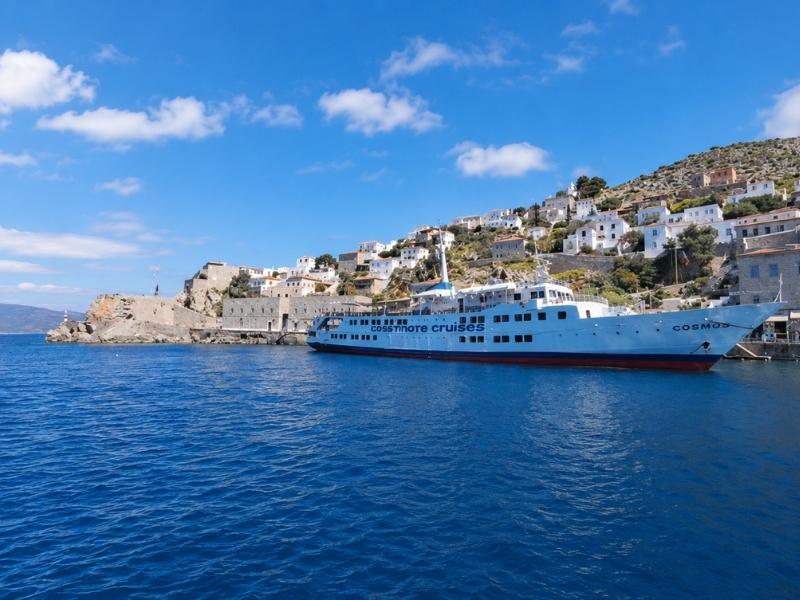
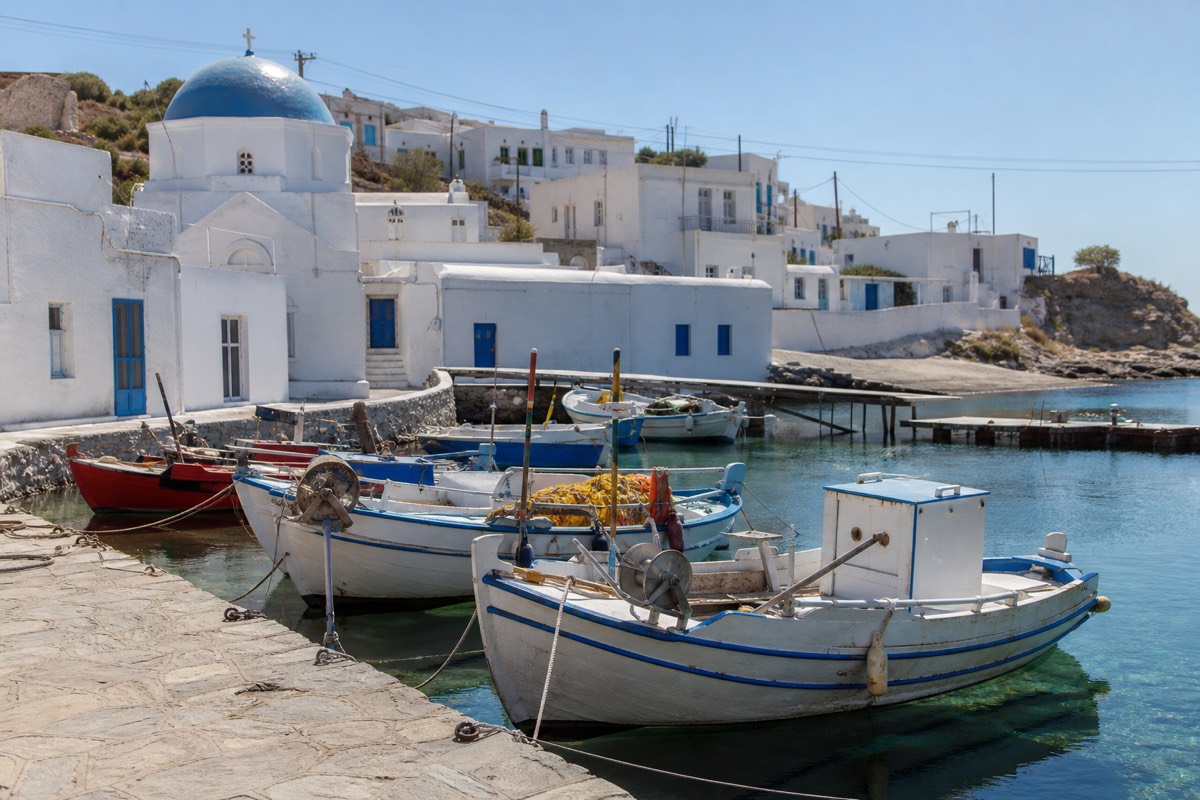
The Saronic day cruise is one of the mainland circuit's quiet highlights and needs nothing from you to arrange. A single boat links three very different islands in a day: car-free Hydra with its stone harbour and mansions, pine-shaded Poros a short hop across the water, and Aegina, famous for its pistachios and the hilltop Temple of Aphaia. It is the trip's one dose of island air, and it slots in without any ferry planning of your own.
| Track | Main mode | Typical leg (allowance) | Planning needed |
|---|---|---|---|
| Ancient sites | First-class coach | Multi-day mainland loop | None; the circuit is fixed |
| Saronic cruise day | Day boat from Athens | Full day, three islands | None; booked as one excursion |
| Islands, Athens hop out | Fast ferry | ~3 hours | Book crossings ahead in summer |
| Islands, return from Santorini | Fast ferry or flight | ~5 hours or ~50 min | Fly if the flight home is same day |
When is the best time for an 8-day trip, and what does it cost?
Late April to June and September to mid-October are best for both tracks: comfortable site-walking on the mainland, warm swimming on the islands, and moderate crowds. As a package, eight days runs from around $1,100 per person self-guided on the islands to about $2,050 fully guided on the ancient circuit, with extras paid locally.
The season advice is the same whichever track you take, because the shoulder months serve both: the archaeological parks are cool enough to walk and the sea is warm enough to swim. High summer works but sits at peak heat and price. On cost, the self-guided seven-day island format is from $1,139 and simply adds a night for eight; the fully guided ancient-sites tour is from $2,047 with the licensed guide, all monument entries and the Saronic cruise included. Meals inside Athens, tips and the overnight city tax are extra. For the finer season detail see our best time to visit Greece guide, and for the on-the-ground numbers, what a short Greece trip costs.
On both tracks the package handles the fixed costs and leaves you the local ones. The guided ancient-sites tour includes the coach, a licensed guide, every monument entry on the route and several dinners; the self-guided island format includes the hotels, ferries and transfers. What you pay on the ground is broadly the same either way: lunches and Athens dinners, tips for the guide and driver, and the overnight city tax the hotel charges per room per night on a scale from about 1.50 to 15 euros depending on the rating and season.
| Window | Mainland circuit | Island track | Verdict |
|---|---|---|---|
| Apr to mid-May | Cool, clear, ideal for sites | Cooler sea | Best for the ancient lean |
| Late May to Jun | Warm, comfortable | Warm, swimmable | Excellent for either |
| Jul to Aug | Hot at midday | Hot, crowded | Start early, book ahead |
| Sep to mid-Oct | Comfortable, clear | Warm sea, calmer | Best overall for either |
Every option here is bookable as a single done-for-you package through Greece Tour Packages, with island hotels, ferries and airport transfers already arranged.